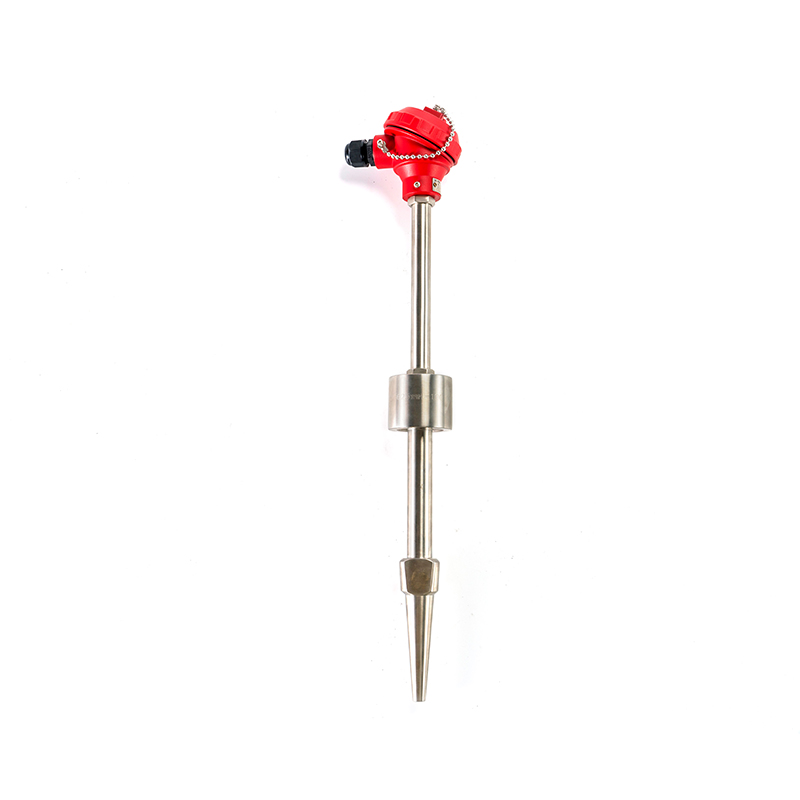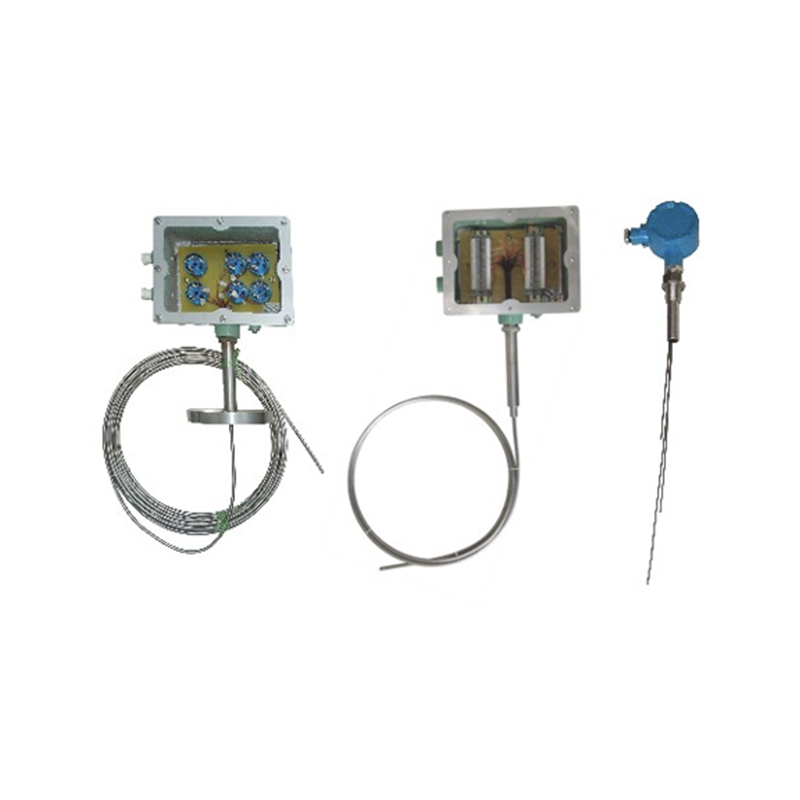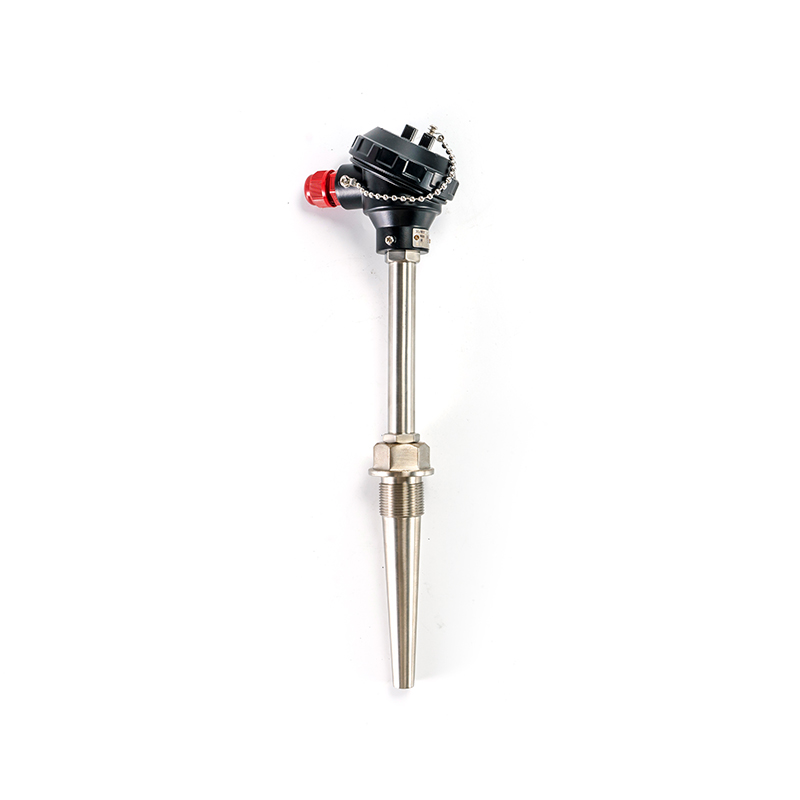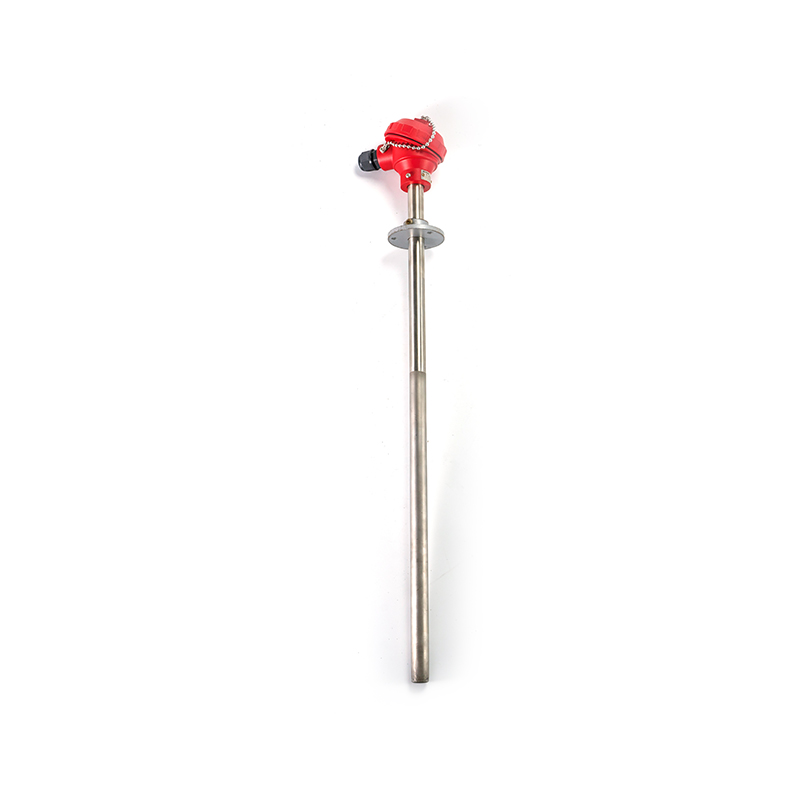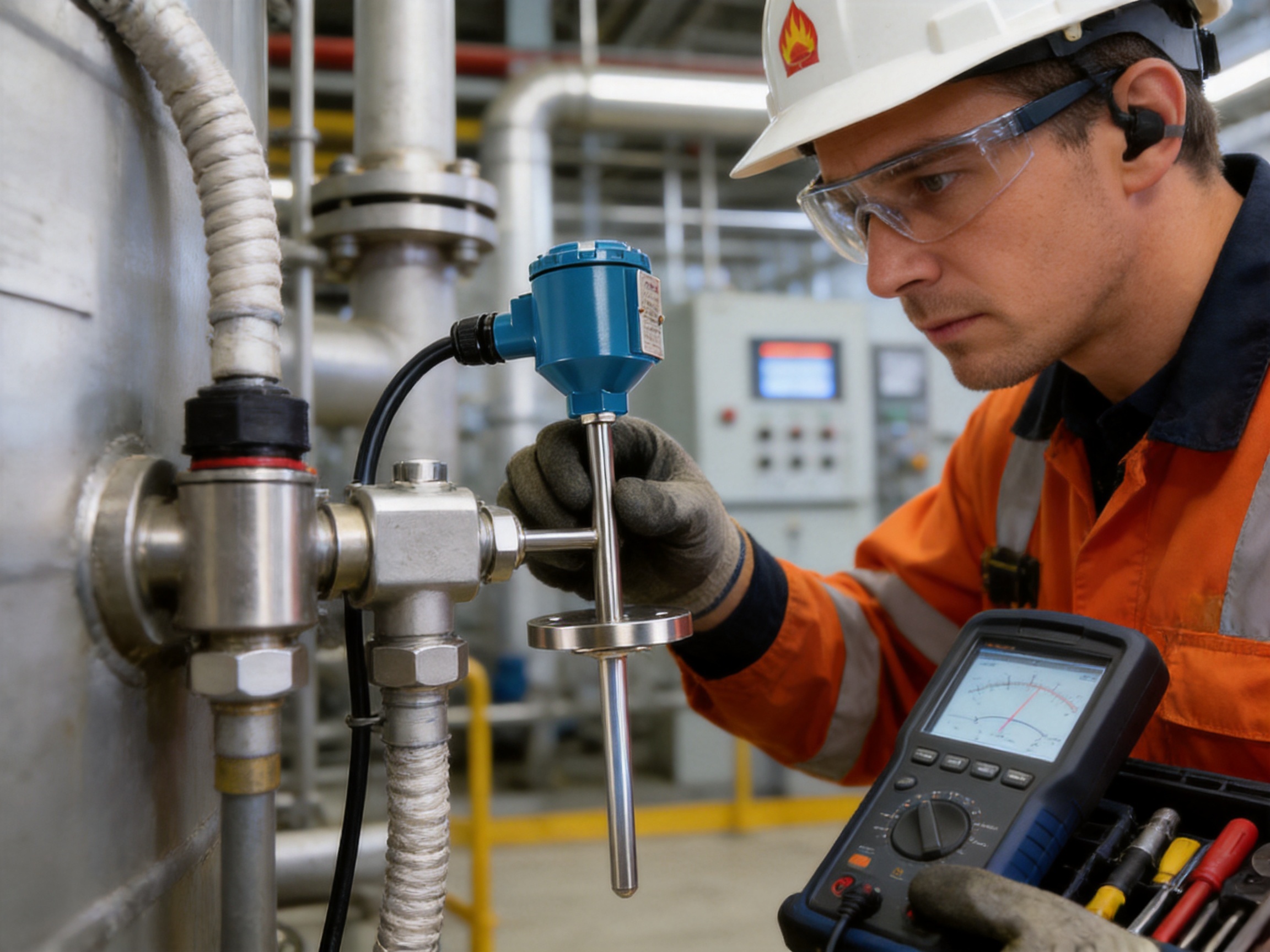
Reliable temperature measurement is essential wherever industrial processes involve hydrocarbons, combustible gases, flammable vapors, steam, hot liquids, or high-temperature solid surfaces. In these environments, a temperature sensor must do more than provide a numerical reading. It must operate safely, withstand demanding conditions, maintain stable measurement performance, and integrate with the instruments used for process control and safety monitoring. The Explosion-proof RTD is designed for this purpose, combining industrial temperature measurement with protection for hazardous production areas.
This product is suitable for direct temperature measurement in liquids, steam, gases, and solid surfaces across a stated range of 0°C to 1300°C, subject to the selected sensing element, sheath, installation configuration, and application requirements. It can be connected to display instruments, recording instrumentation, electronic computing systems, and other compatible monitoring or control facilities. Its fundamental value lies in bringing dependable temperature information into environments where ordinary sensors may not provide the required level of protection.
Manufactured and supplied by Xinguo Group Co., Ltd., the Explosion-proof RTD forms part of a broader portfolio that includes temperature instruments, thermocouples, alloy wires, pressure instruments, flow meters, level instruments, cables, and other industrial materials. The group’s integrated capabilities in alloy production, instrument manufacturing, cable production, research and development, and quality inspection support consistent product performance from raw material selection through final testing.
Temperature affects nearly every important industrial process. It influences chemical reaction rates, fluid viscosity, pressure, material strength, evaporation, combustion behavior, product quality, and equipment service life. In petroleum refining, chemical processing, power generation, and manufacturing, even a relatively small temperature deviation can lead to reduced efficiency, off-specification products, equipment damage, or unsafe operating conditions.
Hazardous areas introduce an additional challenge. Flammable gases, vapors, dust, or combustible process materials may be present around the measurement point. If electrical equipment generates an ignition source, the consequences can be serious. For this reason, temperature sensors installed in such locations require an appropriate protection concept and must be selected, installed, connected, and maintained in accordance with the applicable design requirements for the installation.
An explosion-proof RTD is intended to provide temperature measurement while supporting safer operation in areas where explosive substances may exist. The sensor is normally installed at the point where temperature must be measured and connected to an external display, recorder, controller, or data acquisition system. The sensor’s enclosure, connection arrangement, mechanical construction, and installation accessories must work together as part of the overall protection system.
It is important to understand that explosion protection is not achieved by the sensing element alone. Safe application depends on the complete product configuration, the approved connection method, the electrical circuit, the installation environment, and compliance with the required hazardous-area practices. Customers should therefore confirm the process conditions and required approvals before placing an order.
The Explosion-proof RTD is a robust industrial temperature sensor developed for direct measurement in demanding environments. It is compatible with display instruments, recording devices, electronic computing equipment, and other industrial facilities. The product may be used to monitor the temperature of liquids, steam, gases, and solid surfaces, making it adaptable to a wide variety of process applications.
The stated operating range extends from 0°C to 1300°C. Because a single RTD construction may not cover every point within this complete range, the actual configuration should be selected according to the required temperature, sensing element, sheath material, insulation, installation method, and response characteristics. Applications near the upper end of the range may require specialized high-temperature designs or alternative thermoelectric sensing configurations. Technical confirmation before production helps ensure that the selected sensor is suitable for the process.
The product is designed around several essential requirements:
• Safe use in areas where explosive gases, vapors, or other combustible substances may be present.
• Stable temperature measurement for process control, monitoring, recording, and safety-related decision-making.
• Mechanical durability for industrial installation and routine operation.
• Compatibility with common industrial measurement and control systems.
• Adaptability to different media, surface conditions, installation positions, and process layouts.
• Low routine maintenance when properly installed and protected from mechanical or chemical damage.
Rather than functioning as an isolated laboratory sensor, the Explosion-proof RTD is intended to become part of an industrial measurement chain. It can provide a field temperature signal that is displayed locally, transmitted to a control room, recorded for traceability, or incorporated into an automated control strategy.
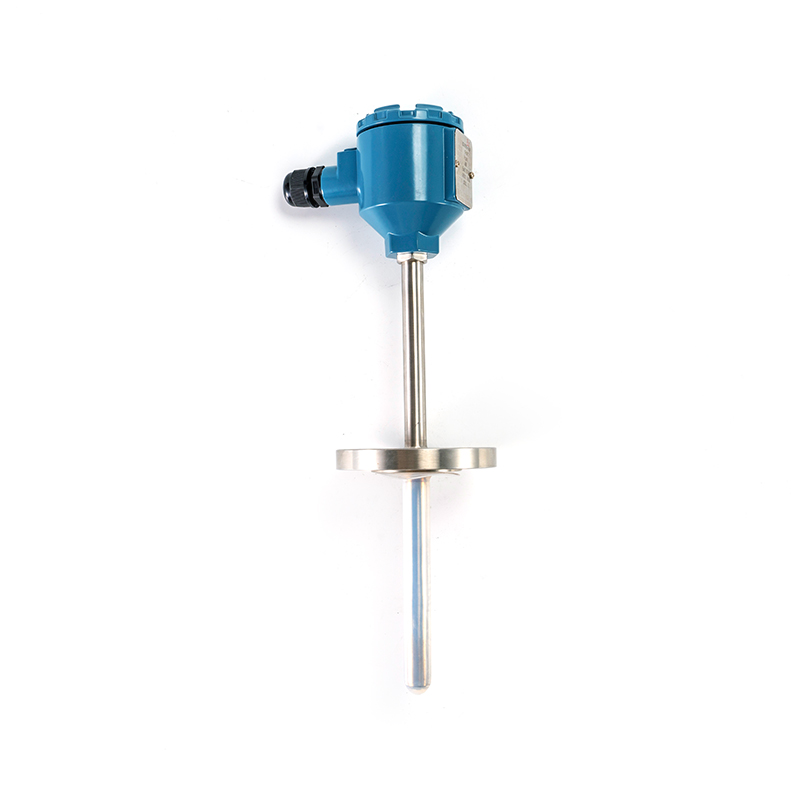
Explosion-proof RTD
An RTD, or resistance temperature detector, measures temperature through the predictable change in electrical resistance of its sensing element. As temperature changes, the resistance of the element changes in a corresponding manner. The connected instrument measures this resistance and converts it into a temperature value according to the characteristics of the selected element and the applicable calculation method.
This principle provides an important advantage in industrial applications because resistance-based measurement can offer good repeatability and stable output when the sensor is correctly designed and connected. The signal can be routed to a display, recorder, transmitter, programmable controller, distributed control system, or data acquisition unit, depending on the complete instrumentation arrangement.
Measurement accuracy depends on more than the sensing element. Important factors include sensor construction, element quality, lead-wire resistance, wiring configuration, calibration, insertion depth, thermal contact, process flow, response time, sheath material, and the performance of the receiving instrument. A high-quality sensor installed incorrectly may perform less effectively than a correctly engineered sensor installed with suitable protection and calibration.
For demanding installations, the selection process should consider:
• Required measuring range and normal operating temperature.
• Short-term excursions, start-up conditions, shutdown conditions, and emergency temperatures.
• Whether the sensor measures a flowing medium, a stagnant medium, or a solid surface.
• Chemical compatibility between the process medium and the wetted materials.
• Required insertion length and available mounting space.
• Vibration, pressure, flow velocity, and mechanical loading.
• Hazardous-area classification and required explosion-protection arrangement.
• Output connection, wiring configuration, and signal transmission distance.
• Required response time, accuracy, stability, and calibration interval.
• Inspection, maintenance, and replacement requirements.
The primary advantage of the Explosion-proof RTD is its suitability for applications where ordinary temperature sensors may not meet the safety requirements of the installation. Its construction is intended to support operation in hazardous environments containing hydrocarbons or other potentially explosive substances. The complete installation must still follow the applicable safety rules, but the sensor is designed with hazardous-area service in mind from the beginning.
This protection-oriented approach is particularly valuable in refineries, petrochemical plants, chemical production lines, fuel storage facilities, gas processing stations, and other locations where process materials can form flammable mixtures with air. By using an appropriate explosion-proof sensor, operators can obtain necessary temperature information without relying on unsuitable general-purpose equipment.
The sensor can be applied to liquids, steam, gases, and solid surfaces. This flexibility enables one product family to support different measurement points throughout a plant. For example, it may be installed on a process vessel, in a pipeline, near a steam system, on a gas-handling line, or against a heated solid component.
A broad application range can simplify procurement and plant standardization. Engineering teams may reduce the number of unrelated sensor types used across a facility, while maintenance teams can become familiar with a consistent product platform. The actual mounting arrangement and material selection should always be adapted to the measured medium and operating conditions.
The Explosion-proof RTD is compatible with display instruments, recording instrumentation, electronic computing systems, and other measurement facilities. This makes it suitable for both local and centralized monitoring. A local display can help operators check a process point in the field, while a remote control system can use the signal for alarms, trend analysis, interlocking, or automatic regulation.
Integration also improves the value of historical temperature data. Recorded information can help maintenance teams identify gradual process changes, confirm operating stability, investigate abnormal events, and optimize energy use. In regulated or quality-sensitive industries, recorded temperature trends may support batch records, production verification, and audit documentation.
The product is designed as a robust industrial sensor rather than a delicate laboratory device. When it is installed correctly and operated within its rated conditions, routine maintenance is generally limited to inspection, connection checks, cleaning where necessary, and confirmation of signal performance.
Reduced maintenance helps lower operating costs and limits the need for frequent process interruption. It also supports safer maintenance planning because inspections can be scheduled during normal plant maintenance windows rather than being triggered by repeated sensor failures.
Temperature information is often one of the earliest indicators of an abnormal industrial condition. A rising temperature may indicate loss of cooling, excessive reaction activity, blocked flow, friction, insulation failure, heater malfunction, or an unwanted change in process composition. A reliable temperature sensor can therefore support early warning and preventive action.
The Explosion-proof RTD does not replace a complete safety system, but it can provide an important input to that system. Its measurements may be used alongside pressure, flow, level, vibration, and gas detection signals to give operators a more complete picture of process conditions.
General-purpose RTDs can be suitable for offices, laboratories, clean production areas, and non-hazardous machinery. However, they may not be appropriate for areas where flammable gases, vapors, or combustible dust are present. The main distinction is not simply measurement accuracy. It is the ability of the complete sensor construction and installation method to support safe operation in the specified environment.
Compared with a basic non-protected sensor, an explosion-proof model offers several application advantages:
• It is designed with hazardous-area use as a core requirement rather than as an afterthought.
• It can be selected for installations where hydrocarbons or explosive substances may occur.
• Its mechanical and connection arrangements can be coordinated with approved industrial fittings and wiring practices.
• It provides temperature data without forcing operators to compromise the protection requirements of the process area.
• It can be incorporated into a wider industrial instrumentation system that includes recording, control, and alarm functions.
Compared with low-cost sensors intended for light-duty service, the Explosion-proof RTD is better suited to industrial environments where durability, process compatibility, and safety are more important than the lowest initial purchase price. A lower-cost sensor may appear economical at the time of purchase, but unsuitable equipment can create higher costs through premature failure, inaccurate control, unplanned shutdowns, or unsafe operation.
Compared with a sensor designed only for one medium or one mounting arrangement, this product family provides broader adaptability. It can be configured for different process points and measurement requirements, subject to engineering review. This flexibility is particularly useful for equipment manufacturers, plant contractors, and end users who require multiple temperature measurement solutions from one experienced supplier.
| Evaluation Factor | Explosion-Proof RTD | General-Purpose Sensor | Application Significance |
|---|---|---|---|
| Hazardous-area suitability | Designed for specified hazardous industrial applications | May be intended only for ordinary areas | Helps align the sensor with the safety requirements of the installation |
| Process media | Liquids, steam, gases, and solid surfaces, subject to configuration | Often limited by construction and environmental rating | Supports wider plant application coverage |
| Industrial integration | Compatible with displays, recorders, computing systems, and control equipment | Compatibility may be more limited | Facilitates centralized monitoring and process data management |
| Mechanical service | Robust industrial construction | May be optimized for lighter-duty conditions | Improves suitability for vibration, heat, and continuous operation |
| Maintenance approach | Periodic inspection and connection verification | Depends strongly on the specific design | Supports planned maintenance and long service use |
| Temperature capability | Stated product range of 0°C to 1300°C, subject to selected configuration | Often narrower or application-specific | Allows engineering teams to address diverse process temperatures |
Temperature sensors operate in direct contact with process conditions, so material selection is critical. The sheath, protection tube, mounting components, sealing parts, and connection housing must be considered in relation to temperature, pressure, chemical exposure, corrosion, vibration, and installation environment.
For liquid service, the sensor should have sufficient insertion depth to measure the representative temperature of the fluid rather than the temperature of the vessel wall or mounting fitting. For gas service, the design should consider the lower heat transfer rate of gases and the possibility of vibration or high flow velocity. For steam service, the installation must be mechanically secure and selected for the pressure and temperature conditions. For solid surfaces, thermal contact and surface geometry have a major effect on response and accuracy.
Process engineers should provide complete application data when requesting a quotation. Useful information includes the medium, normal and maximum temperature, pressure, flow velocity, corrosive components, pipe or vessel size, connection type, insertion length, hazardous-area classification, required cable length, and receiving instrument. Accurate information allows the manufacturer to recommend a suitable configuration rather than relying on assumptions.
Where high-temperature service approaches the upper portion of the stated range, engineering review becomes especially important. The selected element and protection materials must be able to tolerate the temperature without excessive drift or premature degradation. In some situations, a thermocouple may be more appropriate than an RTD. The correct choice depends on the required accuracy, response time, long-term stability, wiring distance, temperature range, and system design.
Xinguo Group Co., Ltd. is a national high-tech enterprise founded in 1997 and located in Tianchang City, Anhui Province, China. The group consists of Anhui Xinguo Instrument Co., Ltd., Shenyang Oudi Instrument Manufacturing Co., Ltd., Anhui Xinguo Alloy Co., Ltd., Anhui Xinguo Cable Co., Ltd., and Anhui Xinguo Precious Metal Co., Ltd.
This structure provides a broad manufacturing foundation for temperature instruments and related industrial products. The group does not operate only as an assembly supplier. Its business scope includes instruments, alloy materials, cables, precious-metal-related materials, and electrical accessories. Such capabilities can support closer coordination between sensing materials, conductors, instrument housings, cable assemblies, and finished products.
Vertical coordination is valuable in temperature measurement because sensor performance depends on the interaction of multiple components. The sensing element, lead wire, insulation, protection tube, terminal arrangement, and receiving instrument must work together. An organization with experience across these product categories can better understand the complete measurement chain.
The group employs nearly 300 people, including more than 50 professional technicians, senior technical experts, senior engineers, engineers, and assistant engineers. This technical workforce supports product development, process improvement, application consultation, testing, and quality management.
Research and development capability is particularly important for explosion-proof temperature instruments because industrial applications vary significantly. A refinery temperature point may require a different structure from a chemical reactor, steam pipeline, storage tank, or high-temperature furnace. Engineering teams must be able to translate field conditions into a suitable product design.
Technical development also supports continuous improvement. Feedback from operating sites can be used to refine materials, connection methods, mechanical construction, inspection procedures, and installation guidance. Over time, this process can improve reliability and reduce the likelihood of repeated application problems.
Xinguo Group reports the use of advanced equipment, modern production techniques, and strict inspection procedures at every stage of manufacturing. For industrial temperature instruments, this may include controlled material preparation, precision machining, sensor assembly, connection processing, sealing, dimensional inspection, electrical testing, and final product verification.
Consistent manufacturing is important because temperature sensors are often installed in critical process locations that are difficult or expensive to access. Variations in assembly quality can affect insulation resistance, mechanical strength, response characteristics, and long-term stability. A controlled manufacturing process helps reduce variation and improves confidence in repeat orders.
Modern manufacturing also supports customized production. Customers may require different insertion lengths, connection arrangements, cable types, mounting threads, protection tubes, or output configurations. A capable manufacturer can adapt the product while maintaining documented production and inspection controls.
The group has obtained ISO9001 Quality Management System, ISO14001 Environmental Management System, and GB/T28001 Occupational Health and Safety Management System certifications. These systems demonstrate a structured approach to quality, environmental responsibility, and occupational safety management.
ISO9001 provides a framework for controlled processes, customer requirements, documentation, corrective action, and continual improvement. ISO14001 addresses environmental management and encourages organizations to manage the environmental effects of their operations. GB/T28001 relates to occupational health and safety management, supporting the company’s attention to workplace risk and operational safety.
These management systems do not replace product-specific technical verification or hazardous-area approval requirements. However, they provide an important foundation for consistent manufacturing and responsible business operation. Customers can benefit from clearer procedures, stronger traceability, more systematic problem handling, and a more disciplined approach to production control.
The company states that its products comply with IEC international standards as well as national and industrial specifications. Its temperature instruments, cables, alloy materials, and electrical accessories hold a wide range of domestic and international qualifications and are intended to meet strict global market access requirements.
For an explosion-proof sensor, buyers should request the specific certificates, markings, test reports, and technical documents applicable to the ordered configuration and destination market. Approval requirements can differ according to hazardous-area classification, protection method, gas or dust group, temperature class, installation zone, and national regulations. Verification of the exact model and certificate is an essential part of responsible procurement.
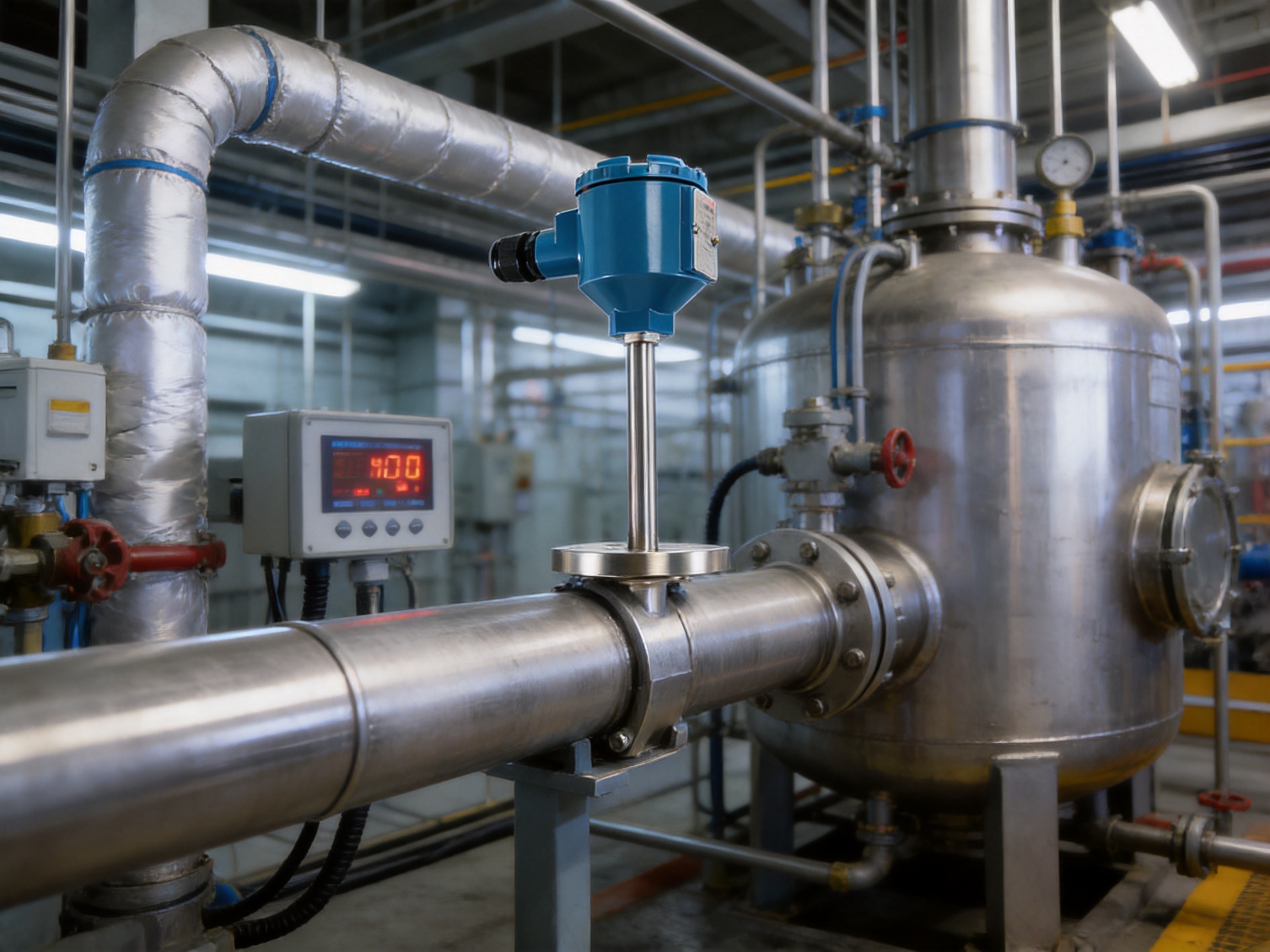
Refineries contain many locations where hydrocarbons are processed at elevated temperatures. Temperature measurement may be required in process vessels, pipelines, heaters, heat exchangers, distillation systems, storage units, and utility systems. Reliable field sensors help operators maintain process conditions and detect deviations before they become serious problems.
An explosion-proof temperature sensor is appropriate for locations where flammable vapor may be present. Its measurement can support product quality, energy management, equipment protection, and alarm functions. Correct selection of the sheath and process connection is particularly important because refinery service may involve corrosive compounds, pressure, vibration, and rapid temperature changes.
Chemical and petrochemical processes often depend on carefully controlled reaction temperatures. A temperature that is too low may reduce yield or increase processing time, while an excessive temperature may accelerate unwanted reactions or damage equipment. The Explosion-proof RTD can be used to monitor reactors, transfer lines, storage tanks, heating systems, and cooling systems.
Because chemical media vary widely, the product must be selected with attention to chemical compatibility. The process engineer should identify corrosive components, concentration, pressure, flow, and expected temperature cycling. Where the medium can attack the protection tube or process fitting, a suitable material or additional protection strategy may be required.
Power plants use temperature measurement throughout fuel systems, steam systems, combustion equipment, turbines, boilers, heat recovery equipment, transformers, and auxiliary systems. Some areas may contain fuel gases, oil vapors, or other combustible substances. Temperature sensors provide information used for operating efficiency, equipment protection, maintenance planning, and safety monitoring.
In high-temperature power applications, response time and long-term stability are important. Sensors may experience vibration, thermal cycling, pressure, and continuous operation. The installation should be mechanically secure and arranged so that the sensor can be inspected or replaced without unnecessary disruption.
Industrial manufacturing plants use temperature sensors in furnaces, ovens, drying systems, coating lines, heat-treatment equipment, material-handling systems, and process machinery. Depending on the material being processed, combustible dust or vapors may be present. An explosion-proof configuration can help address the safety requirements of selected production areas.
Accurate temperature measurement supports product consistency. In heat treatment, for example, temperature uniformity can affect hardness, strength, dimensional stability, and surface properties. In coating and drying, it can influence curing, adhesion, solvent removal, and appearance. In general manufacturing, temperature data may also help identify abnormal friction, blocked cooling, or heater faults.
Tank farms, loading stations, transfer pipelines, and fuel-handling areas require temperature information for inventory management, process control, and safety monitoring. Temperature affects fluid density, viscosity, vapor formation, and pumping behavior. In these locations, the presence of flammable material makes appropriate equipment selection essential.
The sensor configuration should consider tank geometry, installation height, access requirements, process connection, environmental exposure, and the possibility of condensation or weather-related damage. A complete installation plan should include cable routing, sealing, grounding, inspection access, and compatibility with the site’s hazardous-area requirements.
Before installing the Explosion-proof RTD, verify the medium, temperature range, pressure, flow conditions, hazardous-area classification, sensor length, connection type, and receiving instrument. Confirm that the selected model matches the approved design documentation and that all associated fittings are suitable for the same environment.
Do not install a sensor based only on physical fit. A probe may fit into a process opening but still be unsuitable because of incorrect material, insufficient temperature rating, inadequate insertion length, poor sealing, or inappropriate hazardous-area protection.
The sensor should be mounted at a representative measurement point and installed with appropriate fittings approved for the hazardous environment. It must be mechanically secure and protected from excessive vibration, impact, bending, and accidental damage.
For pipe installation, the sensing tip should generally reach an area where it can respond to the process temperature rather than merely measuring the pipe wall. For tanks and vessels, the location should reflect the temperature of the relevant process zone. For surface measurements, the sensor should have firm thermal contact and suitable insulation against ambient interference when required.
Connect the sensor to the display instrument, recorder, electronic computing system, transmitter, or control system according to the approved wiring specification. Use suitable cables, glands, seals, terminals, and grounding arrangements. Connections must remain secure during vibration and thermal cycling.
Incorrect wiring can introduce measurement error, increase lead resistance, or cause unstable readings. For longer cable runs, the wiring configuration and receiving instrument should be selected to minimize the influence of lead resistance and electrical interference. The connection enclosure must be closed and secured in accordance with the relevant protection requirements before the equipment is energized.
After installation, allow the sensor to stabilize in the operating environment before using its output for important control or safety decisions. The stabilization period depends on the sensor’s construction, installation method, process flow, and temperature difference between the sensor and the medium.
Initial readings should be compared with expected process conditions or an independent reference where practical. An unexpected reading may result from incorrect wiring, insufficient insertion, poor thermal contact, instrument configuration, or an actual process abnormality. Verification at commissioning helps prevent avoidable operating problems.
The Explosion-proof RTD requires limited routine maintenance when it is correctly selected and installed. Nevertheless, periodic inspection is necessary because the operating environment can change over time. Maintenance personnel should examine the sensor body, connection enclosure, cable, mounting hardware, seals, and visible protection components for damage or deterioration.
Inspection should include the following activities:
• Check for cracks, deformation, corrosion, loose fittings, or other mechanical damage.
• Confirm that cable glands, terminals, covers, and sealing components remain secure.
• Inspect for process leakage around the mounting connection.
• Verify that the sensor remains firmly positioned and has not shifted because of vibration.
• Compare the reading with a reliable reference or process expectation when appropriate.
• Review historical trends for sudden changes, unusual noise, or gradual drift.
• Check the receiving instrument and wiring if the output becomes unstable.
• Follow site procedures before opening or removing equipment in a hazardous area.
Do not attempt repairs that could compromise the explosion-protection design. If the sensor housing, sealing arrangement, cable entry, or protective structure is damaged, the unit should be evaluated by qualified personnel. Replacement parts must be compatible with the approved configuration.
Reliable temperature instruments begin with controlled raw materials. Alloy composition, conductor quality, insulation performance, sheath material, connection components, and mechanical parts all influence the final product. Xinguo Group’s related capabilities in alloy wire, cables, instruments, and precious-metal materials provide a foundation for coordinated material management.
During manufacturing, process control should address dimensional accuracy, assembly consistency, insulation integrity, connection quality, sealing, mechanical strength, and electrical performance. The exact inspection program depends on the product configuration, but a disciplined process helps ensure that each sensor meets the required design parameters.
Final inspection is especially important for products intended for hazardous industrial environments. The completed sensor should be reviewed against the order specification, drawings, technical requirements, and applicable documentation. Where required, inspection records and product certificates should be prepared for customer review and project acceptance.
Traceability is another important manufacturing strength. Clear identification of materials, production batches, inspection results, and finished products can help customers manage installation records, maintenance histories, and future replacement orders. When multiple sensors are installed throughout a plant, consistent identification makes troubleshooting and inventory control easier.
When purchasing an Explosion-proof RTD, buyers should evaluate more than the unit price. The most suitable product is the one that meets the complete technical, safety, installation, and service requirements of the project.
Important questions include:
• What is the exact normal and maximum temperature?
• Is the stated 0°C to 1300°C range required in full, or is a narrower operating range applicable?
• Is an RTD the preferred sensing technology for the process, or should a thermocouple be considered?
• What medium is being measured, and is it corrosive or abrasive?
• What are the process pressure and flow conditions?
• What are the hazardous-area classification and required protection documentation?
• What connection, insertion length, sheath, cable, and mounting arrangement are required?
• Will the sensor connect to a local display, recorder, transmitter, PLC, or distributed control system?
• What accuracy, response time, stability, and calibration requirements apply?
• What inspection records, certificates, drawings, and manuals are needed for project acceptance?
• Are spare sensors required, and can future replacement units be matched to the original specification?
Working with a manufacturer that produces both instruments and related materials can simplify communication. Instead of coordinating several unrelated suppliers, engineering teams may obtain technical assistance, product customization, and documentation through one established industrial group.

Industrial temperature sensors are small compared with the equipment they monitor, but their performance can influence large and expensive operations. A sensor failure may interrupt production, cause a false alarm, hide a developing fault, or force personnel to enter a hazardous area for investigation. Manufacturing experience therefore matters because reliability is built through many details rather than through one visible feature.
Experience supports better material choices, more consistent assembly, stronger process documentation, and more practical application advice. It also helps a manufacturer understand the difference between a sensor that performs adequately in a controlled test and one that continues to operate in a hot, vibrating, chemically exposed industrial environment.
Xinguo Group’s history since 1997, broad product portfolio, technical workforce, production facilities, and management certifications provide a strong basis for serving industrial customers. Its headquarters and principal operations in Anhui Province support manufacturing and coordination across instruments, alloys, cables, and related components.
The group’s stated principles include customer-first service, consistent quality, pursuit of perfection, continuous improvement, integrity, compliance, technical innovation, and sustainable growth. These principles are relevant to long-term industrial supply because customers often require technical support not only at the time of purchase but also during installation, commissioning, maintenance, and future expansion.
Industrial manufacturing must address both product quality and operational responsibility. The group’s ISO14001 Environmental Management System certification reflects a structured approach to environmental management. Responsible manufacturing includes attention to material use, energy consumption, waste handling, emissions control, and efficient production practices.
Its GB/T28001 Occupational Health and Safety Management System certification also indicates attention to workplace safety. This is particularly relevant for a manufacturer serving hazardous industries. A supplier that takes occupational safety seriously is better positioned to understand the importance of controlled procedures, risk assessment, training, and disciplined production management.
Environmental and safety management can also benefit customers indirectly. More organized production generally supports clearer documentation, better process control, and stronger accountability. These qualities contribute to a dependable supply relationship and support customers’ own quality and compliance objectives.
Documentation is an essential part of an industrial temperature instrument. A complete supply package may include product specifications, dimensional drawings, wiring information, installation instructions, inspection records, certificates, calibration information, and hazardous-area documentation where applicable.
Good documentation helps engineers verify compatibility before installation. It helps technicians perform correct wiring and commissioning. It helps maintenance departments identify replacement parts and troubleshoot abnormal readings. It also provides project teams with evidence that the supplied equipment meets the agreed requirements.
Customers should communicate documentation needs at the inquiry stage. Large projects may require document approval before production, inspection plans, material certificates, packing records, or customized nameplate information. Early communication reduces delays and helps the manufacturer organize production and quality records effectively.
Technical support is equally important. Questions about temperature range, process connection, installation location, signal wiring, or hazardous-area use should be directed to qualified technical personnel. An experienced manufacturer can help customers avoid common selection errors and identify when a different sensing technology or protective arrangement is more suitable.
The stated product range is 0°C to 1300°C. The actual usable range depends on the selected sensing element, protection tube, sheath material, insulation, connection arrangement, and process conditions. Applications near the upper end of the range should be reviewed technically before ordering.
Yes. The Explosion-proof RTD is specifically intended for industrial environments where hydrocarbons or other explosive substances may be present. However, the complete product configuration and installation must match the hazardous-area requirements. Customers should verify the applicable protection documentation, classification, and installation practices for the project.
It can be used for direct measurement of liquids, steam, gases, and solid surfaces, provided that the selected construction is suitable for the temperature, pressure, chemical exposure, mechanical conditions, and mounting method of the application.
The sensor can be connected to compatible display instruments, recording instrumentation, electronic computing systems, transmitters, controllers, and other industrial measurement or control facilities. Wiring and configuration must follow the product specification and the requirements of the receiving instrument.
It is more suitable when the installation is located in a hazardous area requiring an appropriate explosion-protection arrangement. A standard RTD may be adequate for a non-hazardous environment, but it should not be substituted for a properly selected hazardous-area product where explosive substances may be present.
The sensor is designed to provide stable and accurate industrial temperature measurement. Actual accuracy depends on the sensing element, tolerance class, calibration, wiring, installation, process conditions, and receiving instrument. Customers should specify the required accuracy so that the correct configuration can be selected.
Industrial temperature sensors are commonly configured according to insertion length, process connection, cable arrangement, sheath material, mounting method, and measurement requirements. Customers should provide complete technical information so the manufacturer can evaluate the requested configuration and confirm feasibility.
Routine maintenance is generally limited to periodic inspection of the sensor body, mounting connection, cable, enclosure, seals, and electrical connections. The reading should also be reviewed for unexpected drift or instability. Any inspection or removal in a hazardous area must follow the site’s approved safety procedures.
Check the wiring, terminals, cable condition, receiving instrument, grounding, and mechanical installation. Also consider vibration, poor thermal contact, insufficient insertion depth, electrical interference, or an actual process fluctuation. If the problem continues, the sensor should be inspected by qualified personnel rather than repaired in an unauthorized manner.
An integrated manufacturer with capabilities in instruments, alloy materials, cables, and related components can provide better coordination across the measurement chain. It may also offer more consistent product documentation, technical communication, customization support, and replacement planning.
A practical workflow helps ensure that the Explosion-proof RTD performs as intended throughout its service life.
First, define the measurement objective. Identify whether the sensor is used for indication, recording, process control, alarm generation, equipment protection, or a combination of these functions.
Second, document the process conditions. Record the normal, minimum, maximum, and transient temperatures; process pressure; medium composition; flow conditions; vibration; corrosion; and available installation space.
Third, confirm the hazardous-area requirements. Determine the area classification, protection concept, temperature class, documentation requirements, cable entry arrangements, and applicable local or international standards.
Fourth, select the sensing technology and mechanical configuration. Confirm whether an RTD is appropriate for the required range and accuracy, and then select the suitable sheath, mounting, insertion length, connection, and wiring arrangement.
Fifth, review drawings and technical documents before production. This step can identify errors in dimensions, connection type, cable length, or instrument compatibility before the sensor is manufactured.
Sixth, inspect the delivered product. Check the model, nameplate, dimensions, documents, certificates, and visible condition against the purchase order.
Seventh, install and commission the sensor according to the approved procedures. Verify secure mounting, correct wiring, appropriate sealing, stable readings, and proper integration with the control or monitoring system.
Finally, establish a maintenance and replacement plan. Keep records of installation locations, calibration results, inspection findings, and replacement dates. This information supports reliable operation and efficient future procurement.
The Explosion-proof RTD is designed for industrial temperature measurement where safety, durability, and signal integration are essential. Its ability to measure liquids, steam, gases, and solid surfaces across a broad stated range makes it adaptable to refineries, chemical plants, petrochemical facilities, power stations, manufacturing lines, storage systems, and other demanding environments.
Its principal advantages over ordinary temperature sensors include hazardous-area suitability, robust industrial construction, broad application flexibility, compatibility with display and recording systems, support for process control, and limited routine maintenance. These benefits are most valuable when the product is correctly matched to the process and installed as part of a complete, compliant instrumentation system.
Xinguo Group Co., Ltd. supports this product with a substantial industrial manufacturing foundation. Established in 1997, the group combines instrument production with alloy, cable, and related material capabilities. Its technical workforce, research and development resources, modern equipment, quality management systems, international standards orientation, and structured inspection procedures provide important advantages for customers seeking dependable industrial instrumentation.
For hazardous process applications, the best result comes from early technical communication. By supplying accurate process data and confirming the required protection, materials, dimensions, connections, documentation, and performance criteria, customers can obtain an Explosion-proof RTD configuration suited to their installation. Proper selection, professional manufacturing, correct installation, and planned maintenance together create the reliable temperature measurement foundation required by modern industrial operations.
1. International Electrotechnical Commission. Industrial-process measurement and control principles for temperature measurement systems.
2. International Electrotechnical Commission. Electrical apparatus for explosive gas atmospheres and hazardous-area protection practices.
3. International Organization for Standardization. ISO 9001 Quality Management Systems—Requirements.
4. International Organization for Standardization. ISO 14001 Environmental Management Systems—Requirements with Guidance for Use.
5. Xinguo Group Co., Ltd. Product information for Explosion-proof RTD temperature instruments.
6. Xinguo Group Co., Ltd. Corporate information, manufacturing capabilities, certifications, and industrial product portfolio.



 INQUIRY
 English
 عربى
 русский
 中文简体