Copper-based low-resistance heating alloy wire is an engineered electrical resistance material developed for applications that require controlled heat generation, stable resistance characteristics, reliable mechanical performance, and practical processing flexibility. Unlike pure copper wire, which is valued primarily for its excellent electrical conductivity, this alloy wire is designed to convert electrical energy into useful and controllable heat. Its carefully adjusted alloy composition provides a balance between low resistivity, resistance stability, ductility, weldability, corrosion resistance, oxidation resistance, and moderate operating temperature.
The material is manufactured with copper as its base and with alloying elements such as nickel and manganese added to modify its electrical and mechanical properties. Depending on the selected grade, the wire can be used in heating cables, electric heating components, thermal protection devices, temperature-sensitive switches, industrial heating systems, and other electrical assemblies. It can also be supplied in different diameters, flat-wire forms, and enameled-wire configurations to meet the requirements of different product structures.
For modern equipment manufacturers, the value of a heating alloy wire is not determined by resistivity alone. A successful material must also provide predictable resistance during operation, adequate tensile strength during processing, uniform heating across the working length, compatibility with insulation systems, and a service life appropriate to the application. These requirements make material consistency and manufacturing control especially important.
Xinguo Group Co., Ltd. manufactures alloy materials together with temperature instruments, cables, electrical accessories, and industrial instrumentation. Its integrated technical resources, modern production equipment, inspection procedures, and experience in alloy and instrument manufacturing support the production of copper-based low-resistance heating alloy wire for domestic and international industrial customers.
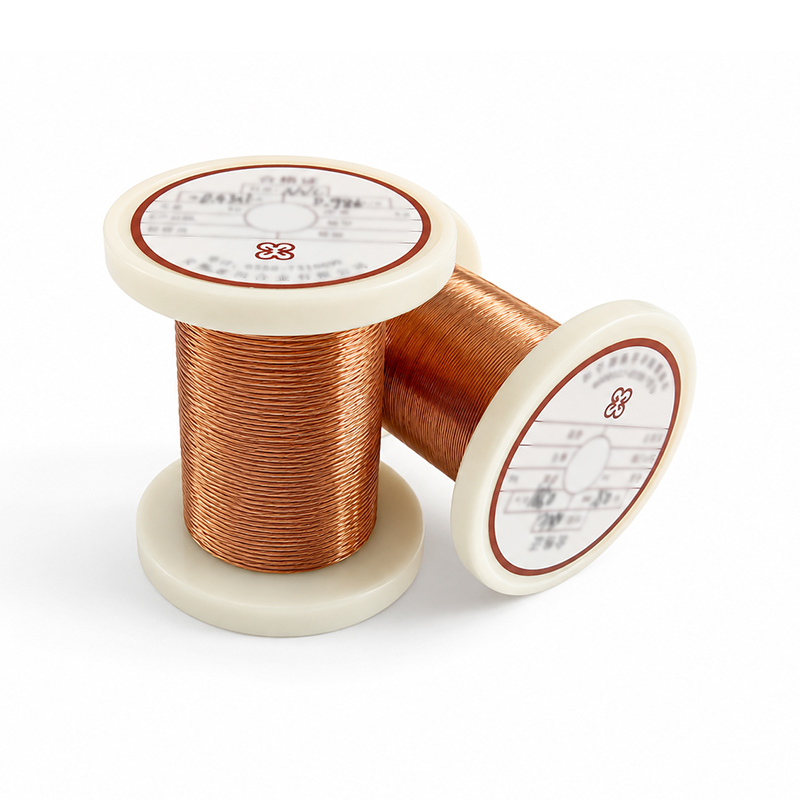
Copper-based low-resistance heating alloy wire
Electrical resistance heating is based on the conversion of electrical energy into thermal energy. When current passes through a conductor, the electrical resistance of the conductor produces heat. The amount of heat generated depends on the electrical power applied, which is related to voltage, current, and resistance. By selecting a suitable alloy and controlling the wire dimensions, engineers can design heating elements that deliver a predictable amount of heat within a defined operating range.
Pure copper is an excellent electrical conductor because it has very low resistivity. This property makes it highly suitable for power transmission, electrical connections, busbars, and conductive leads. However, the very low resistance of pure copper makes it inefficient as the active heating section of many electrical heating products. A copper-based heating alloy modifies the conductivity of copper so that the wire develops a useful and controllable resistance while retaining many of copper’s processing advantages.
The addition of nickel, manganese, and other alloying elements increases the electrical resistivity of the material and changes its temperature-resistance behavior. The result is a wire that can be used as a functional heating element rather than simply as a current-carrying conductor. The alloy is also designed to maintain stable performance across its intended working temperature range.
Resistivity is one of the most important technical parameters for a heating alloy. It determines how much resistance is produced for a given length and cross-sectional area. A material with higher resistivity can generate the required resistance using a shorter length or a larger cross section. A material with lower resistivity may be preferred when a longer heating path, lower surface loading, or a particular product geometry is needed.
The grades available in this product series cover resistivity values from approximately 0.03 to 0.49 micro-ohm meters. This range allows designers to choose a grade according to voltage, power, wire length, heating density, physical dimensions, and thermal design. The availability of multiple grades is an advantage over a one-grade material system because it reduces the need to compromise between electrical performance and mechanical requirements.
The temperature coefficient of resistance indicates how strongly the electrical resistance changes as temperature changes. For many heating and electrical protection applications, a lower coefficient is desirable because it helps maintain more consistent electrical behavior during temperature fluctuations.
The listed grades have temperature coefficient values that range from less than 100 to less than -6 in the specified test format. Several higher-resistivity grades provide particularly low coefficient values. This characteristic can be useful in systems where stable heat output, predictable current, or accurate thermal response is required.
A lower temperature coefficient does not mean that resistance remains absolutely unchanged under all conditions. Actual performance also depends on the operating temperature, wire geometry, installation method, heat dissipation, electrical contacts, insulation, and surrounding environment. Nevertheless, controlling the temperature coefficient at the material level gives equipment designers a stronger basis for achieving stable system performance.
Uniform heat generation is essential in underfloor heating, wall heating, electric heating pads, compact appliances, and industrial heating structures. Localized resistance variation can create hot spots, uneven temperature distribution, accelerated insulation aging, or premature component failure. Consistent alloy composition and dimensional control help the wire deliver a more uniform thermal output along its effective heating length.
Uniform heating also improves product comfort and energy efficiency. In domestic heating systems, it helps prevent areas that are too hot or too cold. In industrial equipment, it supports more consistent drying, temperature maintenance, or process control. In small appliances, it helps reduce thermal stress on housings, heating chambers, seals, and adjacent electronic components.
The product series includes grades identified as NC003, NC005, NC010, NC012, NC015, NC020, NC025, NC030, NC035, NC040, and NC050. The code structure distinguishes materials with different combinations of working temperature, resistivity, temperature coefficient, thermoelectric response, tensile strength, and elongation.
| Grade | Maximum Working Temperature (°C) | Resistivity (μΩ·m) | Temperature Coefficient of Resistance | EMF Against Copper (μV/°C) | Tensile Strength (MPa) | Elongation, Diameter ≤ 1.00 mm (%) | Elongation, Diameter > 1.00 mm (%) |
|---|---|---|---|---|---|---|---|
| NC003 | 200 | 0.03 | <100 | -8 | 210 | 18 | 25 |
| NC005 | 200 | 0.05 | <120 | -12 | 220 | 18 | 25 |
| NC010 | 220 | 0.10 | <60 | -18 | 250 | 18 | 25 |
| NC012 | 250 | 0.12 | <57 | -22 | 270 | 18 | 25 |
| NC015 | 250 | 0.15 | <50 | -25 | 290 | 20 | 25 |
| NC020 | 300 | 0.20 | <38 | -28 | 310 | 20 | 25 |
| NC025 | 300 | 0.25 | <25 | -32 | 340 | 20 | 25 |
| NC030 | 300 | 0.30 | <16 | -34 | 350 | 20 | 25 |
| NC035 | 350 | 0.35 | <10 | -37 | 400 | 20 | 25 |
| NC040 | 350 | 0.40 | 0 | -39 | 400 | 20 | 25 |
| NC050 | 400 | 0.49 | <-6 | -43 | 420 | 20 | 25 |
The values in the table are representative technical data supplied for the listed grades. Final design decisions should be based on the agreed material specification, actual wire diameter, delivery condition, test method, insulation system, and application environment.
The maximum working temperatures of the listed grades range from 200°C to 400°C. Lower-temperature grades are appropriate for moderate heating structures, thermal response components, and compact consumer products. Grades with higher working temperatures can be considered for more demanding industrial heating systems, provided that the insulation, support structure, electrical connections, and surrounding materials are also suitable for the required temperature.
The maximum working temperature should not be interpreted as a universal continuous-use guarantee for every design. Heating element performance depends on heat dissipation, atmosphere, current density, thermal cycling, surface condition, mechanical tension, and contact configuration. Engineers should establish a safety margin between the normal operating temperature and the material’s stated maximum working temperature.
Mechanical properties are essential because heating wire is frequently wound, embedded, stretched, shaped, welded, or installed within a protective structure. Tensile strength values for the listed materials range from approximately 210 MPa to 420 MPa. Elongation values are generally 18% to 20% for wire with a diameter of 1.00 mm or less and 25% for wire above 1.00 mm.
This combination of strength and ductility helps the wire withstand normal handling and forming operations while reducing the risk of cracking or breakage. Ductility is particularly important when a wire is wound around a mandrel, bent into a compact heating path, embedded in a flexible cable, or connected to a terminal by welding or crimping.
The product data also identifies the electromotive force against copper. The values range from -8 to -43 microvolts per degree Celsius, depending on the grade. This parameter can be relevant when the alloy is connected to copper conductors or used near temperature-sensing circuits. It provides useful information for engineers evaluating thermoelectric effects, junction behavior, and potential measurement influences.
Although the product is primarily designed as a resistance heating alloy rather than as a thermocouple material, the electromotive force value should be considered where dissimilar-metal junctions and temperature gradients exist. Careful connection design can help minimize unwanted electrical signals or ensure that such signals are properly accounted for.
The most fundamental advantage of copper-based low-resistance heating alloy wire over pure copper wire is its ability to provide useful electrical resistance. Pure copper is highly conductive and therefore produces limited heat when used as a practical heating path. Increasing the length of pure copper to obtain a required resistance may create unnecessary installation complexity and still result in an unsuitable temperature-resistance response.
By contrast, a copper-based heating alloy is formulated to offer controllable resistivity while maintaining good workability. This allows the wire to function as an active heating element in a compact and engineered structure. It can be designed around the required voltage and power rather than being selected only for conductivity.
A second advantage is the range of available grades. Different equipment designs require different combinations of resistance, temperature capability, mechanical strength, and resistance stability. A broad grade selection gives designers greater flexibility than a single generic conductor or an alloy without controlled electrical characteristics.
A third advantage is the balance between electrical and mechanical performance. Some high-resistance materials may be difficult to form, weld, or handle. The listed copper-based grades combine useful resistivity with elongation values suitable for common processing operations. This is especially valuable for manufacturers producing long lengths of heating cable, intricate heating paths, or compact electrical assemblies.
A fourth advantage is corrosion and oxidation resistance relative to ordinary untreated copper in demanding environments. The alloy structure supports use in humid conditions and other complex working environments. However, resistance to corrosion is influenced by temperature, atmosphere, contaminants, insulation, surface treatment, and electrical potential. Proper material selection and system protection remain necessary.
A fifth advantage is the moderate operating temperature range. Many applications do not require extremely high-temperature resistance but do require dependable operation at temperatures from approximately 200°C to 400°C. The product series is designed for this practical range, helping manufacturers avoid the unnecessary cost or processing difficulty associated with materials intended for much higher temperatures.
Some heating alloys are available only in a limited resistivity range or in fixed standard dimensions. This can force equipment manufacturers to redesign heating paths, use additional connections, or accept inefficient power distribution. The NC grade family provides multiple electrical options, making it easier to match the alloy to the intended voltage and power requirements.
For example, a low-resistivity grade may be appropriate for a longer heating path or a structure that needs a relatively large cross section. A higher-resistivity grade may be more suitable where space is limited and the required resistance must be achieved within a shorter length. Selecting the correct grade can improve the balance between heating performance, packaging, and manufacturing cost.
Resistance heating applications are sensitive to variation. Differences in alloy composition, diameter, surface condition, or heat treatment can affect resistance per unit length and the uniformity of heat generation. A manufacturer with controlled melting, processing, drawing, inspection, and documentation procedures can reduce these variations and provide more reliable material for series production.
Manufacturing consistency is also important for downstream operations. Stable wire dimensions make it easier to control winding tension, forming radius, insulation thickness, welding parameters, and finished resistance. These benefits can reduce adjustment time and improve production repeatability.
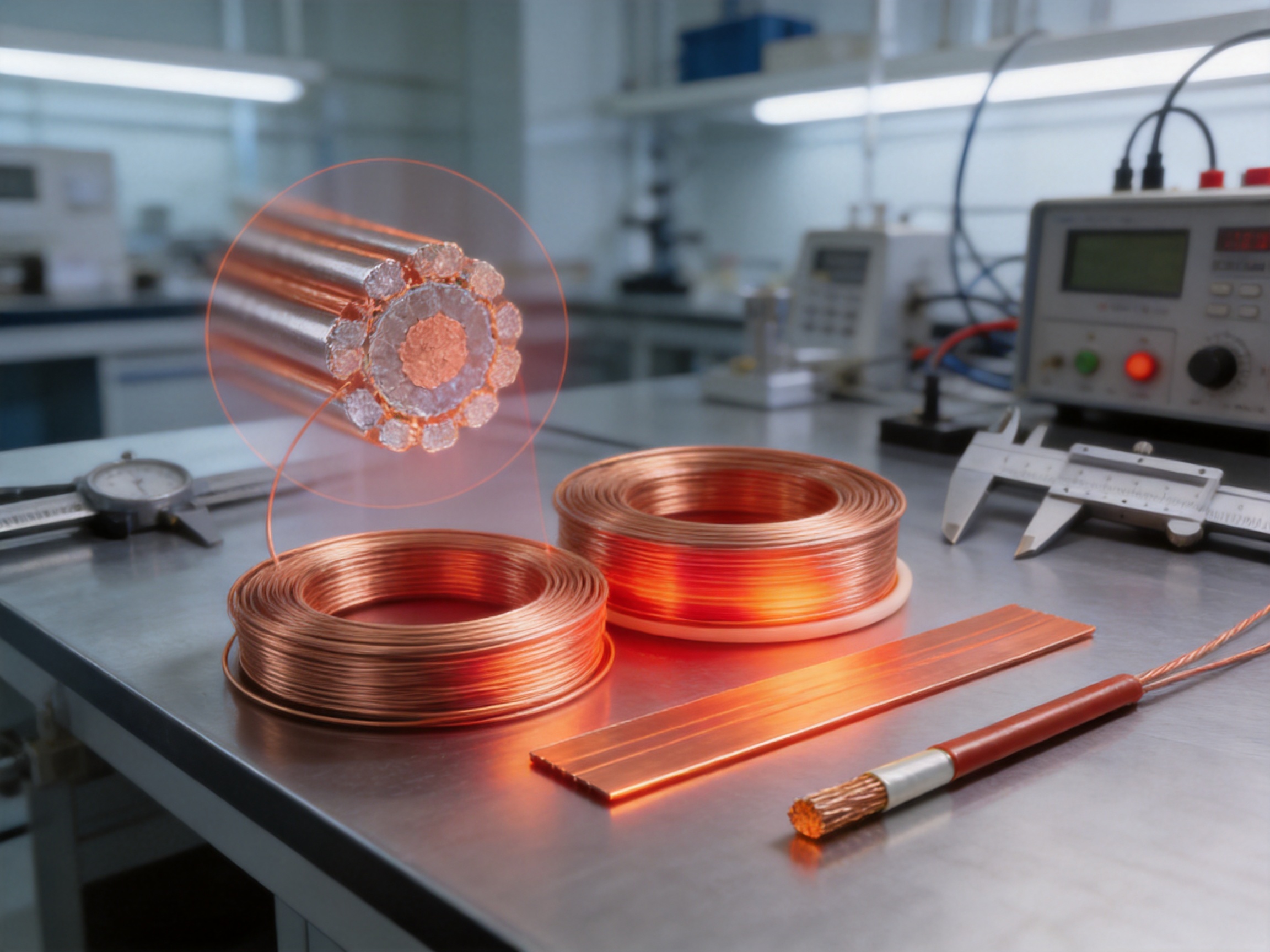
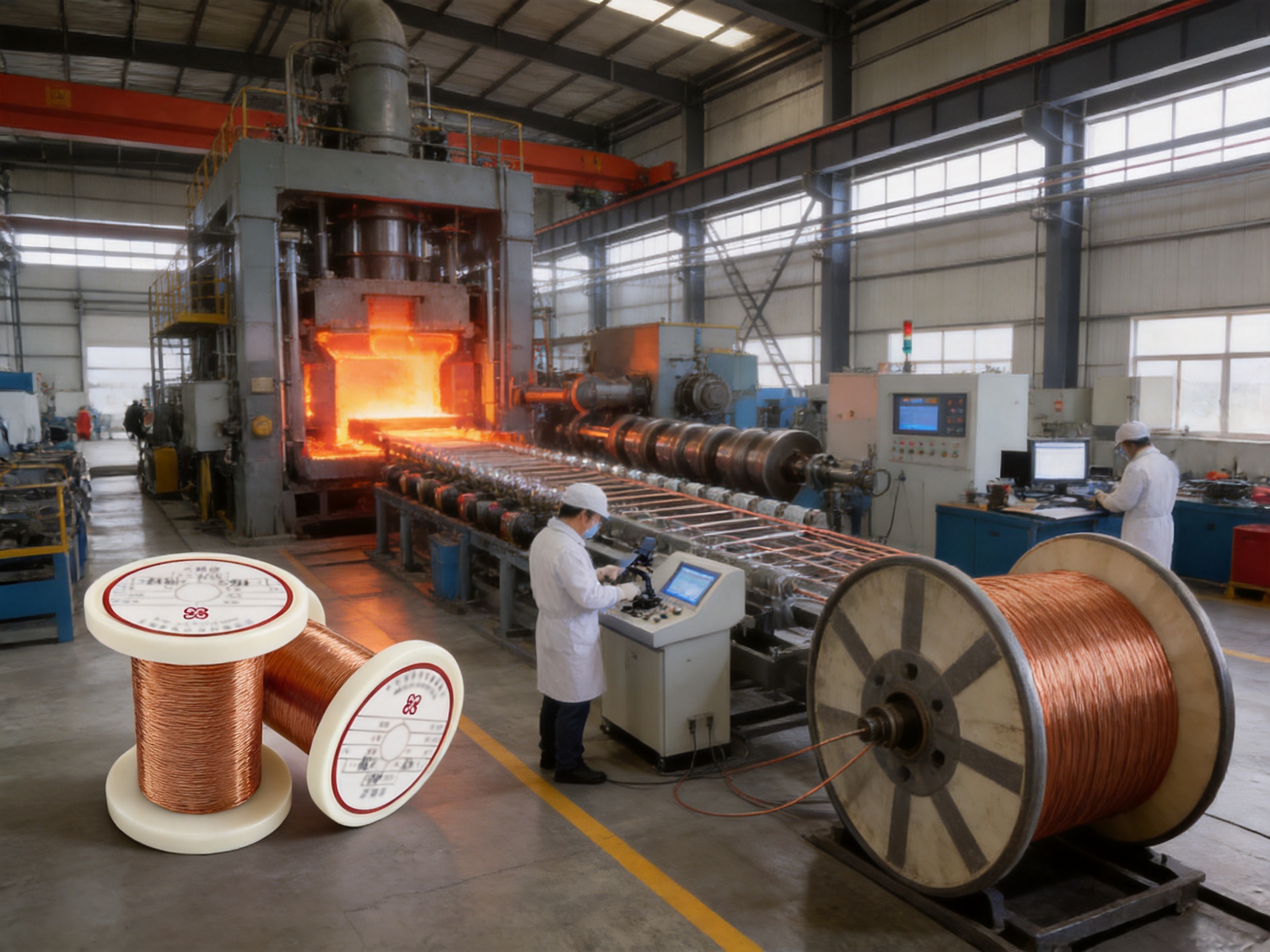
The performance of a resistance alloy wire begins with material design and continues through every stage of manufacturing. A professional production system must control the chemical composition, melting condition, casting or forming condition, hot and cold working, intermediate annealing, final drawing, surface quality, dimensional accuracy, and electrical properties.
Copper is used as the base material because it provides good thermal and electrical conductivity, ductility, and processing flexibility. Nickel, manganese, and other alloying elements are introduced to adjust resistivity, temperature coefficient, mechanical strength, oxidation behavior, and thermoelectric characteristics.
Composition control is critical because small changes in alloy content may influence resistance, tensile strength, elongation, and thermal performance. The production process therefore begins with controlled raw material selection and accurate weighing of alloy additions. The selected formulation is matched to the requirements of each grade, such as NC003, NC020, NC035, or NC050.
A stable composition also supports consistent batch-to-batch performance. When customers use the wire in automated manufacturing, predictable material properties help them establish stable process parameters and reduce the need for repeated production adjustments.
During melting, the constituent materials must be combined under controlled conditions to achieve a uniform alloy. Temperature, holding time, atmosphere, charge sequence, and stirring or mixing conditions may all influence the final structure. Good melting practice helps reduce segregation, contamination, and unwanted inclusions.
After melting, homogenization and controlled solidification help create a more consistent internal structure. This is important because localized variations in composition can create resistance differences along the wire. A uniform starting material provides a stronger foundation for later rolling, drawing, and heat treatment.
The cast or semi-finished alloy is processed into an intermediate form through suitable hot-working or forming operations. These steps reduce the cross section and prepare the material for precision cold drawing. Process control is required to avoid excessive work hardening, surface defects, internal cracking, or dimensional instability.
Intermediate annealing may be used to restore ductility after deformation. The exact thermal cycle depends on the alloy grade, cross section, and required final properties. Correctly controlled annealing allows the material to undergo further drawing while maintaining an appropriate balance between tensile strength and elongation.
Wire drawing reduces the material to the required diameter and improves dimensional accuracy. Multiple drawing passes may be used, with lubrication, die condition, drawing speed, reduction ratio, and cooling carefully controlled. These variables influence surface quality, residual stress, roundness, tensile strength, and elongation.
Precision drawing is especially important for heating wire because resistance depends directly on cross-sectional area. Even a relatively small dimensional deviation can affect resistance per unit length and therefore change heat output. Stable diameter control supports consistent performance in winding, embedding, and insulation operations.
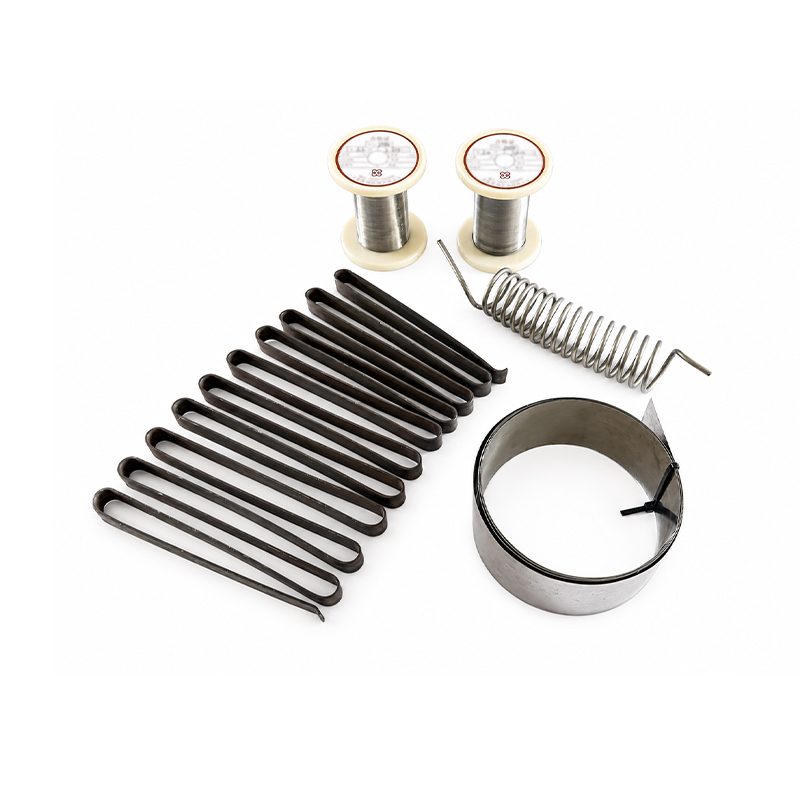
Depending on the customer’s requirements, the material can be supplied as round wire, flat wire, or enameled wire. Flat wire may be useful where a broader contact area or lower profile is required. Enameled wire can provide an insulating layer for compact electrical structures, subject to the thermal rating and compatibility of the selected enamel system.
Surface condition influences welding, insulation adhesion, electrical contact quality, and long-term stability. The wire must be processed and handled in a way that minimizes scale, oil residue, embedded particles, scratches, and other defects. Suitable cleaning or surface preparation may be applied according to the product configuration and customer requirements.
For enameled products, coating uniformity, insulation thickness, pinhole control, adhesion, flexibility, and thermal resistance are important considerations. The enamel must be selected according to the working temperature and the mechanical demands of winding or forming.
Inspection is conducted at different stages of manufacturing rather than only at final delivery. Typical quality-control activities may include chemical composition verification, diameter measurement, surface inspection, resistivity testing, tensile strength testing, elongation testing, and evaluation of temperature-related electrical characteristics.
Final inspection confirms that the finished wire conforms to the agreed technical specification. Testing records support traceability and help customers verify that the product is suitable for their application. In addition to routine tests, technical discussions can be used to establish special inspection requirements for customized dimensions, resistance limits, packaging, or surface conditions.
Xinguo Group has production and technical capabilities covering alloy materials, temperature instruments, cables, electrical accessories, pressure instruments, flow meters, and level instruments. This broad industrial background is valuable because heating alloy wire is often integrated into complete sensing, heating, control, or instrumentation systems.
The group’s structure includes Anhui Xinguo Alloy Co., Ltd., Anhui Xinguo Instrument Co., Ltd., Shenyang Oudi Instrument Manufacturing Co., Ltd., Anhui Xinguo Cable Co., Ltd., and Anhui Xinguo Precious Metal Co., Ltd. Cooperation among these units can support cross-disciplinary product development, material selection, cable construction, instrumentation integration, and technical service.
The company reports a modern quality management system and certifications including ISO 9001 Quality Management System, ISO 14001 Environmental Management System, and GB/T 28001 Occupational Health and Safety Management System. These systems provide a framework for process management, environmental responsibility, occupational safety, corrective action, and continuous improvement.
Underfloor heating systems require a heating conductor that can provide stable output over a long installation path. The wire may be arranged in a cable, mat, or embedded structure beneath the floor surface. Uniform resistance and reliable insulation are essential because repairs after installation can be difficult and costly.
Copper-based low-resistance heating alloy wire can be selected for heating cables and related systems because it provides controlled resistance, practical forming characteristics, and stable heat generation. The final cable must include suitable insulation, moisture protection, mechanical reinforcement, and temperature control. The wire itself is one component of a complete system and must be evaluated together with the surrounding construction.
Wall heating applications use similar principles but may involve different installation geometry, thermal transfer conditions, and surface temperature requirements. The material can be shaped or embedded according to the design of the heating panel or cable assembly.
Electric heating pads require flexible or semi-flexible heating paths that can distribute heat over a defined area. The alloy wire may be wound, stitched, embedded, or integrated into a layered structure. Ductility and consistent resistance are important during assembly because the wire may be formed into repeated patterns.
A suitable pad design should control wire spacing, insulation, bending radius, current density, and surface temperature. The selected alloy grade should match the intended voltage and power, while the insulation system should be rated for the maximum operating temperature and expected flexing conditions.
Small household appliances often use compact heating components that must produce heat quickly and safely within a restricted space. Copper-based heating alloy wire can be used in heating elements and temperature control structures where moderate temperature capability, stable electrical behavior, and reliable connections are required.
In such products, the wire is typically installed with ceramic, mica, metal, polymer, or other insulating and supporting materials. The material selection must consider moisture, repeated heating and cooling cycles, electrical isolation, contact resistance, and the possibility of scale or contamination in the appliance environment.
Rice cookers and similar appliances require controlled heating to maintain cooking temperature and, in some designs, to switch between cooking and warming modes. The alloy wire may function as part of a heating plate, heating ring, thermal response device, or temperature-sensitive switching assembly.
The relatively moderate operating range of the available grades makes them suitable for many appliance heating structures, provided that the final design is properly insulated and thermally controlled. The wire can be supplied in configurations that support compact assembly and repeatable production.
In electrical protection devices, heat is used to create a controlled response. A current passing through a resistance component causes temperature rise, which can activate a bimetallic element, release mechanism, or temperature-sensitive switch. The resistance must be sufficiently predictable to achieve the intended trip behavior.
Copper-based low-resistance heating alloy wire can be used in thermal overload relays, circuit breakers, and related protective components. The appropriate grade is selected according to current, resistance, response time, thermal mass, ambient temperature, and required reset behavior.
For protection equipment, the wire must be evaluated as part of the complete protective device. Electrical clearance, insulation, contact design, mechanical movement, calibration, and applicable safety standards all influence final performance.
Industrial and commercial drying equipment requires dependable heat over extended operating periods. The heating element may be arranged in coils, grids, panels, or embedded assemblies. The alloy wire must withstand the expected temperature, thermal cycling, airflow, and mechanical support conditions.
Grades with maximum working temperatures up to 400°C can be considered for moderate-temperature drying applications. Higher-temperature systems may require different alloy families or additional design measures. The selection should be based on actual air temperature, element temperature, atmosphere, surface loading, and required service life.
In industrial furnaces and temperature-control systems, stable heat generation is often more important than maximum temperature alone. The heating wire must work in coordination with a power supply, control instrument, sensor, insulation, support structure, and enclosure.
The product can support moderate-temperature furnace zones, laboratory equipment, small process heaters, and other systems where controlled resistance and manageable forming characteristics are required. Where the heating element is close to a thermocouple or other sensor, the electromotive force against copper and possible thermoelectric effects should be considered.
The basic relationship between resistance, resistivity, length, and cross-sectional area is:
R = ρL/A
In this relationship, R is the electrical resistance, ρ is the material resistivity, L is the wire length, and A is the cross-sectional area. This equation provides the starting point for selecting a grade and wire size. The final design must also consider resistance change with temperature, contact resistance, lead resistance, tolerances, and heat dissipation.
For a system operating at a specified voltage, power can be estimated using the relationship P = V²/R. For a specified current, power can be estimated using P = I²R. These calculations should be used with appropriate safety margins and verified through prototype testing.
Grade selection should begin with the required operating temperature and electrical resistance. NC003 and NC005 offer relatively low resistivity and lower maximum working temperatures. NC020 through NC030 provide intermediate resistivity and temperature capability. NC035, NC040, and NC050 provide higher resistivity and higher maximum working temperatures within the listed series.
Designers should also evaluate tensile strength, elongation, resistance coefficient, wire diameter, available installation space, forming method, and connection technology. The highest-resistivity grade is not automatically the best option. The correct material is the one that provides the required resistance within the available length while maintaining suitable mechanical and thermal performance.
When the wire is wound into a coil, the winding diameter should be selected according to the wire diameter, ductility, and required service conditions. Excessive bending or sharp forming can create localized stress and may damage the surface. Winding tension should be controlled to prevent stretching or distortion.
The coil must be supported so that it does not move excessively during heating and cooling. Repeated movement can cause fatigue, abrasion, or contact with adjacent conductive structures. Ceramic supports, mica components, insulating sleeves, or other appropriate materials may be used depending on temperature and voltage requirements.
Embedding the wire in an insulating or thermally conductive material can improve heat transfer and provide mechanical protection. However, the embedding compound must be compatible with the operating temperature, thermal expansion, moisture exposure, and electrical voltage.
Insulation design should address dielectric strength, thermal aging, flexibility, moisture resistance, flame behavior, and mechanical protection. The wire should not be operated beyond the temperature rating of the insulation, even if the alloy itself can tolerate a higher temperature.
Welding and terminal connections should be designed to maintain low and stable contact resistance. Poor connections may become hotter than the active heating section and create local failure points. The joining method should be selected according to wire diameter, alloy grade, terminal material, current, temperature, and production volume.
Because the wire is an alloy rather than pure copper, welding parameters may differ from those used for ordinary copper conductors. Production trials should be used to establish suitable current, pressure, energy, electrode geometry, and post-weld inspection requirements.
Heating elements commonly experience repeated expansion and contraction. Thermal cycling can affect wire tension, support structures, insulation, welded joints, and electrical resistance. A durable design should minimize sharp temperature gradients and avoid unnecessary mechanical restraint.
Prototype testing should reproduce the expected operating cycle, including startup, steady operation, shutdown, overload conditions where relevant, humidity, vibration, and mechanical movement. Monitoring resistance drift and temperature distribution can help identify design issues before mass production.
Different customers require different combinations of wire diameter, resistance, mechanical properties, surface finish, delivery condition, and packaging. The product can be customized according to application requirements, including wire diameter, resistivity, and mechanical performance.
Round wire is suitable for general heating elements, cables, thermal protection parts, and wound structures. Flat wire can provide a lower-profile geometry or broader contact area. Enameled wire can be used where electrical insulation must be integrated directly onto the conductor. The appropriate configuration depends on the heating pattern, insulation structure, forming process, and available installation space.
Customization may also include resistance limits, length, coil dimensions, spool type, packaging, labeling, inspection documentation, and batch traceability. For large-volume customers, a technical agreement can define the key characteristics that must remain stable from batch to batch.
Before ordering, customers should provide the intended voltage, power, operating temperature, heating length, wire diameter, installation method, atmosphere, insulation type, thermal cycling pattern, and connection method. These details help the manufacturer recommend a suitable grade and avoid selecting a material based on resistivity alone.
Material performance is only one part of procurement value. Customers also need stable delivery, technical communication, quality documentation, production capacity, and responsive after-sales support. A supplier with experience in alloy wire and industrial instrumentation can better understand the practical relationship between material properties and finished equipment performance.
Xinguo Group was founded in 1997 and is located in Tianchang City, Anhui Province, China. The group reports a registered capital of RMB 118 million, a land area of more than 150 mu, a construction area of approximately 60,000 square meters, and a workforce of nearly 300 people, including more than 50 professional technicians, senior technical experts, engineers, and assistant engineers.
This technical workforce supports product development, process optimization, quality management, equipment maintenance, application analysis, and customer service. The company’s manufacturing scope includes temperature instruments, thermocouples, instrument cables, alloy materials, pressure instruments, flow meters, level instruments, and electrical accessories.
The combination of alloy production and instrumentation manufacturing is particularly relevant to customers developing heating and temperature-control equipment. A heating element often operates together with thermocouples, temperature transmitters, controllers, pressure instruments, and cables. A supplier familiar with these related components can contribute to more coordinated system design.
The group states that its products comply with IEC international standards as well as applicable national and industrial specifications. Compliance requirements vary by product and market, so customers should confirm the specific standard, testing method, certification, and documentation required for their application before placing an order.
Modern industrial customers increasingly evaluate suppliers according to product quality, environmental management, occupational safety, and long-term sustainability. Manufacturing alloy wire involves melting, forming, drawing, heat treatment, lubrication, cleaning, inspection, and packaging. Each stage should be managed to control energy use, emissions, waste, chemical handling, and worker safety.
The company reports ISO 14001 Environmental Management System certification and GB/T 28001 Occupational Health and Safety Management System certification, in addition to ISO 9001 quality certification. These systems provide organizational frameworks for identifying risks, establishing procedures, monitoring performance, and implementing corrective actions.
Environmental and safety management also support product reliability. Well-controlled workplaces are more likely to maintain stable equipment operation, careful material handling, accurate inspection, and consistent process documentation. As a result, responsible manufacturing can contribute not only to compliance but also to better production quality.
Before purchasing copper-based low-resistance heating alloy wire, engineers and procurement teams should define the application requirements clearly. The following points can help structure the technical discussion:
1. What voltage and power must the heating element provide?
2. What resistance is required at room temperature and at operating temperature?
3. What wire length and cross-sectional area are available?
4. What is the normal operating temperature, and what is the maximum allowable temperature?
5. Will the wire be wound, embedded, welded, stretched, or repeatedly flexed?
6. What insulation material and support structure will be used?
7. Is the application exposed to humidity, oxidation, chemicals, vibration, or thermal cycling?
8. Is round wire, flat wire, or enameled wire required?
9. What tensile strength and elongation are needed for processing?
10. What resistance tolerance and dimensional tolerance are acceptable?
11. Are special inspection reports, certificates, or traceability records required?
12. What packaging and storage conditions are necessary to protect the wire?
Answering these questions before production helps the supplier recommend an appropriate grade and delivery form. It also reduces the risk of selecting a material that satisfies one parameter but fails to meet the overall system requirements.
Pure copper has very low electrical resistance and is mainly used for electrical conduction. It generally does not provide an efficient or controllable heating function in compact heating applications. Copper-based low-resistance heating alloy wire includes alloying elements that increase and control resistivity, allowing the wire to generate stable heat while retaining useful ductility, weldability, and conductivity characteristics.
The listed grades have maximum working temperatures from 200°C to 400°C. The correct grade depends on the actual operating temperature, thermal cycling, atmosphere, insulation, and mechanical structure. The complete heating assembly must be designed so that the wire, insulation, terminals, supports, and surrounding materials all remain within their permitted temperature ranges.
Yes. The material can be used as a core heating conductor in underfloor heating cables and related structures. Its controlled resistance and uniform heat-generation characteristics are suitable for distributed heating. The final system must also include suitable insulation, moisture protection, mechanical reinforcement, temperature control, and installation procedures.
The copper-based alloy structure provides good oxidation and corrosion resistance and can be considered for humid or complex working environments. However, environmental resistance depends on temperature, water exposure, chemicals, electrical potential, insulation, and surface protection. A complete application test is recommended for severe or corrosive conditions.
Yes. Wire diameter, resistivity, mechanical properties, delivery form, and other specifications can be customized according to application requirements. Customers should provide the intended use, voltage, power, temperature, heating length, forming method, and connection requirements so that the manufacturer can recommend a suitable configuration.
The answer depends on the required resistance and available heating length. A higher-resistivity grade may achieve the required resistance in a shorter length, while a lower-resistivity grade may be preferable for a longer heating path or a larger conductor cross section. Working temperature, mechanical properties, and temperature coefficient must also be considered.
The material has good weldability and can be integrated into heating structures by welding or other suitable joining methods. Welding parameters should be established through trials because alloy grade, wire diameter, terminal material, current, pressure, and heat input all affect joint quality.
The material can be processed into enameled wire when an insulated conductor is required. The enamel system must be selected according to the operating temperature, voltage, flexibility, winding process, and environmental conditions. The thermal rating of the enamel may be lower than the temperature capability of the alloy itself.
Important information may include grade, resistivity, wire diameter, dimensional tolerance, tensile strength, elongation, maximum working temperature, surface condition, delivery form, length, packaging, and inspection requirements. For series production, customers may also request batch traceability and test documentation.
The temperature coefficient indicates how resistance changes with temperature. A lower coefficient can help maintain more predictable current and heat output as the wire warms. It is especially useful in applications that require stable heating or controlled thermal response. Actual system behavior still depends on heat dissipation, installation, power control, and operating conditions.
No material is suitable for every heating application. Copper-based low-resistance heating alloy wire is designed for low-to-moderate resistance heating and related thermal response applications, with the listed grades operating up to approximately 400°C. Applications requiring substantially higher temperatures, special atmospheres, or unusual chemical resistance may require another alloy family.
A qualified manufacturer can review electrical calculations, operating temperature, wire dimensions, forming requirements, insulation, connection methods, and environmental conditions. It can also discuss customized resistivity, mechanical properties, surface condition, packaging, inspection, and delivery arrangements. Early technical communication helps reduce design changes later in the production process.
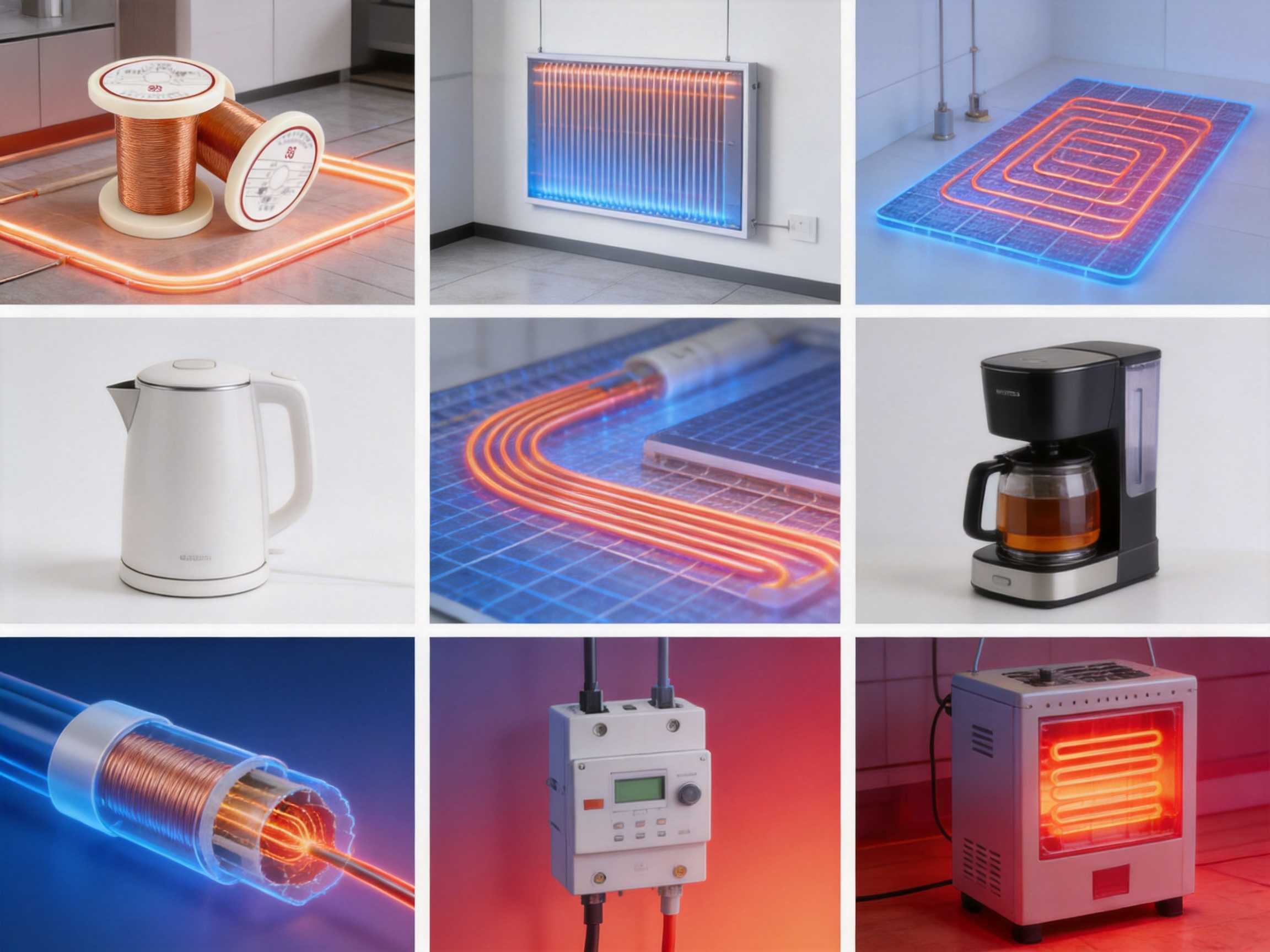
Copper-based low-resistance heating alloy wire provides a practical balance between controlled electrical resistance, stable heat generation, mechanical flexibility, weldability, corrosion resistance, and moderate temperature capability. Its main advantage over pure copper wire is that it is engineered to function as a heating material rather than merely as a conductor. Its range of grades also gives equipment manufacturers greater flexibility when matching resistance, temperature, wire length, and structural dimensions.
The NC003 through NC050 product series covers a broad range of resistivity and working temperature requirements. Tensile strength values up to approximately 420 MPa, elongation suitable for forming, and controlled temperature coefficients support use in heating cables, appliances, thermal protection components, drying equipment, heating furnaces, and temperature-control systems.
Product performance depends on more than alloy composition. Controlled melting, homogenization, drawing, annealing, surface treatment, dimensional inspection, resistance testing, and mechanical testing are all important to achieving consistent results. Manufacturing systems based on quality, environmental, and occupational management further strengthen supply reliability.
With experience in alloy materials, cables, temperature instruments, and industrial instrumentation, Xinguo Group Co., Ltd. can support customers seeking both material supply and application-oriented technical cooperation. By selecting the appropriate grade, designing suitable insulation and connections, and validating the completed assembly through testing, manufacturers can use copper-based low-resistance heating alloy wire to develop efficient, stable, and durable thermal products.
1. IEC standards and related technical guidance for electrical resistance heating equipment and industrial electrical components.
2. ISO 9001, Quality Management Systems—Requirements.
3. ISO 14001, Environmental Management Systems—Requirements with Guidance for Use.
4. GB/T 28001, Occupational Health and Safety Management System requirements and implementation guidance.
5. General engineering principles for electrical resistance, thermal design, wire drawing, alloy processing, and heating-element construction.
6. Manufacturer-provided technical data for copper-based low-resistance heating alloy wire grades NC003 through NC050.
7. Reference materials on copper-based electrical alloys, resistance heating, temperature coefficients, welding of alloy wire, and industrial thermal management.



 INQUIRY
 English
 عربى
 русский
 中文简体