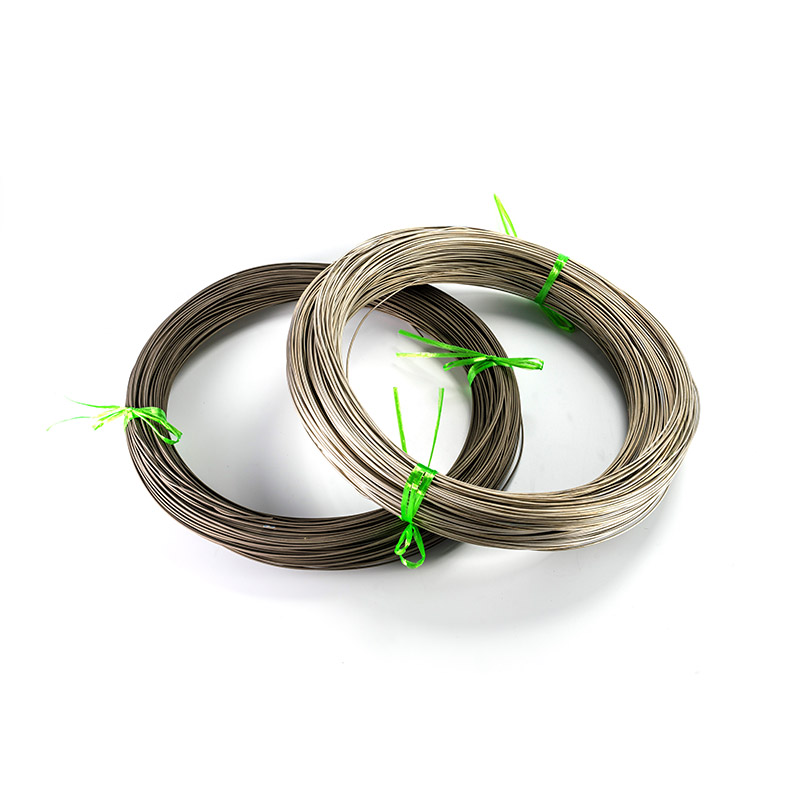
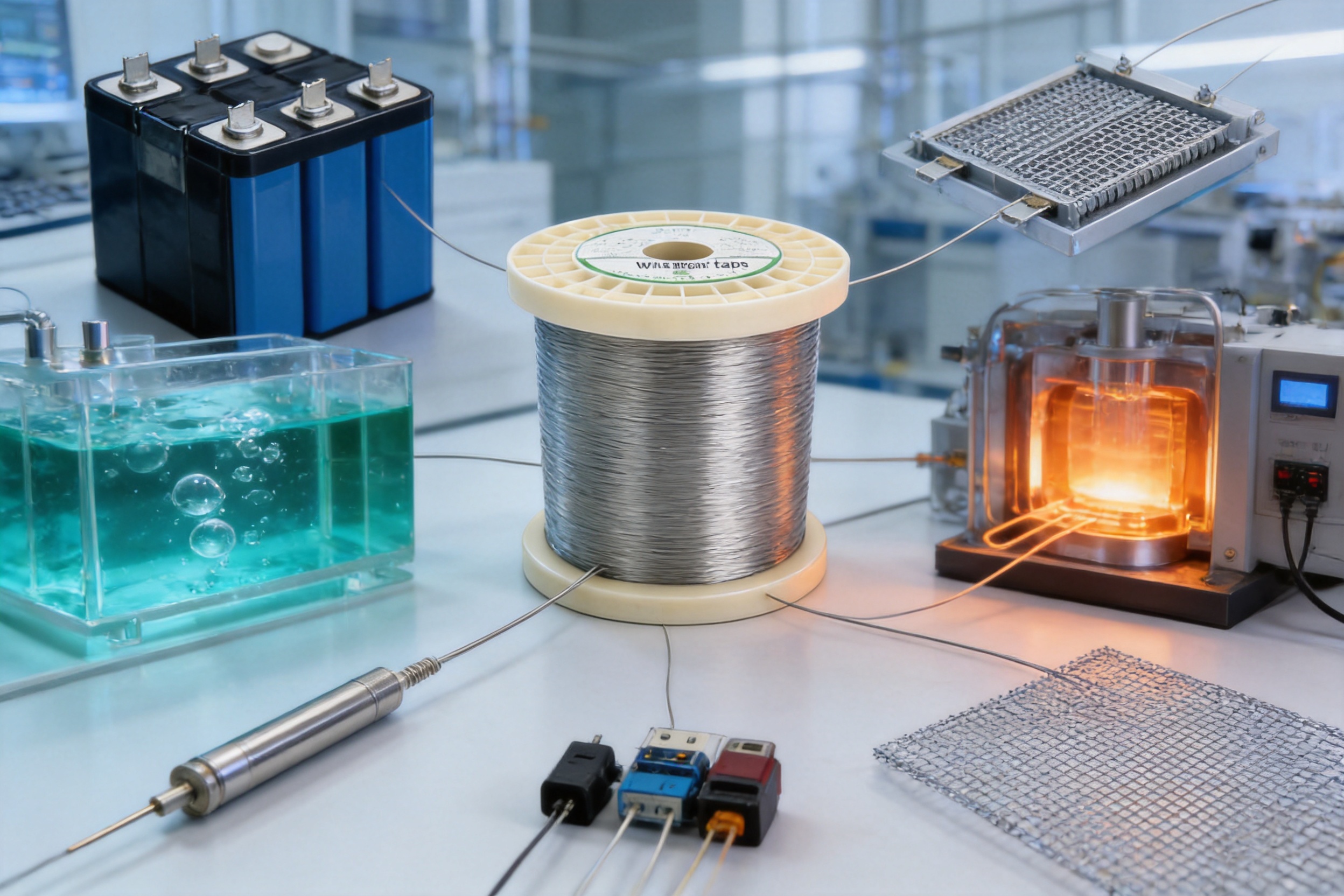
Pure nickel wire is a high-performance metallic conductor manufactured from nickel with a very high degree of chemical purity. It combines electrical conductivity, thermal conductivity, ductility, weldability, corrosion resistance, and high-temperature stability in one versatile wire product. These characteristics make it valuable in electronics, batteries, hydrogen production, temperature measurement, vacuum equipment, lighting, chemical processing, and industrial instrumentation.
Unlike resistance alloys designed to generate heat, pure nickel wire is primarily selected when the application requires reliable current transfer, clean welding, mechanical flexibility, or resistance to alkaline and neutral environments. Its relatively low electrical resistivity allows it to function efficiently as a lead, jumper, tab, electrode, contact, or signal conductor. Its ability to withstand forming and joining operations also supports the production of complex components with consistent dimensions.
High-quality pure nickel wire is not defined by nickel content alone. The final performance depends on the selected grade, control of impurities, wire diameter, temper, surface quality, dimensional tolerance, heat treatment, winding condition, and inspection procedures. A professional manufacturer must therefore control the entire process, from raw material selection and melting to drawing, annealing, testing, packaging, and technical support.
This article explains the properties, grades, advantages, manufacturing process, applications, selection factors, and quality considerations associated with pure nickel wire. It also explains why a specialized manufacturer with alloy production capabilities, modern inspection systems, and experience in industrial instrumentation can provide greater value than a general-purpose wire supplier.
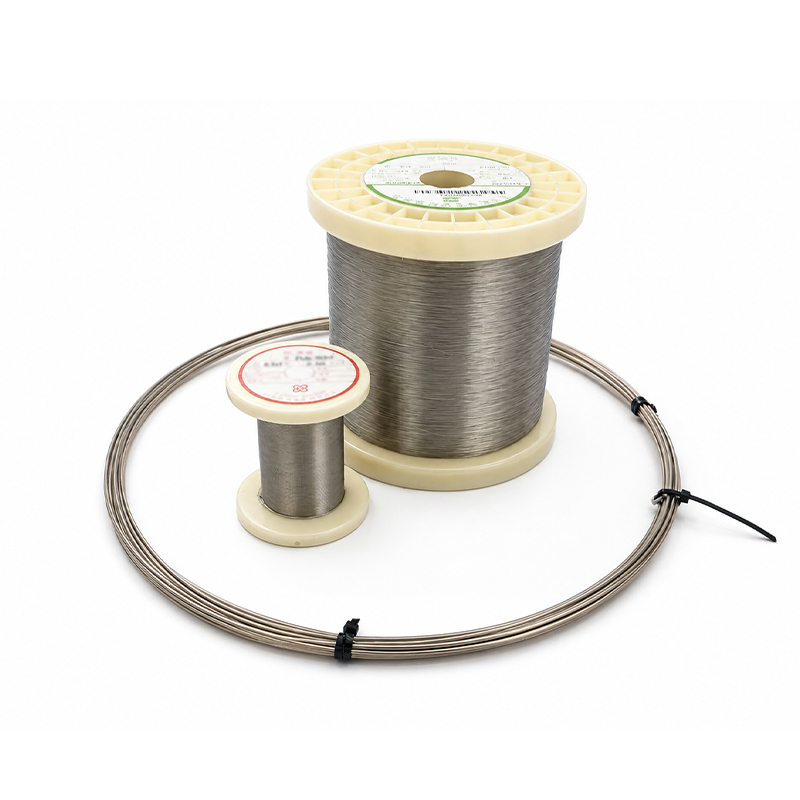
Pure nickel wire
Pure nickel wire is a drawn metallic wire made primarily from nickel rather than from a multi-element nickel alloy. Depending on the specified grade, nickel content is generally above 98.5% and may exceed 99.5% or 99.9%. Small quantities of iron, silicon, manganese, copper, carbon, sulfur, and other elements may be controlled to achieve a particular balance of conductivity, workability, corrosion resistance, and mechanical performance.
The term “pure nickel” does not mean that the material contains absolutely no other elements. Industrial grades are manufactured according to defined chemical limits, and controlled trace elements are necessary to meet production standards. For example, some grades are optimized for high purity and conductivity, while others are selected for better performance in specific forming or temperature conditions.
Nickel has a face-centered cubic crystal structure and retains useful ductility over a broad temperature range. This structure enables nickel wire to be drawn into small diameters without excessive cracking when the material is properly processed. Nickel also forms a protective surface film in many environments, which contributes to its resistance to corrosion, particularly in alkaline and neutral media.
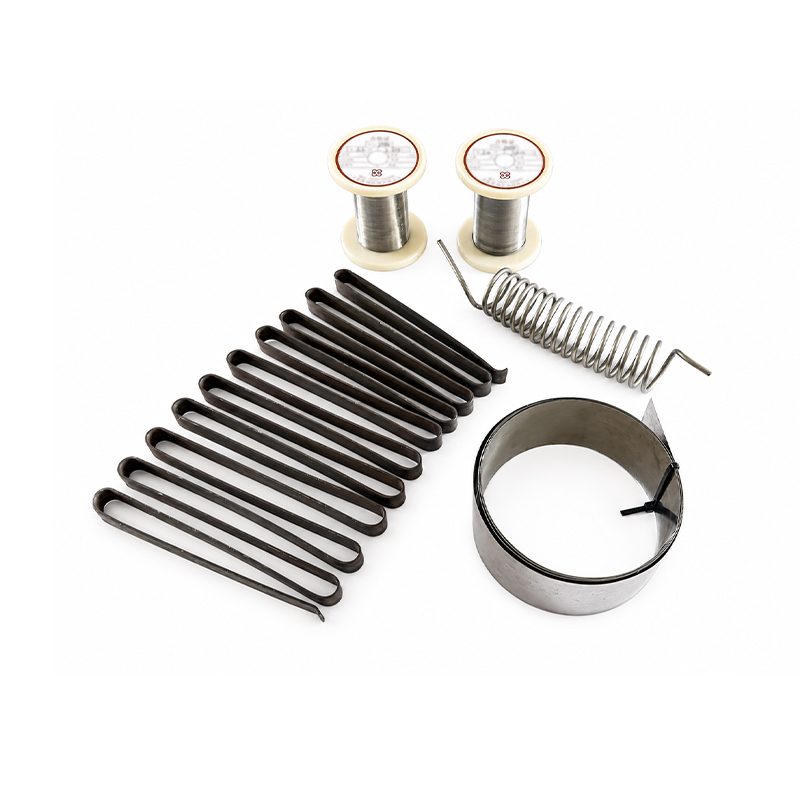
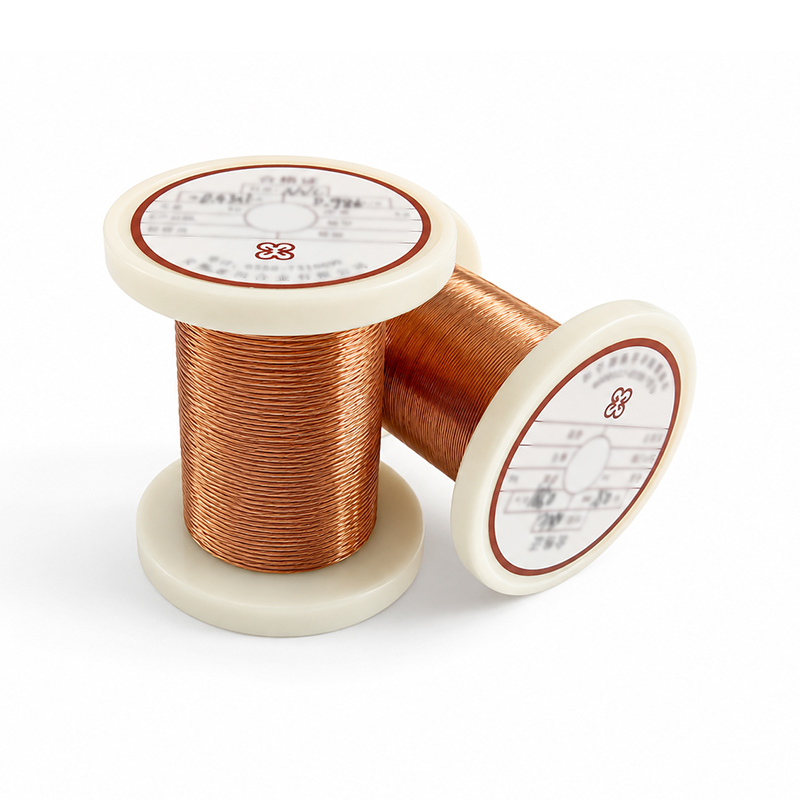
In practical applications, pure nickel wire may be supplied in coils, spools, straight lengths, or customized winding forms. The wire may be soft, annealed, semi-hard, or hard, depending on the required combination of flexibility and tensile strength. Surface conditions may include bright, clean, or specially treated finishes according to the customer’s application.
Pure nickel wire offers stable electrical conductivity and is suitable for leads, connectors, electrical jumpers, relay contacts, and conductive pins. Although its conductivity is lower than that of copper, nickel provides a useful combination of conductivity, mechanical durability, corrosion resistance, and high-temperature performance.
For applications exposed to heat, vibration, alkaline electrolytes, or repeated handling, a nickel conductor can provide a more balanced solution than a highly conductive but less chemically resistant material. Nickel wire is also compatible with many joining processes, allowing manufacturers to create electrically stable connections without using complicated mechanical structures.
Nickel transfers heat effectively enough for use in temperature-sensing assemblies, thermal leads, vacuum equipment, and high-temperature electrical components. Its thermal behavior is predictable when the chemical composition and processing condition are controlled. This is important in sensors and instruments, where uncontrolled material variation can cause measurement drift or inconsistent response.
One of the most important advantages of pure nickel wire is its ductility. It can be bent, wound, stamped, shaped, and formed into small components without easily breaking. This characteristic is especially useful for battery tabs, lead-out wires, sensor connections, electronic pins, lamp supports, and small mesh structures.
Good formability reduces production losses during assembly. It also allows designers to use smaller radii, compact routing paths, and customized contact shapes. However, forming should still be performed within appropriate limits. Excessive bending, repeated sharp kinking, or uncontrolled stretching can damage the surface and reduce mechanical reliability.
Pure nickel wire has excellent weldability. Depending on the wire diameter, joint design, and application, it may support soldering, resistance welding, laser welding, or argon arc welding. Reliable weldability is a major reason for its use in battery manufacturing and electronic assemblies.
A clean surface and controlled chemical composition are essential for good welding results. Surface contamination, oxide layers, excessive lubricant residue, or inconsistent diameter can lead to unstable weld energy, weak joints, spatter, or incomplete fusion. Professional manufacturing and suitable packaging help preserve the wire’s joining performance until it reaches the customer’s production line.
Pure nickel performs well in alkaline, neutral, and fresh-water environments. This makes it useful in alkaline batteries, electrolyzers, chemical screens, seals, and corrosion-resistant structural elements. Nickel is particularly attractive where a component must carry current while remaining exposed to an electrolyte or chemically active atmosphere.
Its corrosion resistance is not unlimited. Strong acids, highly oxidizing environments, and prolonged exposure to high-temperature oxidizing atmospheres may cause surface degradation. Application conditions should therefore be evaluated carefully, including temperature, pH value, concentration, pressure, exposure time, and the presence of halides or other aggressive chemicals.
Pure nickel has a high melting point and maintains useful mechanical and electrical properties at elevated temperatures. It is used in vacuum furnaces, electric vacuum devices, arc extinguishers, high-temperature supports, and internal leads for lamps. Its relatively low vapor pressure and stable behavior make it suitable for certain vacuum-related components.
Pure nickel should not automatically be treated as a replacement for every high-temperature alloy. In strongly oxidizing atmospheres and during long-term exposure at high temperatures, nickel-chromium alloys may provide better oxidation resistance. The correct material depends on whether the priority is conductivity, resistance heating, mechanical strength, oxidation resistance, or chemical compatibility.
Common grades include N4, N5, N6, N7, and N8. Equivalent designations may also be used in different national or international specifications. N5 is commonly associated with Nickel 200, while N7 is commonly associated with Nickel 201. Exact equivalence should always be confirmed against the applicable standard and the supplier’s certificate because naming conventions and permitted limits can vary.
N4 is a high-purity nickel grade with a nickel content of approximately 99.9% or higher according to the supplied specification. It is suitable for applications that place a strong emphasis on purity, electrical performance, stable forming behavior, and clean joining.
N4 may be selected for electronic leads, conductive pins, precision instrument components, battery parts, vacuum applications, and other assemblies where low impurity levels are important. Its use can help reduce the risk of contamination or unwanted changes in electrical and welding behavior.
N5, often identified with Nickel 200, is a commercially pure nickel grade used in electrical, chemical, and general industrial applications. It offers good ductility, corrosion resistance, and weldability. It is suitable for many ordinary pure nickel wire requirements where a very high purity level is not essential.
Nickel 200 is commonly considered for alkaline environments and equipment operating at moderate temperatures. The exact service limit depends on the atmosphere and stress condition. For demanding high-temperature applications involving carbon control, another grade may be more appropriate.
N6 generally contains at least approximately 99.5% nickel under the stated product specification. It provides a practical balance of purity, conductivity, processability, and cost. It is widely suitable for electrical leads, battery tabs, instrument connections, mesh, and general corrosion-resistant wire components.
When a customer needs a dependable industrial grade without the cost associated with the highest purity level, N6 can be an efficient choice. Final selection should still be based on diameter, temper, welding method, temperature, and environmental exposure rather than chemical composition alone.
N7, often associated with Nickel 201, is characterized by a lower carbon limit than Nickel 200. This feature can improve its suitability for certain elevated-temperature applications where carbon-related embrittlement or changes in mechanical behavior must be controlled.
Nickel 201 wire may be considered for vacuum components, high-temperature equipment, chemical processing, and specialized electrical assemblies. Its performance should be evaluated according to the actual operating temperature and atmosphere.
N8 is a commercially pure nickel grade with a lower nominal nickel content than the highest-purity grades. It may be used for general industrial components where basic nickel properties, formability, and corrosion resistance are required and the application does not demand the tightest impurity limits.
The appropriate grade must be confirmed through the product certificate and applicable standard. Customers should avoid selecting a grade solely by name because national standards, internal designations, and equivalent grades may not be identical in every chemical limit.
The following table summarizes the composition information supplied for several grades. Values are representative limits from the provided specification and should be confirmed against the purchase order, technical datasheet, and inspection certificate. The source composition table contains more impurity columns than some row descriptions clearly identify; therefore, formal procurement should always use the manufacturer’s controlled specification.
| Grade | Nominal Nickel Content | Iron Limit | Silicon Limit | Manganese Limit | Copper Limit | Carbon Limit | Sulfur Limit |
| N4 | ≥99.9% | ≤0.04% | ≤0.03% | ≤0.002% | ≤0.015% | ≤0.01% | ≤0.001% |
| N5 / Nickel 200 | ≥99.0% | ≤0.40% | ≤0.35% | ≤0.35% | ≤0.25% | ≤0.15% | ≤0.01% |
| N6 | ≥99.5% | ≤0.10% | ≤0.15% | ≤0.10% | ≤0.10% | ≤0.05% | ≤0.005% |
| N7 / Nickel 201 | ≥99.0% | ≤0.40% | ≤0.35% | ≤0.35% | ≤0.25% | ≤0.02% | ≤0.01% |
| N8 | ≥98.5% | ≤0.50% | ≤0.35% | ≤0.50% | To be confirmed | ≤0.10% | ≤0.02% |
Copper generally offers higher electrical conductivity, but pure nickel can be advantageous when the wire must withstand alkaline exposure, elevated temperature, mechanical handling, or repeated welding. Nickel also offers a different balance of surface stability and strength. In battery and chemical applications, these factors may be more important than maximum conductivity.
Pure nickel is often selected for tabs and leads because it can be welded reliably to battery terminals and can tolerate the service environment. A designer may use copper for a main current path and nickel for a weldable connection or chemically exposed section.
Nickel-chromium wire is designed primarily for electrical resistance and heat generation. It has a much higher resistivity and is commonly used in heating elements. Pure nickel wire has lower resistivity and is therefore more suitable for conductive leads, contacts, electrodes, and signal connections.
Pure nickel can be used for low-temperature or vacuum heating in selected designs, but it is generally not the first choice for long-term high-temperature heating in air. When the main objective is heat generation and oxidation resistance, a nickel-chromium resistance alloy may be more suitable.
Stainless steel may provide higher mechanical strength and good general corrosion resistance, but it may not offer the same combination of electrical conductivity, ductility, weldability, and alkaline compatibility as pure nickel. Nickel is particularly valuable when the wire functions simultaneously as a conductor and a corrosion-resistant electrode.
Nickel-plated copper or steel can provide a conductive core with a protective surface, but the performance depends on coating thickness, adhesion, porosity, and long-term integrity. Pure nickel wire has a homogeneous composition throughout its cross-section. There is no separate plating interface that can crack, peel, or become exposed during severe forming.
For applications involving repeated bending, precision welding, or exposure to corrosive media, a solid pure nickel wire can provide more predictable long-term behavior. However, plated products can remain useful when cost, conductivity, or specific mechanical requirements favor a composite construction.
Pure nickel wire is used for electronic leads, conductive jumpers, connectors, relay contacts, and conductive pins. Its ductility supports miniature component production, while its weldability simplifies assembly. The wire may be cut, bent, formed, or welded into customized electrical connection parts.
For electronic applications, surface cleanliness and dimensional consistency are particularly important. Small variations in diameter can affect contact pressure, resistance, and automated feeding. A controlled manufacturing process helps reduce interruptions and maintain stable assembly conditions.
Battery tabs, lead-out wires, welding pins, and interconnection parts are major applications for pure nickel wire. Nickel is compatible with many nickel-metal hydride and lithium battery designs, especially where a weldable, corrosion-resistant, electrically conductive material is required.
Battery production demands precise dimensions, consistent surface condition, and predictable weld behavior. A wire that varies in hardness or contains surface contamination may cause inconsistent welding current, weak joints, or feeding problems. For this reason, battery manufacturers often specify strict controls for diameter, tensile properties, cleanliness, winding, and packaging.
Pure nickel wire can also be used in battery protection assemblies, small battery packs, energy storage modules, and customized power connectors. The appropriate thickness and temper depend on current, pulse load, thermal conditions, weld method, and available space.
Nickel meshes made from pure nickel wire are widely used as auxiliary electrodes in alkaline water electrolysis systems. Nickel’s resistance to alkaline environments and its electrical conductivity make it suitable for electrode supports, current collectors, and related structures.
Wire diameter, mesh opening, surface condition, mechanical strength, and electrode geometry all influence electrolyzer performance. A reliable wire manufacturer can supply material designed for weaving, forming, welding, or integration into electrode assemblies.
In hydrogen equipment, the wire must withstand continuous contact with electrolyte and electrical current. The material should therefore be selected with attention to electrolyte concentration, temperature, current density, gas evolution, cleaning procedures, and expected service life.
Pure nickel wire is used as a lead wire or signal-output connection for platinum resistance temperature measurement elements and other instrument assemblies. Its stable processing characteristics, electrical behavior, and compatibility with high-temperature components support precision instrumentation.
Instrumentation applications often require more than basic conductivity. Wire dimensions, resistance uniformity, insulation compatibility, surface cleanliness, and connection reliability can all affect measurement stability. The manufacturing process must therefore include suitable dimensional and electrical testing.
Applications include vacuum furnaces, electric vacuum devices, arc extinguishers, high-temperature structural supports, internal connections, and specialized heating assemblies. Nickel wire can maintain useful performance where ordinary copper wire would soften, oxidize, or lose mechanical reliability.
For vacuum use, low contamination and surface cleanliness are important. Oils, residues, and volatile contaminants can affect vacuum quality. Products intended for vacuum equipment should be manufactured, cleaned, inspected, and packaged according to the customer’s requirements.
Pure nickel wire is suitable for corrosion-resistant screens, seals, meshes, and structural wires used in alkaline and neutral environments. It can be incorporated into filtration structures, protective screens, electrode supports, and chemical equipment accessories.
When the medium contains strong acids or oxidizing compounds, a detailed compatibility review is necessary. Material selection should consider not only the nickel grade but also welded areas, residual stress, crevices, temperature gradients, and contact with dissimilar metals.
Pure nickel wire can be used for internal leads and support wires in incandescent lamps, halogen lamps, xenon lamps, and other electric light sources. The material’s high-temperature capability, formability, and joining performance make it suitable for small support structures and electrical connections.
Lighting components often require precise forming and clean surfaces. Dimensional control is important because the wire may be automatically assembled into compact lamp structures. Consistent winding and straightness can improve production efficiency and reduce assembly defects.
Manufacturing begins with the selection of nickel raw materials that meet the target grade. The supplier must control incoming material documentation, chemical composition, lot identification, and storage conditions. High-purity raw materials reduce the risk of unwanted impurity accumulation during melting and processing.
Traceability is important from the beginning. Each production lot should be linked to its raw materials, processing route, equipment, inspection records, and final packaging. This allows the manufacturer to investigate quality issues quickly and provide reliable documentation to industrial customers.
The nickel is melted in controlled equipment suitable for the required purity and production volume. During melting, the manufacturer must manage temperature, atmosphere, charge sequence, and refining conditions. Excessive oxidation or contamination can affect the final wire’s conductivity, surface quality, and weldability.
Samples are taken for chemical analysis. Modern laboratories may use optical emission spectroscopy, X-ray fluorescence, combustion analysis, or other suitable methods to confirm the concentration of major elements and controlled impurities. The material proceeds to casting only after it meets the internal or customer-approved composition range.
Molten nickel is cast into billets, rods, or other intermediate forms. Casting parameters influence grain structure, segregation, porosity, and surface integrity. Homogenization or related heat treatment may be used to reduce compositional variation and prepare the material for subsequent deformation.
Proper control at this stage improves drawing stability. Internal defects that remain in the billet can become more serious as the material is reduced to a small wire diameter. Professional manufacturers therefore inspect intermediate products and remove defective sections before final drawing.
The cast material may undergo hot rolling, forging, or other forming operations to produce a suitable rod. This process refines the structure and establishes the starting dimensions for wire drawing. Temperature control is essential because the material must remain sufficiently workable while avoiding excessive oxidation or grain coarsening.
Rod surface preparation may include peeling, grinding, cleaning, or descaling. Removing surface defects before drawing helps prevent longitudinal cracks, scratches, and die damage.
Wire drawing reduces the rod through a sequence of dies to achieve the specified diameter. The reduction schedule, die geometry, lubrication, drawing speed, and intermediate annealing cycle all influence the final properties.
Drawing must be carefully controlled because pure nickel becomes harder as it is cold worked. Excessive reduction without annealing can reduce ductility and make the wire more difficult to bend or weld. Conversely, insufficient work hardening may produce a wire that does not meet the required tensile strength or dimensional stability.
Advanced production lines use precision dies, controlled tension, stable lubrication, and continuous monitoring. These controls help maintain diameter uniformity, surface quality, straightness, and consistent mechanical properties across the coil.
Annealing restores ductility and reduces internal stress after cold drawing. The temperature, time, heating rate, cooling method, and protective atmosphere must be controlled according to the grade and desired temper.
Bright annealing or controlled-atmosphere annealing can help reduce oxidation and preserve a clean surface. The final condition may be soft and highly ductile, semi-hard, or hard. Customers should specify the required temper because it directly affects bending behavior, tensile strength, spring-back, and welding response.
Surface treatment may include degreasing, chemical cleaning, mechanical polishing, or other approved processes. The objective is to remove drawing residues, oxides, and particles while preserving the wire’s dimensions and surface integrity.
For battery, vacuum, electronic, and instrumentation applications, surface cleanliness can be critical. A professional manufacturer should establish cleaning controls and verify that the final product is protected from recontamination during handling and packaging.
Wire is wound onto spools or into coils with controlled tension. Proper winding prevents tangles, crossed layers, sharp kinks, and feeding interruptions. The packaging method must protect the product from moisture, dust, impact, and deformation during transport.
Labels should identify the grade, diameter, lot number, weight or length, production date, and relevant inspection information. For export shipments, packaging may be adapted to customer requirements, container loading conditions, and long-distance transportation.
Quality assurance should cover chemical, dimensional, mechanical, electrical, surface, and packaging requirements. A manufacturer with integrated alloy and instrumentation capabilities can coordinate material production and application knowledge more effectively than a supplier that only resells standard wire.
Chemical analysis confirms nickel content and impurity limits. The results should be traceable to the production lot. When a customer specifies a particular standard, the manufacturer should identify the applicable limits clearly rather than relying only on a commercial grade name.
Wire diameter, ovality, length, coil dimensions, and spool dimensions may be inspected using calibrated micrometers, laser diameter gauges, optical systems, or other suitable instruments. Continuous monitoring is especially beneficial for small-diameter wire and automated battery or electronic production.
Tensile strength, elongation, hardness, bend performance, and winding behavior may be evaluated according to the customer’s requirements. Mechanical data helps confirm whether the wire is soft enough for forming or strong enough for structural support and handling.
Electrical resistance and resistivity testing can identify variations caused by composition, diameter, or processing condition. Stable electrical properties are important for leads, contacts, sensors, battery connections, and instrument components.
Surface inspection identifies scratches, laps, cracks, pits, oxidation, contamination, and other defects. Depending on the application, visual inspection may be supported by magnification, eddy-current testing, automated optical inspection, or other non-destructive methods.
Industrial customers may require a material certificate, inspection report, certificate of conformity, packing list, traceability record, or manufacturing declaration. Clear documentation supports incoming inspection, quality audits, regulatory compliance, and long-term product traceability.
A specialized industrial group that combines alloy production, instrumentation manufacturing, cable production, precious-metal processing, research, and engineering can offer several practical advantages. Its product knowledge extends beyond the wire itself to the equipment in which the wire will be installed.
Professional technical teams can optimize alloy composition, drawing schedules, annealing conditions, surface cleaning, winding methods, and packaging. They can also help customers select between grades when the application involves unusual temperature, chemical, or welding conditions.
Research capability is especially valuable for customized wire. Customers may need a non-standard diameter, special tolerance, specific temper, improved surface cleanliness, customized spool dimensions, or a modified inspection plan. These requirements are easier to manage when the supplier has its own technical and production resources.
Specialized melting, casting, rolling, drawing, annealing, cleaning, testing, and winding equipment supports stable mass production. Equipment capability should be combined with preventive maintenance, process validation, calibration, and operator training.
Modern equipment reduces variation, but manufacturing discipline remains equally important. Standard operating procedures, controlled parameters, first-piece approval, in-process inspection, and final release procedures ensure that equipment capability is converted into consistent product quality.
Documented quality management systems help control purchasing, production, inspection, nonconforming products, corrective actions, customer complaints, and continuous improvement. Environmental and occupational health systems also support responsible operation and safer manufacturing conditions.
Certifications such as ISO 9001, ISO 14001, and occupational health and safety management certification demonstrate that the supplier has established structured management practices. Certification does not replace product testing, but it provides an important framework for consistent business and manufacturing control.
Export-oriented manufacturing requires attention to international specifications, packing requirements, documentation, communication, lead times, and customer audits. A supplier experienced in global markets can help prevent misunderstandings involving grade equivalence, tolerance, unit systems, labeling, and inspection standards.
An integrated supplier can provide more than raw wire. It may support thermocouples, temperature instruments, pressure instruments, flow meters, level instruments, cables, alloy materials, and electrical accessories. This broader capability allows customers to discuss material selection and instrument integration with one technical partner.
Identify the operating temperature, atmosphere, chemical medium, humidity, pressure, current, voltage, vibration, and expected service life. A wire for a battery tab has different requirements from a wire for a vacuum furnace or alkaline electrolyzer.
Choose the grade according to purity, carbon control, corrosion conditions, electrical requirements, and cost. N4 or N6 may be suitable for high-purity electrical and battery applications, while N5 or N7 may be considered when a recognized Nickel 200 or Nickel 201 type is required. N8 may be suitable for less demanding general industrial uses.
Diameter affects electrical resistance, current capacity, tensile strength, flexibility, welding energy, and fit within the assembly. Tight tolerances may be necessary for automated feeding or precision instruments. The customer should specify both nominal diameter and permitted deviation.
Soft or annealed wire is preferred for bending, winding, and forming. Harder wire may be preferred for spring action, structural support, or dimensional stability. If the temper is not specified, the delivered product may not behave as expected during assembly.
Tell the manufacturer whether the wire will be soldered, resistance welded, laser welded, brazed, crimped, or mechanically connected. Joining method affects the preferred surface condition, hardness, diameter, and cleaning requirement.
Specify coil or spool type, maximum package weight, winding direction, layer arrangement, protective materials, labeling, and export documents. A technically correct wire can still create production problems if the package is difficult to feed or becomes damaged during transport.
Pure nickel wire can be bent, wound, stamped, welded, and otherwise processed. It should be handled with clean tools to avoid embedded particles or cross-contamination from other metals. Sharp scratches, uncontrolled stretching, and severe kinks should be avoided because they can reduce strength and electrical reliability.
When forming small-radius bends, use tooling designed for the wire diameter and temper. Repeated bending at the same location may create work hardening and eventual fracture. If the wire must be formed repeatedly, a softer temper or a suitable intermediate annealing procedure may be necessary.
During welding, establish the correct current, force, time, electrode condition, and cooling cycle. Trial welding should be performed using production-equivalent material and equipment. The finished joint should be evaluated for strength, electrical resistance, appearance, and failure mode.
For high-temperature service, verify the atmosphere and exposure duration. Pure nickel generally performs well in alkaline and neutral environments, but long-term use in strong oxidizing high-temperature atmospheres should be reviewed carefully. If the application is primarily a high-temperature heating element, compare pure nickel with suitable nickel-chromium or other resistance alloys.
Pure nickel wire has relatively low resistivity and is mainly used for electrical conduction, leads, electrodes, contacts, and weldable connections. Nickel-chromium wire has much higher resistivity and is mainly used for heating elements and resistance applications. Pure nickel may be used for selected low-temperature or vacuum heating applications, but it is not generally the preferred material for long-term high-temperature heating in air.
Yes, but the design must account for its lower resistivity. To achieve the same electrical power, the wire may need to be thinner or longer than a nickel-chromium heating wire. Pure nickel is more suitable for low-temperature heating, vacuum heating, or specialized designs where conductivity and weldability are also important.
Pure nickel is generally non-magnetic or weakly magnetic in many room-temperature conditions, but its magnetic behavior can change with temperature, cold working, heat treatment, and exact composition. Slight magnetic response after processing does not necessarily indicate a defect.
It has good resistance in many alkaline, neutral, and fresh-water environments. It may be attacked or oxidized in strong acids, strongly oxidizing media, and some high-temperature atmospheres. Application compatibility should be confirmed using the actual chemical concentration, temperature, stress, and exposure duration.
Yes. It commonly supports soldering, resistance welding, and argon arc welding. Welding performance depends on grade, diameter, surface cleanliness, temper, joint design, and process parameters. Clean, dimensionally consistent wire usually provides more stable welding results.
The answer depends on the battery chemistry, tab design, current requirement, welding method, and customer specification. N4 and N6 may be suitable for high-purity conductive and weldable applications, while other grades may be selected according to a recognized standard or specific carbon requirement. Production trials and certificate review are recommended before mass purchasing.
Yes. Pure nickel wire and nickel mesh are commonly used in alkaline electrolyzers because nickel offers useful electrical conductivity and corrosion resistance in alkaline electrolyte. The design must also consider electrolyte concentration, temperature, current density, mesh structure, mechanical support, and gas release.
A purchase inquiry should include grade, nominal diameter, tolerance, temper, surface condition, coil or spool requirement, quantity, application, operating environment, joining method, testing requirements, packaging requirements, and applicable standard. Providing this information allows the manufacturer to recommend an appropriate product rather than supplying a generic wire.
Store it in a clean, dry, protected location away from corrosive chemicals, moisture, dust, and mechanical impact. Keep the original packaging intact until use when possible. Avoid contact with carbon steel particles or contaminated tools, particularly for battery, vacuum, and precision electronic applications.
Traceability connects the finished wire to its raw material, processing route, inspection results, and packaging records. It helps customers manage incoming inspection, investigate production issues, satisfy audits, and confirm that replacement lots meet the same requirements as earlier deliveries.
Nickel is a valuable industrial material, and responsible manufacturing should focus on efficient use of raw materials, reduction of process waste, recycling of suitable scrap, control of emissions, safe chemical handling, and energy management. Drawing schedules should be optimized to reduce unnecessary material loss, while production residues should be handled according to applicable environmental requirements.
Environmental management systems help manufacturers identify significant environmental aspects and establish improvement targets. Responsible production also includes worker protection, equipment safety, proper ventilation, training, and emergency preparedness.
For customers, a supplier’s environmental and safety practices are increasingly important. A stable and responsible manufacturing system reduces supply risk and supports the customer’s own sustainability objectives.
Pure nickel wire is a versatile material for applications requiring a combination of electrical conductivity, thermal performance, ductility, weldability, corrosion resistance, and high-temperature capability. Its uses extend from battery tabs and electronic leads to hydrogen electrolyzer meshes, temperature instruments, vacuum equipment, chemical screens, and lamp supports.
The best product is not necessarily the wire with the highest nominal nickel content. The correct choice depends on grade, impurity limits, diameter, temper, surface condition, operating environment, joining process, and inspection requirements. N4, N5, N6, N7, and N8 provide options for different combinations of purity, processability, temperature performance, and cost.
A capable manufacturer adds value through controlled raw material selection, precise melting, reliable casting, stable drawing, protective annealing, surface cleaning, accurate winding, and complete quality inspection. Research and development, traceability, international quality systems, modern equipment, and application engineering further improve the reliability of the finished wire.
For demanding industrial applications, customers should work with a supplier that can provide both material expertise and manufacturing discipline. With the correct specification and appropriate processing controls, pure nickel wire can deliver dependable performance across electronics, new energy, instrumentation, chemical processing, vacuum technology, lighting, and other advanced industrial fields.
1. ASTM International, Standard Specifications for Commercially Pure Nickel and Nickel Alloy Products.
2. International Organization for Standardization, Quality Management Systems—Requirements.
3. International Electrotechnical Commission, Standards for Electrical, Temperature, and Industrial Instrumentation Applications.
4. Nickel Institute, Technical Information on Nickel Materials, Corrosion Resistance, and Industrial Applications.
5. ASM International, ASM Handbook: Properties and Selection of Nonferrous Alloys and Special-Purpose Materials.
6. Materials science references concerning nickel metallurgy, cold working, annealing, welding, and corrosion behavior.
7. Manufacturer technical data for N4, N5, N6, N7, and N8 pure nickel wire grades.



 INQUIRY
 English
 عربى
 русский
 中文简体