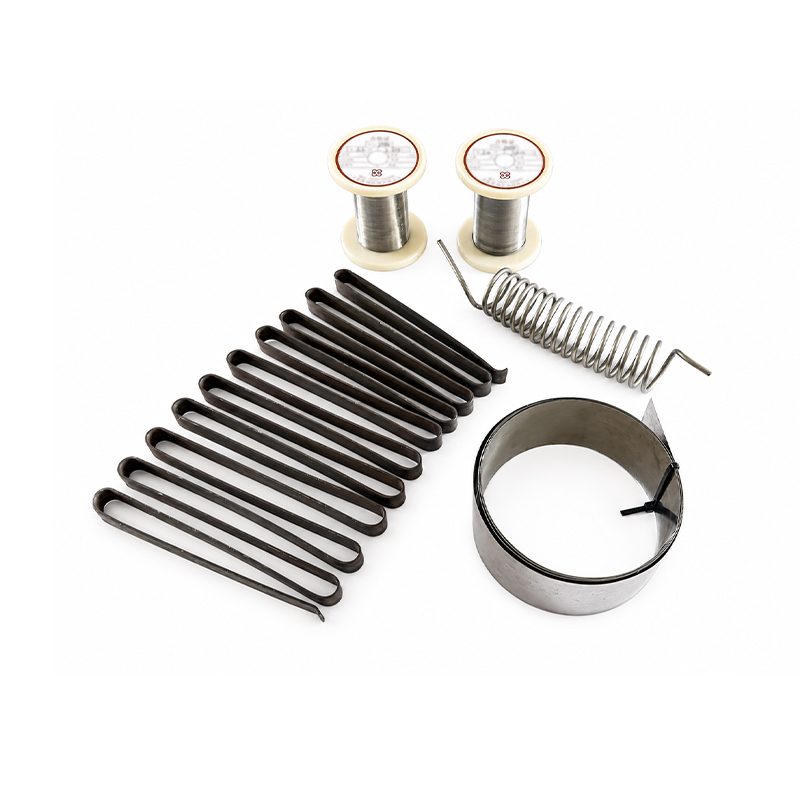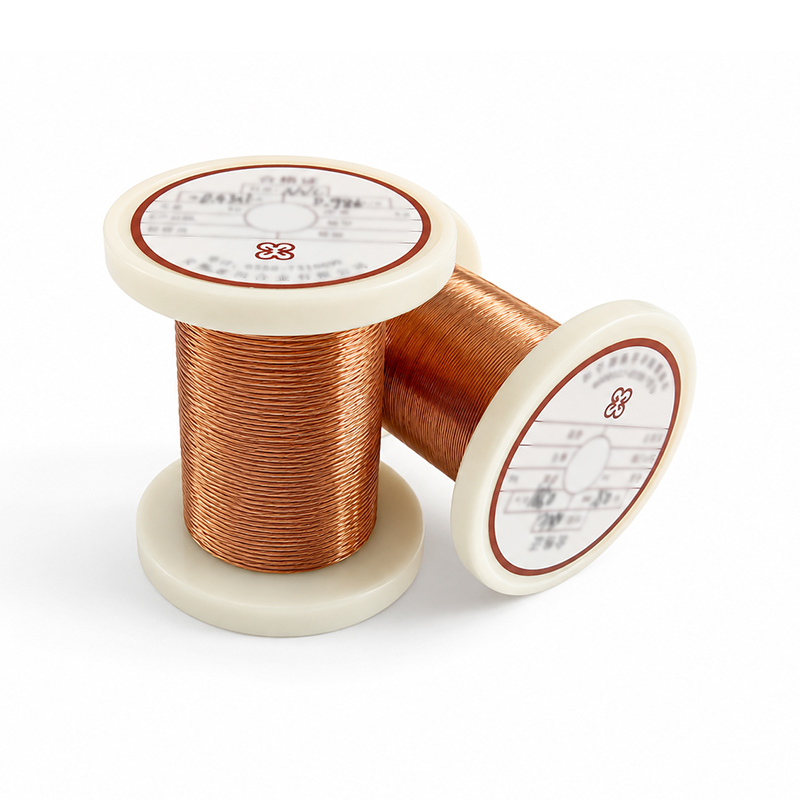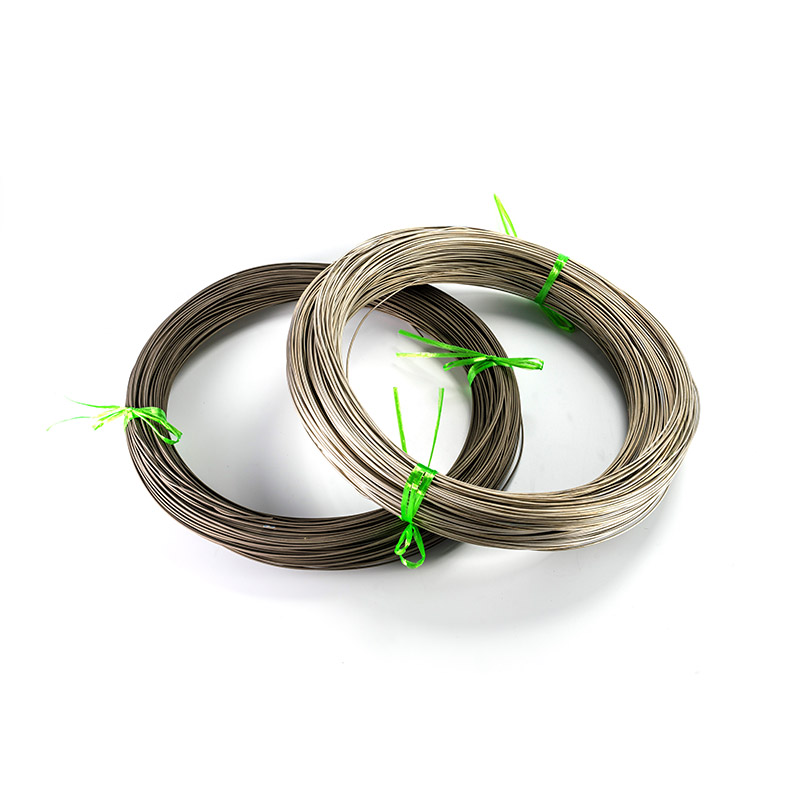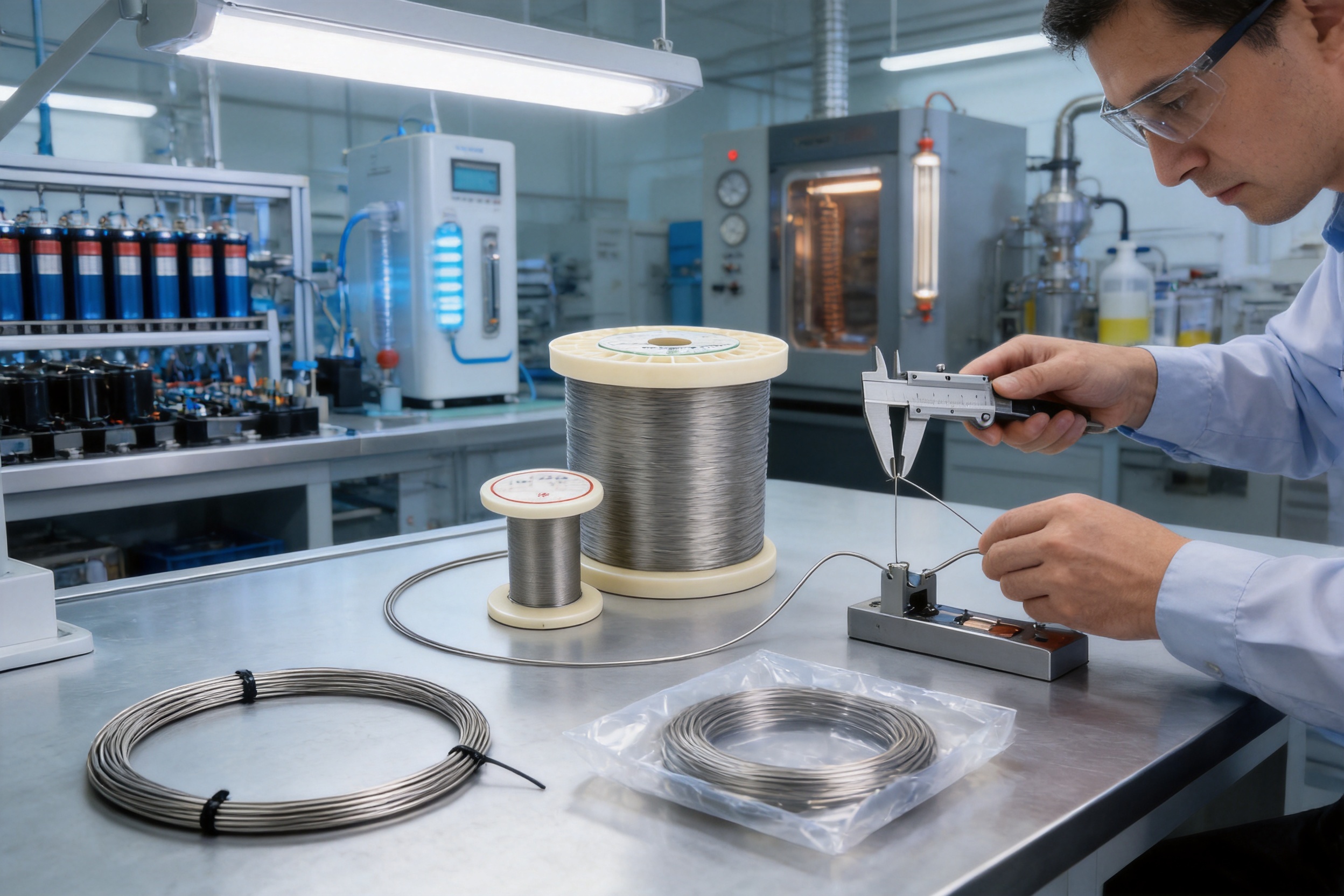
Pure nickel wire is a high-performance metallic conductor manufactured from nickel with a very high degree of chemical purity. It combines electrical conductivity, thermal conductivity, ductility, weldability, corrosion resistance, and reliable performance in demanding environments. These characteristics make it suitable for electronic components, batteries, hydrogen production equipment, temperature-measurement assemblies, vacuum devices, lighting products, chemical-processing equipment, and many other industrial applications.
Compared with nickel-chromium resistance wire, stainless steel wire, copper wire, and other metallic conductors, pure nickel wire offers a distinctive balance of properties. It is more corrosion-resistant than many conventional conductive materials in alkaline and neutral environments, more suitable for high-temperature and vacuum applications than copper, and easier to form and weld than many high-alloy materials. Its relatively stable conductivity and excellent joining performance also make it valuable where dependable electrical connections are required over long service periods.
Pure nickel wire is commonly supplied in grades such as N4, N5, N6, N7, and N8. N5 is generally associated with Nickel 200, while N7 is commonly associated with Nickel 201. The available grade, diameter, surface condition, temper, coil size, and packaging can be customized according to the customer’s application and technical requirements.
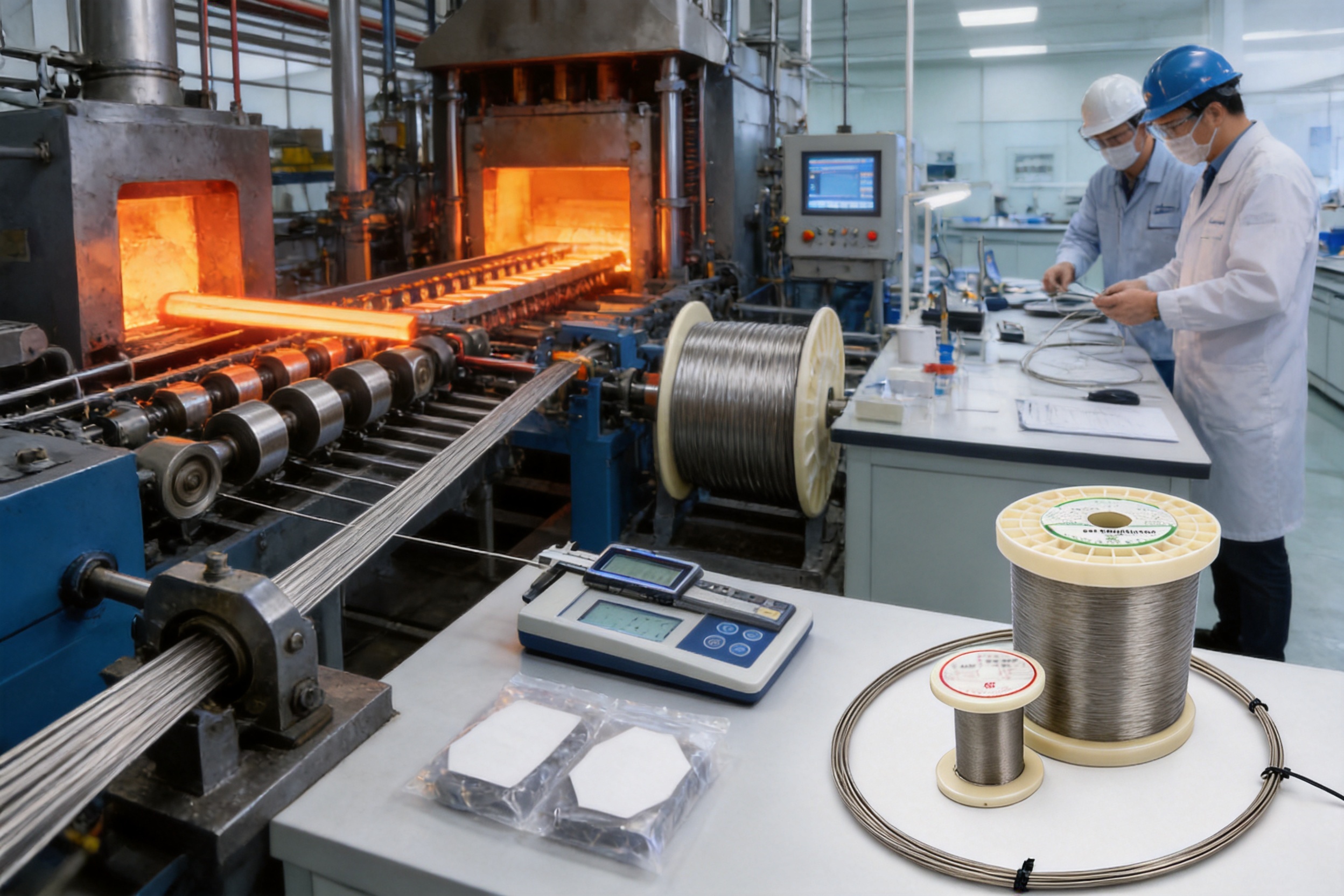
Pure nickel wire is produced by converting refined nickel into a controlled wire form through melting, casting, hot working, cold drawing, intermediate annealing, surface treatment, and final inspection. The word “pure” refers to the high nickel content and the controlled level of iron, silicon, manganese, copper, carbon, sulfur, and other residual elements.
The exact chemical composition depends on the selected grade. Some grades are designed for general electrical and structural applications, while others provide improved control of carbon content for elevated-temperature service. N4 and N6 are often selected when high purity is required. N5 and N7 are widely used for industrial components and may be chosen according to the balance between purity, mechanical performance, processing behavior, and cost.
In practical use, pure nickel wire is not defined only by its nickel percentage. Wire diameter tolerance, tensile strength, elongation, surface cleanliness, straightness, winding quality, weldability, and consistency from batch to batch are equally important. A wire with suitable chemistry but poor dimensional control may cause problems during automatic winding, battery tab welding, sensor assembly, or precision electronic production.
Pure nickel wire offers dependable electrical conductivity for leads, connectors, contact components, battery tabs, relay parts, and signal paths. Although copper and silver generally provide higher conductivity, pure nickel is often preferred when the application also requires corrosion resistance, strength, weldability, or elevated-temperature stability.
Nickel’s conductivity is sufficiently stable for many industrial electrical applications, especially where the wire must operate in a chemically active atmosphere or be joined to nickel-based components. In battery manufacturing, for example, nickel wire can provide a compatible current path and a reliable welding surface. In electronic and vacuum assemblies, it can serve as a lead or conductive support where copper may be unsuitable because of vapor pressure, oxidation, thermal expansion, or compatibility concerns.
One of the most important advantages of pure nickel wire is its ability to undergo bending, winding, stamping, drawing, and other forming processes. Properly processed wire can be shaped into coils, loops, tabs, pins, screens, support structures, and fine connecting elements without excessive cracking or breakage.
Good ductility is especially important in automated production. Battery tabs and electronic leads may need to be bent repeatedly during assembly. Sensor leads may be wound or routed through narrow spaces. Vacuum-device supports may require precise forming before final installation. A stable and ductile wire reduces material waste, tool wear, production interruptions, and the risk of hidden cracks.
Pure nickel wire has excellent weldability and can be processed using soldering, resistance welding, laser welding, and argon arc welding when the correct parameters and surface conditions are used. Its weldability makes it particularly valuable for battery tabs, electronic pins, lead wires, heating assemblies, and nickel mesh electrodes.
Resistance welding is widely used for joining nickel wire to battery terminals or thin nickel strips. The wire’s consistent chemistry and clean surface help support repeatable electrical contact. Argon arc welding may be used for larger or heavier components, while soldering is suitable for selected low-temperature electronic assemblies. The welding method should always be matched to wire diameter, temper, surface condition, joint design, and service temperature.
Pure nickel performs well in alkaline, neutral, and fresh-water environments. This property is important in electrolyzers, chemical equipment, alkaline battery systems, seals, screens, and corrosion-resistant electrical components. Nickel forms a protective surface condition that helps maintain its integrity in many non-oxidizing environments.
However, pure nickel is not universally corrosion-proof. Strong acids, highly oxidizing media, and certain high-temperature oxidizing environments may attack the material. Selection should therefore consider the exact chemical composition, concentration, temperature, flow rate, pressure, exposure time, and mechanical stress of the service environment.
Pure nickel has a high melting point and useful thermal conductivity. It can be used in vacuum furnaces, electric vacuum devices, arc-extinguishing components, lamp supports, and high-temperature structural wire assemblies. Its combination of thermal stability and formability is advantageous when the component must retain its shape and continue functioning under heat.
Pure nickel can also be used as a heating element in selected applications. Nevertheless, its resistivity is relatively low compared with nickel-chromium heating alloys. When used for heating, a longer or thinner wire may be required to achieve the desired electrical resistance. For continuous high-temperature heating in air, nickel-chromium or other specialized resistance alloys may be more suitable because they generally offer better oxidation resistance and higher electrical resistance.
Pure nickel wire is generally non-magnetic or weakly magnetic in many room-temperature applications, although its magnetic response may change with temperature, cold working, heat treatment, or mechanical processing. This behavior can be important in electronic instruments, sensors, vacuum devices, and assemblies where magnetic interference must be controlled.
Customers requiring specific magnetic properties should define the magnetic permeability, annealing condition, and testing method in the technical specification. Material grade alone may not fully determine the final magnetic response of a drawn or annealed wire.
Nickel wire can be manufactured in small diameters and controlled surface conditions for precision applications. This makes it suitable for instrument leads, platinum resistance temperature elements, electronic pins, miniature connectors, and sensor assemblies. Consistent diameter and controlled surface quality are essential for automated feeding, crimping, welding, and winding processes.
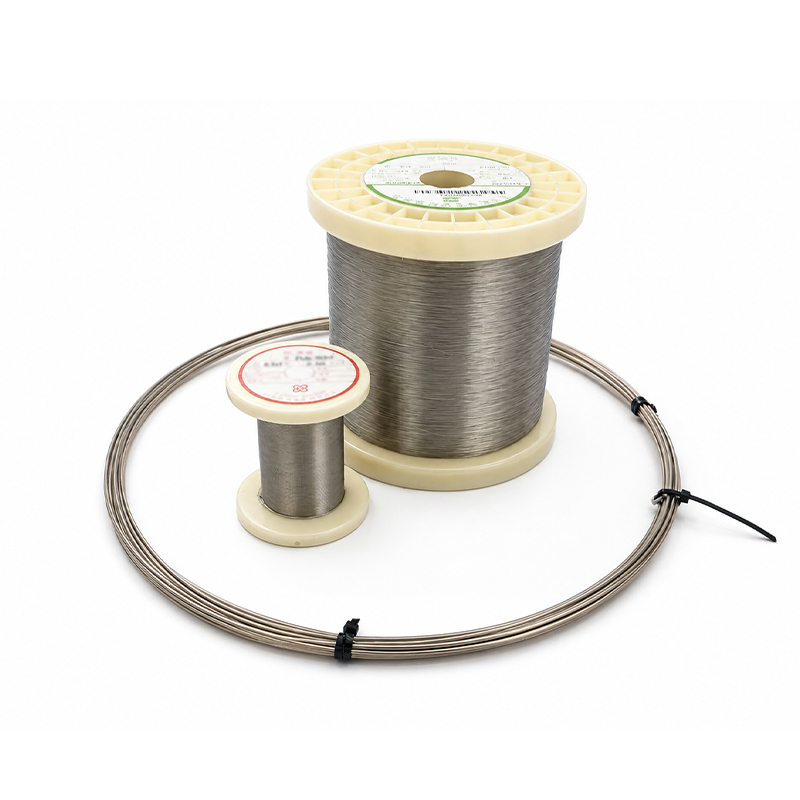
Pure nickel wire
Copper has higher electrical conductivity and is widely used for cables and general electrical conductors. Pure nickel, however, may provide better performance when corrosion resistance, high-temperature compatibility, weldability, or chemical stability is more important than maximum conductivity.
Copper can oxidize or lose performance in certain environments, while nickel remains more stable in many alkaline and neutral conditions. Nickel also offers better compatibility with nickel-based battery components and some vacuum assemblies. The correct choice depends on current load, temperature, atmosphere, mechanical requirements, joining method, and cost.
Pure nickel wire is primarily selected for conductivity, leads, electrodes, battery tabs, and corrosion-resistant components. Nickel-chromium wire is primarily selected for electrical resistance and heating. Nickel-chromium alloys normally provide higher resistivity and are better suited to heating coils and electric heating elements.
Pure nickel can be used for low-temperature or vacuum heating, but it is usually not the first choice for long-term high-temperature heating in oxidizing air. Selecting pure nickel for a heating application without calculating resistance, power density, atmosphere, and operating temperature may result in an inefficient or short-lived component.
Stainless steel wire is often economical and mechanically strong, but pure nickel may provide superior electrical conductivity, alkaline corrosion resistance, ductility, and welding behavior in specific applications. Nickel is especially useful when the wire must function as both a structural part and a conductive element.
Stainless steel may be the better choice where high tensile strength, wear resistance, or general atmospheric corrosion resistance is the primary requirement. Pure nickel becomes more attractive when electrical performance, battery compatibility, vacuum cleanliness, or alkaline service is central to the design.
Nickel-iron alloys can provide specialized thermal expansion or magnetic properties, while nickel-chromium alloys are optimized for resistance heating. Pure nickel is chosen when the application requires a relatively high nickel content, good conductivity, ductility, weldability, and resistance to alkaline or neutral conditions without introducing a large quantity of alloying elements.
Material selection should therefore be based on the required property combination rather than the name of the metal alone. A professional supplier can help compare grades and recommend a specification based on performance, processing, and cost.
The following table summarizes representative composition limits for several pure nickel wire grades supplied for industrial applications. The values are based on the provided product information and should be confirmed against the applicable material certificate, national standard, international standard, or purchase specification before production use.
| Grade | Nickel Minimum (%) | Iron Maximum (%) | Silicon Maximum (%) | Manganese Maximum (%) | Copper Maximum (%) | Carbon Maximum (%) | Sulfur Maximum (%) | Other or Additional Limit |
|---|---|---|---|---|---|---|---|---|
| N4 | 99.9 | 0.04 | 0.03 | 0.002 | 0.015 | 0.01 | 0.001 | Up to 0.10% as specified |
| N5 / Nickel 200 | 99.0 | 0.40 | 0.35 | 0.35 | 0.25 | 0.15 | 0.01 | Additional limits should be confirmed |
| N6 | 99.5 | 0.10 | 0.15 | 0.10 | 0.10 | 0.05 | 0.005 | Up to 0.50% as specified |
| N7 / Nickel 201 | 99.0 | 0.40 | 0.35 | 0.35 | 0.25 | 0.02 | 0.01 | Low-carbon grade for selected applications |
| N8 | 98.5 | 0.50 | 0.35 | 0.50 | Not specified | 0.10 | 0.02 | Up to 1.50% as specified |
N4 is suitable when a particularly high nickel content and controlled impurity level are needed. N6 provides a high-purity option for general industrial use. N5 and N7 may be selected where the customer requires recognized Nickel 200 or Nickel 201 equivalents, with N7 offering lower carbon content than N5. N8 may be appropriate for certain less demanding applications where the composition and cost balance meet the customer’s needs.
Because standards and customer specifications may define composition differently, the grade designation should always be accompanied by a complete chemical, dimensional, mechanical, and surface-quality requirement. A supplier should provide a certificate of analysis for each production batch when required.
Manufacturing begins with the selection and verification of nickel raw materials. High-purity feedstock is essential because impurities can affect conductivity, ductility, weldability, corrosion resistance, recrystallization behavior, and high-temperature performance.
Raw materials are identified by batch and checked against purchasing requirements. Chemical analysis may be performed using optical emission spectroscopy, X-ray fluorescence, or other appropriate laboratory methods. Traceability from raw material to finished coil allows the manufacturer to investigate quality concerns and provide reliable documentation.
Nickel is melted in controlled equipment designed to achieve chemical uniformity and reduce contamination. Furnace cleanliness, atmosphere control, temperature management, and charge preparation all influence the final product. Careful melting helps reduce inclusions, segregation, gas absorption, and unwanted variation between batches.
For high-purity wire, the refining stage is especially important. Excessive iron, sulfur, carbon, silicon, or other impurities may reduce ductility or affect welding. Consistent refining also improves the stability of downstream drawing and annealing operations.
After melting, the nickel is cast into an intermediate form suitable for hot working. Controlled solidification helps limit internal defects and chemical segregation. Depending on the manufacturing route, homogenization or other thermal treatment may be used to improve compositional uniformity before rolling or forging.
A uniform starting structure is important because wire drawing applies substantial deformation. Any internal defect present in the billet or rod can become more serious as the material is reduced to a smaller diameter. Inspection at the semi-finished stage helps prevent defective material from reaching the final drawing process.
The cast material is processed into rod through hot rolling, forging, or a comparable method. Temperature control is critical. If the material is too cold, cracking and excessive deformation resistance may occur. If the material is too hot, surface oxidation, grain coarsening, or dimensional problems may develop.
After hot working, the rod may undergo surface conditioning to remove scale, seams, laps, or other imperfections. A clean and uniform rod provides a better starting point for cold drawing and helps reduce the risk of longitudinal defects in the finished wire.
Cold drawing reduces the rod to the required wire diameter by pulling it through a series of dies. This process improves dimensional accuracy and can increase tensile strength through work hardening. Multiple drawing passes may be used for fine wire or tight diameter tolerances.
Drawing lubricant, die geometry, reduction per pass, line speed, and intermediate cleaning must be carefully controlled. Poorly selected parameters can cause surface scratches, die lines, cracking, excessive residual stress, or non-uniform mechanical properties.
As nickel wire is cold drawn, it becomes harder and less ductile. Intermediate annealing restores ductility and relieves accumulated stress, allowing additional reductions without cracking. The annealing atmosphere, temperature, holding time, and cooling method influence grain structure, surface condition, tensile strength, elongation, and forming behavior.
Annealing may be used to produce soft wire, semi-hard wire, or other specified tempers. The correct temper depends on the customer’s application. Battery tabs may require a balance between flexibility and strength. Precision springs or formed contacts may need a harder condition. Sensor leads and fine electronic wire may require excellent bending performance.
Surface quality is essential for welding, soldering, electrical contact, corrosion resistance, and appearance. After drawing and heat treatment, the wire may be cleaned, bright annealed, chemically treated, or otherwise finished according to the application.
Surface inspection can identify scratches, pits, discoloration, oxide residues, drawing marks, oil contamination, and other defects. For battery and electronic applications, cleanliness requirements may be more stringent than for general structural wire. Packaging materials must also be selected to prevent contamination during storage and transport.
Finished wire is checked for diameter, ovality, tensile strength, elongation, surface condition, coil weight, winding quality, and chemical composition when required. The manufacturer may also perform weldability checks, conductivity tests, visual inspection, and dimensional sampling.
Wire is commonly supplied on coils, spools, reels, or in straight lengths. Packaging should protect the material from moisture, dust, impact, deformation, and mixed-batch identification. Each package should be labeled with the grade, diameter, lot number, weight, production date, and applicable inspection information.
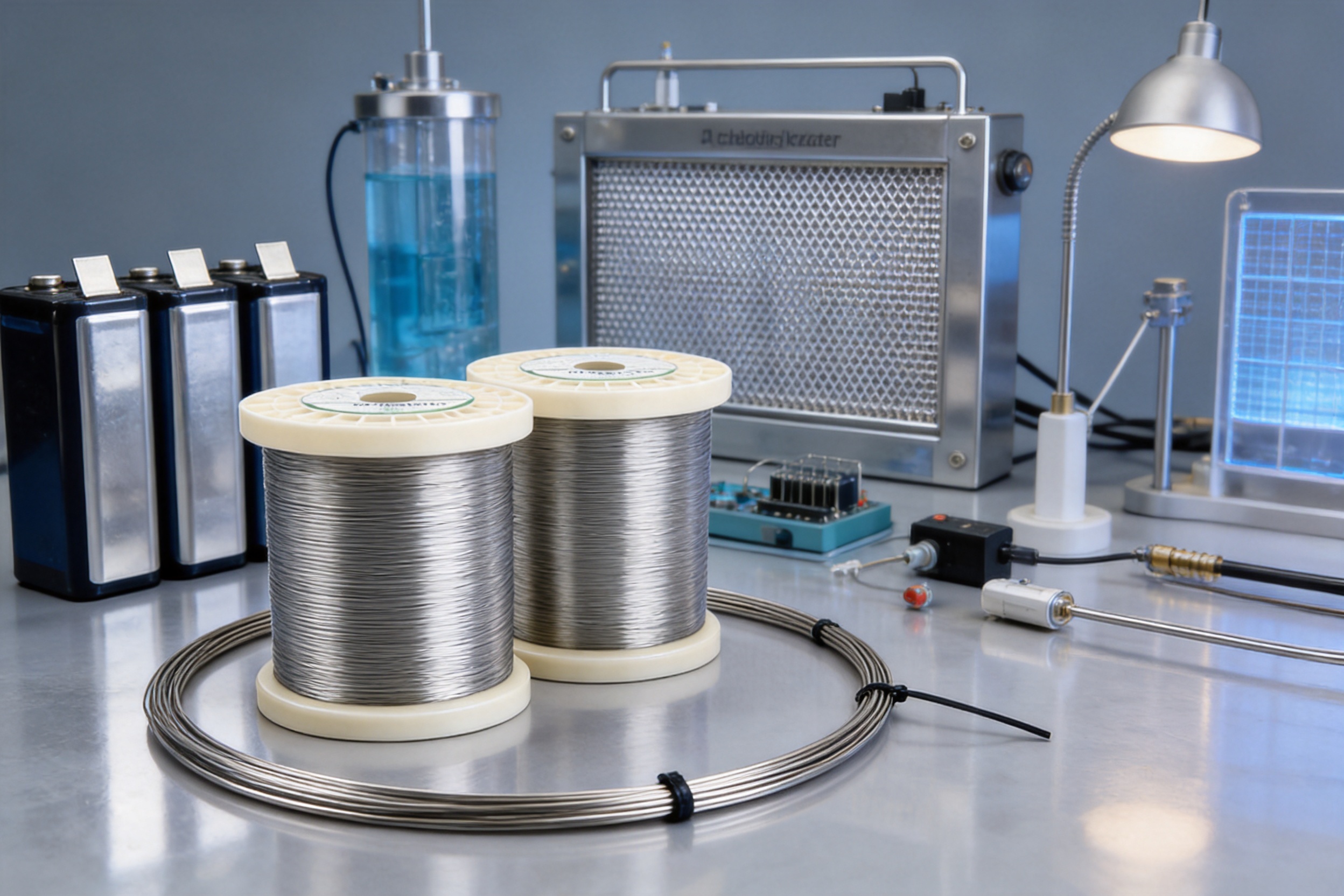
A reliable pure nickel wire supplier must control the complete manufacturing chain rather than simply purchase and resell finished wire. Integrated capability in alloy production, wire processing, instrumentation, cable manufacturing, and inspection provides important advantages for customers requiring stable quality and technical support.
The supplying group described in the product information is a national high-tech enterprise founded in 1997. It includes specialized companies involved in instrumentation, alloy production, cable manufacturing, and precious-metal products. Its facilities are located in Tianchang City, Anhui Province, China, and the group has a registered capital of RMB 118 million, a land area of more than 150 mu, a construction area of approximately 60,000 square meters, and nearly 300 employees.
More than 50 professional personnel are engaged in technical and engineering work, including senior technical experts, senior engineers, engineers, and assistant engineers. This technical team supports product development, process optimization, testing, customer consultation, and continuous improvement.
The company has obtained ISO9001 Quality Management System certification, ISO14001 Environmental Management System certification, and GB/T28001 Occupational Health and Safety Management System certification. These systems provide a structured framework for production planning, process control, environmental management, workplace safety, corrective action, and customer feedback.
Certification does not replace product testing, but it demonstrates that the organization has established documented management procedures. For customers purchasing industrial wire, this can improve confidence in traceability, complaint handling, supplier control, inspection records, and manufacturing consistency.
Advanced melting, rolling, drawing, heat-treatment, cleaning, testing, and packaging equipment helps maintain stable production conditions. Automated or semi-automated systems can improve repeatability, while skilled technicians monitor the parameters that directly affect wire quality.
Important process controls include raw-material identification, furnace temperature, drawing reduction, lubrication, annealing atmosphere, line speed, dimensional measurement, surface inspection, and final packaging. Controlling these variables reduces batch variation and supports the production of wire for demanding applications.
Research and development capability is valuable when standard wire cannot fully satisfy an application. Customers may require an unusual diameter, special temper, improved welding behavior, narrow composition limits, customized coil weight, or specific surface treatment. Engineers can evaluate the operating conditions and recommend a suitable combination of grade and process.
Technical cooperation is particularly important for battery manufacturers, sensor producers, instrument companies, hydrogen-equipment manufacturers, and electronic component suppliers. In these industries, the wire is usually one part of a larger assembly, so its performance must be compatible with welding equipment, adjacent materials, production speed, and service conditions.
The company’s products are described as complying with IEC international standards as well as relevant national and industrial specifications. Customers should identify the exact standard required for their project because composition, tolerances, mechanical properties, testing frequency, and documentation may differ between standards.
For export orders, the supplier can provide product certificates, inspection reports, packing lists, certificates of origin, and other documents requested by the purchaser. Documentation requirements should be agreed before production begins.
Pure nickel wire is used for electronic leads, conductive jumpers, connectors, relay contacts, and conductive pins in vacuum devices. Its conductivity, ductility, and weldability make it convenient for small components that must be formed and joined accurately.
In electrical assemblies, wire diameter and surface condition influence contact resistance and joining reliability. Fine wire may be used for signal connections, while larger wire can serve as a structural conductor or terminal component.
Battery manufacturing is one of the most important application areas for pure nickel wire. It can be used for tabs, lead-out wires, welding pins, and connecting elements in lithium-ion and nickel-metal hydride batteries.
Nickel wire is compatible with many nickel-plated or nickel-based battery terminals. Its resistance to alkaline conditions and its excellent resistance-welding behavior support high-volume battery assembly. For battery applications, customers should specify dimensional tolerance, surface cleanliness, temper, weldability, and restrictions on oil or particulate contamination.
Nickel mesh made from pure nickel wire is widely used as an auxiliary electrode or electrode-support material in alkaline water electrolysis. Nickel is valued for its electrical conductivity, alkaline corrosion resistance, and availability in woven or expanded structures.
Wire diameter, mesh opening, tensile strength, surface condition, and edge quality affect the performance of the finished electrode. The best specification depends on electrolyte concentration, operating temperature, current density, electrode geometry, and expected service life.
Pure nickel wire can be used as a lead wire or signal-output connection for platinum resistance temperature measurement elements and related instrumentation. Its stable mechanical behavior, formability, and compatibility with instrument manufacturing make it suitable for sensor assemblies.
In precision temperature instruments, the wire’s resistance, thermoelectric behavior, insulation system, connection method, and thermal expansion must all be considered. The wire should be selected in coordination with the sensing element and the required measurement accuracy.
Pure nickel wire is used in vacuum furnaces, electric vacuum devices, arc extinguishers, lamp supports, and high-temperature structural components. Its high melting point and useful mechanical stability make it suitable for components that must operate in controlled atmospheres.
Vacuum applications require special attention to cleanliness, outgassing, surface treatment, and compatibility with other materials. A bright, clean, properly annealed wire may be required for high-vacuum assemblies.
Nickel wire can be used to produce corrosion-resistant screens, wire cloth, seals, filters, and structural elements for alkaline or neutral chemical environments. Its ability to remain stable in suitable media helps extend service life and reduce replacement frequency.
Before selecting pure nickel for chemical service, engineers should review the complete chemical exposure. Strong oxidizers, concentrated acids, chloride conditions, high temperature, and mechanical stress may require a different nickel alloy or a corrosion-resistant specialty material.
Pure nickel wire is used as internal lead wire and support wire in incandescent lamps, halogen lamps, xenon lamps, and other electric light sources. It can withstand heat and maintain a useful combination of shape stability, conductivity, and manufacturability.
Lighting applications may require precise wire dimensions, clean surfaces, controlled forming characteristics, and compatibility with glass, ceramic, or other internal materials. Proper thermal treatment helps prevent unexpected deformation during lamp operation.
Begin by identifying temperature, atmosphere, chemical exposure, humidity, pressure, current, voltage, mechanical load, and expected service life. A wire used in an alkaline electrolyzer will have different requirements from one used in a vacuum furnace or battery tab.
Choose the grade according to chemical purity, carbon content, corrosion conditions, electrical requirements, and processing needs. If the application involves long-term elevated temperature, vacuum, welding, or severe forming, discuss the grade with the supplier rather than relying only on a general product name.
Nominal diameter alone is not sufficient. Specify the permitted diameter range, ovality, length or coil format, and any requirements for straightness. Tight tolerances may be necessary for automated welding, fine winding, sensor construction, or precision forming.
State whether the wire should be soft, annealed, semi-hard, hard-drawn, or supplied within a specified tensile-strength and elongation range. Temper affects bending, forming, springback, welding, and dimensional stability.
Surface requirements may include bright finish, cleaned finish, oxide-free condition, low residue, absence of scratches, or suitability for soldering and resistance welding. These requirements should be written into the purchase specification.
For industrial applications, request a certificate of analysis, mechanical test report, dimensional inspection report, and certificate of conformity when needed. Batch traceability is especially important for battery, aerospace-related, medical, energy, and safety-critical applications.
A capable supplier should provide technical communication, sample development, customized dimensions, stable delivery, packaging options, and after-sales support. An integrated manufacturer with alloy, wire, instrumentation, cable, and testing capabilities can often respond more effectively to application-specific requirements.
Pure nickel wire can generally be bent, wound, stamped, welded, and otherwise processed using suitable tools. During forming, avoid sharp bends that exceed the material’s allowable radius. Excessive bending may create local work hardening, surface damage, or hidden cracks.
When installing the wire, avoid excessive stretching. Over-tension can reduce the cross-sectional area and alter electrical resistance, while also creating residual stress that may cause dimensional changes during later heating.
Sharp tools, contaminated dies, and rough guides can scratch the wire surface. Scratches may reduce fatigue strength, increase contact resistance, and create sites for localized corrosion. Guides, feeders, rollers, and welding fixtures should be maintained in good condition.
For welding, the joint area should be clean and free from oil, dust, oxide, and foreign particles. Welding current, pressure, pulse time, electrode condition, and cooling should be optimized through sample testing. A production-quality welding procedure should be validated before large-scale manufacturing.
Pure nickel wire should be stored in a clean and dry location. Packages should remain sealed until use whenever possible. Avoid contact with carbon-steel dust, corrosive chemicals, moisture, and abrasive surfaces. If the wire is supplied on a spool, prevent flange damage and uncontrolled unwinding.
Pure nickel wire has better conductivity and is mainly used for leads, conductors, battery tabs, electrodes, contacts, and corrosion-resistant components. Nickel-chromium wire has higher electrical resistance and is mainly used for heating coils and electric heating elements. Pure nickel may be used for low-temperature or vacuum heating, but nickel-chromium is generally more suitable for long-term high-temperature heating in oxidizing air.
Yes, but its resistivity is relatively low. To produce the same electrical resistance and power, a thinner or longer wire may be required. Its long-term oxidation resistance at high temperature is also generally lower than that of nickel-chromium heating alloys. It is normally considered for low-temperature, intermittent, or vacuum heating after the electrical and thermal design has been verified.
Pure nickel wire is generally non-magnetic or weakly magnetic at room temperature in many applications. However, magnetic behavior can change after cold working, heat treatment, temperature changes, or other processing. If magnetic performance is critical, the customer should specify the required test method and magnetic-property range.
It provides good corrosion resistance in many alkaline, neutral, and fresh-water environments. It may be attacked by strong acids, strong oxidizing chemicals, and high-temperature oxidizing atmospheres. The final selection must be based on the actual chemical concentration, temperature, pressure, flow, and exposure duration.
Yes. It has excellent weldability and can support soldering, resistance welding, laser welding, and argon arc welding when suitable procedures are used. Clean surfaces and controlled welding parameters are important for achieving strong, stable joints.
N5, N6, N7, or another customer-approved nickel grade may be suitable depending on battery chemistry, tab design, welding method, thickness, and required purity. The final selection should be validated through welding trials and electrical, mechanical, and corrosion testing.
Yes. Pure nickel wire can be woven or processed into mesh for electrolyzer electrodes, screens, filters, and other industrial structures. Wire diameter, tensile strength, temper, surface condition, and mesh opening should be selected according to the application.
Provide the required grade, nickel content, diameter, tolerance, temper, surface condition, coil or spool size, total quantity, application, destination, inspection requirements, packaging needs, and required delivery date. Providing drawings or samples can help the manufacturer recommend the most suitable specification.
It should be stored in a dry, clean environment and protected from moisture, dust, corrosive substances, impact, and contamination from carbon-steel particles. Keep the original packaging intact until the wire is ready for processing.
Yes. Customization may include grade, diameter, tolerance, temper, surface finish, coil weight, spool type, straight length, packaging, inspection documentation, and special processing requirements. Custom specifications should be reviewed and approved before production.
An integrated manufacturer can offer more than a standard material catalogue. It can connect raw-material control, alloy production, wire drawing, heat treatment, inspection, packaging, and technical service within one quality-management framework. This reduces communication gaps and makes it easier to investigate quality issues.
For customers developing a new product, an integrated supplier can also support sample preparation, material comparison, welding trials, forming evaluation, and specification optimization. These services are valuable when pure nickel wire is used in a complex assembly rather than as a simple replacement material.
The described manufacturer has experience in temperature instruments, pressure instruments, flow meters, level instruments, cables, alloy materials, electrical accessories, and related industrial products. This broad technical background helps the company understand how alloy wire behaves in practical instrumentation, energy, electrical, and industrial environments.
Its stated manufacturing philosophy emphasizes customer focus, consistent quality, continuous improvement, integrity, technical innovation, and long-term cooperation. These principles are especially important for customers that require recurring shipments, stable batch performance, and engineering support.
Pure nickel wire is a versatile industrial material that combines high nickel content with useful conductivity, ductility, weldability, thermal performance, and corrosion resistance. It is a strong choice for battery tabs, electronic leads, connectors, sensors, electrolyzer electrodes, vacuum equipment, lighting supports, chemical screens, seals, and other components exposed to demanding electrical or environmental conditions.
Its advantages over competing materials are application-dependent. Copper may provide higher conductivity, stainless steel may provide greater mechanical strength, and nickel-chromium may provide higher electrical resistance. Pure nickel becomes particularly competitive when the design requires a balance of conductivity, corrosion resistance, formability, weldability, cleanliness, and high-temperature compatibility.
Successful application depends on selecting the correct grade, diameter, temper, surface condition, and manufacturing tolerance. Equally important are raw-material control, melting quality, drawing technology, annealing, surface finishing, inspection, traceability, and packaging. A manufacturer with certified management systems, advanced production equipment, experienced technical personnel, and integrated alloy and instrumentation capabilities can provide greater confidence in long-term product performance.
When ordering pure nickel wire, buyers should define the complete operating environment and processing requirements rather than specifying only “pure nickel.” A detailed technical specification and validated production sample will help ensure that the finished wire provides reliable performance in the intended application.
1. General technical literature on commercially pure nickel, Nickel 200, and Nickel 201 materials.
2. IEC standards and related industrial specifications for electrical materials, temperature-measurement components, and instrumentation.
3. ISO 9001 quality management system principles and industrial manufacturing quality-control practices.
4. ISO 14001 environmental management system principles for manufacturing organizations.
5. Technical references on nickel alloys, electrical conductivity, corrosion resistance, welding, cold drawing, and annealing.
6. Industrial design literature for alkaline water electrolysis, nickel mesh electrodes, and hydrogen-production equipment.
7. Materials engineering references concerning battery tab welding, electronic leads, vacuum devices, and high-temperature wire applications.



 INQUIRY
 English
 عربى
 русский
 中文简体