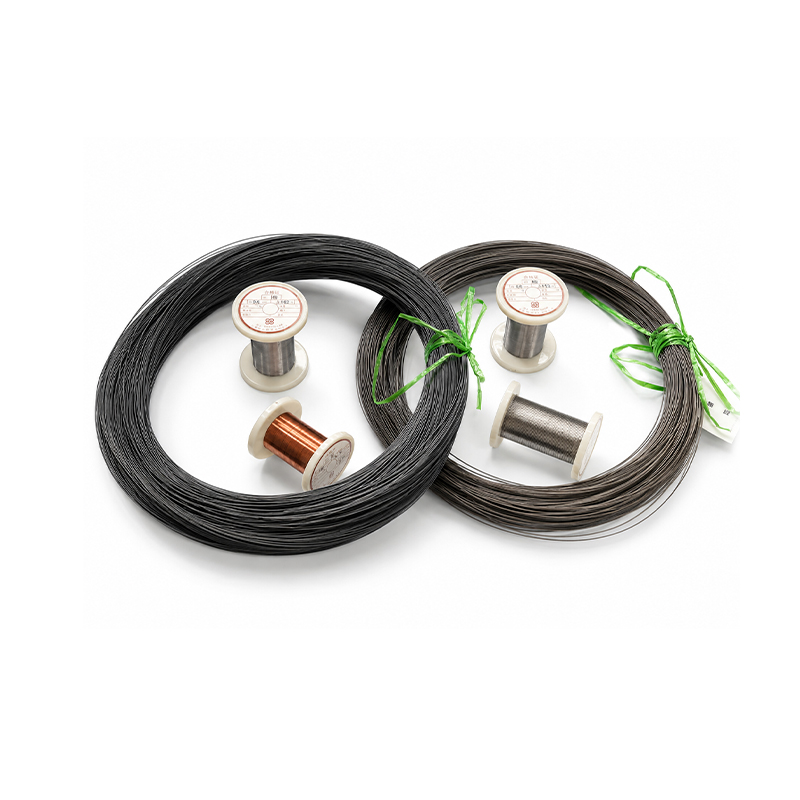
Thermocouple alloy wire is the functional core of many industrial temperature measurement systems. Although it is often supplied as a simple wire or pair of wires, its performance directly determines the accuracy, stability, response time, service life, and safety of the finished thermocouple. The quality of the alloy, the uniformity of its chemical composition, the control of its mechanical properties, and the precision of its processing all influence the reliability of temperature data used in production and process control.
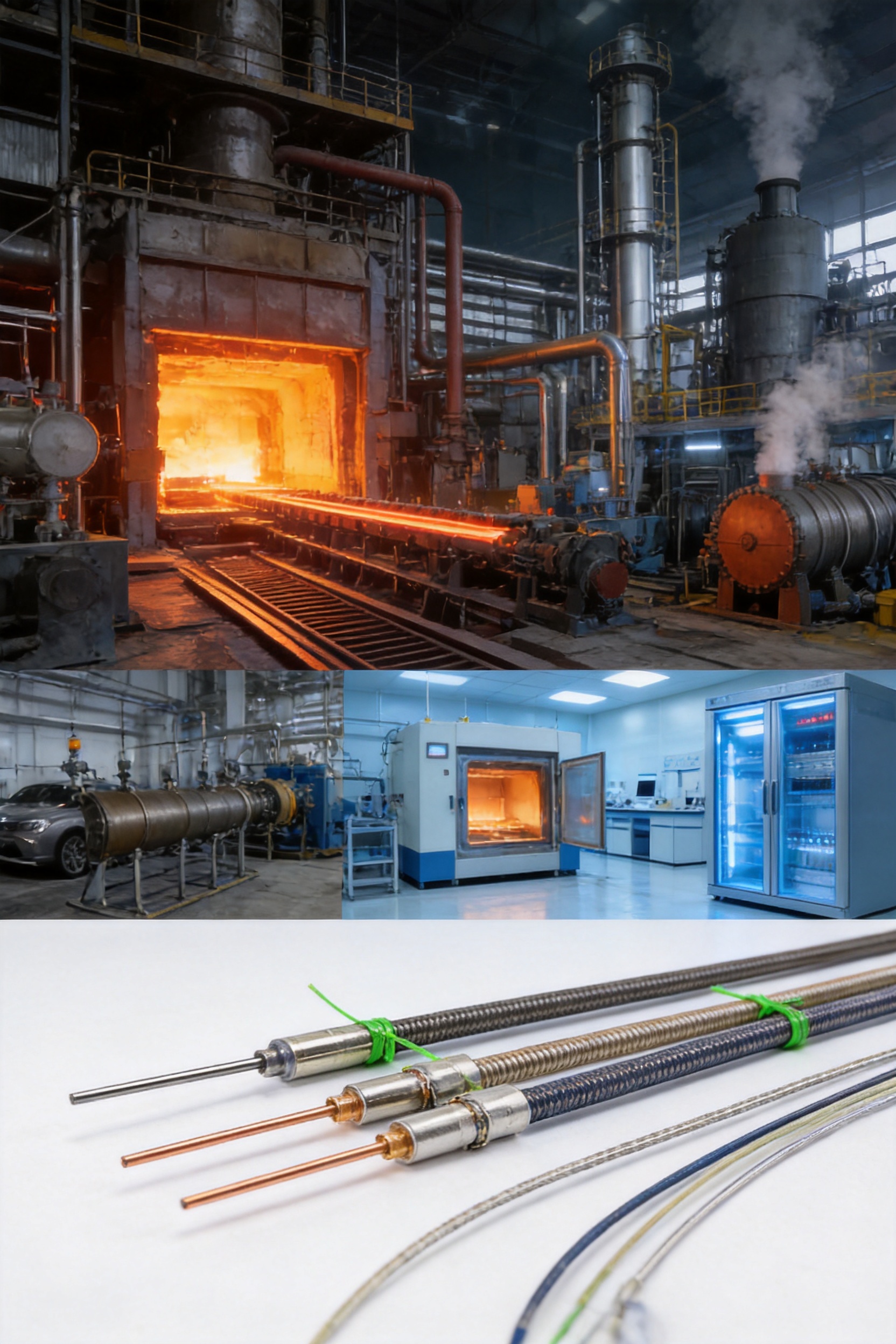
Modern industries increasingly require temperature sensors that can operate continuously in high-temperature, corrosive, vibrating, pressurized, or electrically noisy environments. Metallurgical furnaces, petrochemical units, power generation equipment, vehicle exhaust systems, kilns, sterilization equipment, laboratories, and aerospace test facilities all depend on stable temperature signals. A thermocouple made from inconsistent or unsuitable alloy wire may drift, oxidize, fracture, or produce an incorrect signal, potentially causing product defects, energy waste, equipment damage, or safety incidents.
High-quality thermocouple alloy wire is therefore more than a conductive material. It is a precision-engineered temperature-sensing material designed to generate a predictable thermoelectric voltage over a specified measuring range. The wire must maintain the correct relationship between temperature and electromotive force while resisting oxidation, thermal fatigue, mechanical stress, and environmental degradation.
Xinguo Group Co., Ltd. manufactures thermocouple alloy wire together with industrial temperature instruments, cables, alloy materials, pressure instruments, flow meters, level instruments, and related accessories. Supported by alloy production capabilities, modern inspection procedures, technical personnel, and integrated manufacturing resources, the company supplies alloy wire for standard K, N, E, J, and T thermocouples. Its manufacturing approach emphasizes composition control, process consistency, traceability, product conformity, and suitability for practical industrial applications.
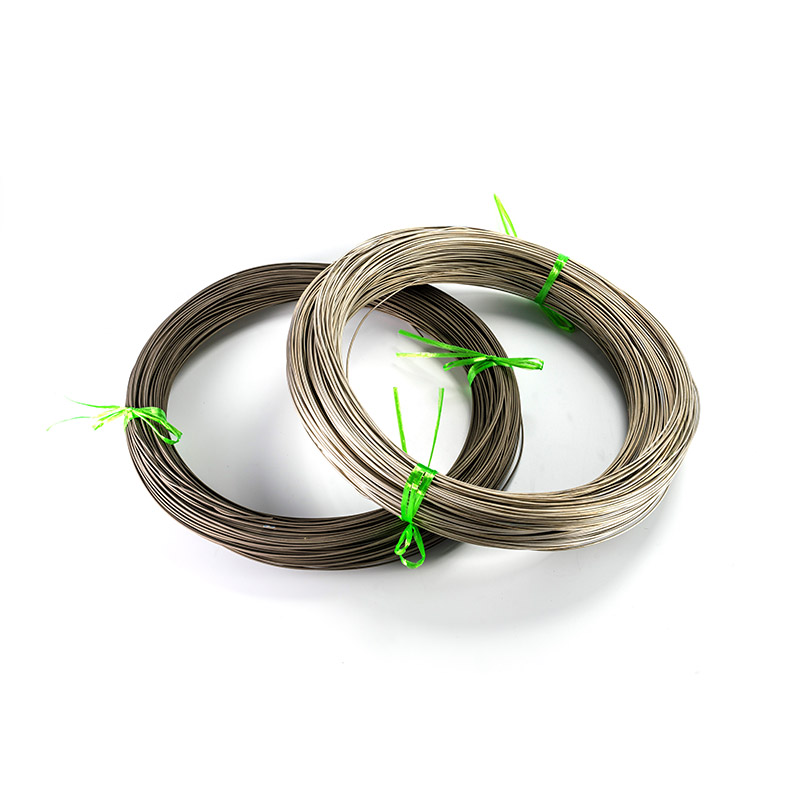
Thermocouple alloy wire
A thermocouple is formed by joining two dissimilar metallic conductors. When the measuring junction is exposed to a temperature different from the reference junction, a thermoelectric voltage is generated. This voltage varies with temperature and can be measured by an instrument, transmitter, recorder, controller, or data acquisition system.
Thermocouple alloy wire is the material used to make these conductors. One conductor is commonly identified as the positive leg and the other as the negative leg. The two legs must possess carefully controlled thermoelectric properties so that the output follows the relevant standard over the intended temperature range.
The alloy wire may be supplied for direct fabrication into bare thermocouples, armored thermocouples, patch thermocouples, needle probes, assembled sensors, and other temperature assemblies. Depending on the installation design, the wire may be cut, formed, welded, insulated, sheathed, or integrated into a complete sensor.
The performance of thermocouple wire depends on several factors:
1. Chemical composition: The proportions of nickel, chromium, silicon, magnesium, iron, copper, and other elements affect thermoelectric characteristics.
2. Metallurgical uniformity: Consistent composition along the entire length helps prevent local output changes and measurement drift.
3. Surface condition: A clean and stable surface supports reliable welding, forming, insulation, and protection against oxidation.
4. Mechanical properties: Tensile strength and elongation determine whether the wire can withstand drawing, bending, vibration, assembly, and thermal cycling.
5. Electrical properties: Resistivity affects signal transmission, circuit loading, and the design of long-distance measurement systems.
6. Temperature capability: Each thermocouple type has a recommended continuous and short-term operating range.
7. Standard compliance: The alloy pair must correspond to recognized thermocouple standards and tolerance classes.
Because these characteristics are interdependent, thermocouple alloy wire must be manufactured through controlled alloy preparation and carefully managed forming processes rather than treated as ordinary metal wire.
Type K is one of the most widely used industrial thermocouple types. Its positive leg is generally nickel-chromium based, while its negative leg is nickel-silicon or nickel-aluminum based. Type K provides a broad operating range, good general-purpose performance, and strong availability in industrial sensor designs.
Type K wire is commonly used in furnaces, heat treatment lines, boilers, kilns, engines, exhaust systems, process piping, and general industrial equipment. In the supplied technical data, Type K Grade I is associated with a long-term operating temperature of approximately 1,200°C and a short-term operating temperature of approximately 1,300°C, subject to installation conditions, protection, atmosphere, and sensor construction.
The listed K-type material combinations include KP and KN. KP is identified as a nickel-chromium alloy with a nominal composition of approximately 90% nickel and 10% chromium. KN is identified as a nickel-based alloy containing approximately 3% silicon. The specific composition and tolerance should always be confirmed against the applicable order specification and product catalog.
Type N is designed for high-temperature applications where improved stability and resistance to certain forms of thermoelectric drift are important. Its positive leg is nickel-chromium-silicon based, while its negative leg is nickel-silicon-magnesium based.
Compared with general-purpose high-temperature thermocouples, Type N can provide improved long-term stability in suitable oxidizing environments. It is used in high-temperature furnaces, heat treatment installations, combustion systems, power equipment, and demanding process monitoring applications.
The supplied material data identifies NP and NN as the principal Type N alloy combinations. NP includes nickel as the balance, chromium in the approximate range of 13.7% to 14.7%, silicon in the range of 1.2% to 1.6%, and a very low magnesium content. NN is nickel based with controlled chromium, silicon, and other alloying elements. Type N Grade I is listed with a long-term operating temperature of approximately 1,200°C and a short-term operating temperature of approximately 1,300°C.
Type E consists of a nickel-chromium positive leg and a copper-nickel negative leg. It is valued for relatively high thermoelectric sensitivity, which can be beneficial where the measurement system requires a stronger voltage signal over a medium or lower temperature range.
Type E wire is suitable for laboratory equipment, environmental chambers, cryogenic-related applications within its rated range, process equipment, ovens, and general temperature control. The supplied data lists a long-term operating temperature of approximately 750°C and a short-term operating temperature of approximately 900°C for Grade I conditions, subject to sensor design and environment.
The primary material combinations are identified as EP and EN. EP is a nickel-chromium alloy with approximately 90% nickel and 10% chromium. EN is a copper-nickel alloy containing approximately 45% nickel and 55% iron according to the supplied composition table. Product documentation should be consulted for the exact applicable composition, tolerance, and national or international standard.
Type J uses an iron positive leg and a copper-nickel negative leg. It is a cost-effective thermocouple type for medium-temperature applications and is widely used in machinery, manufacturing equipment, heat treatment, molds, process lines, and older industrial control systems.
Type J may be selected where the operating atmosphere and temperature range are suitable for iron-based materials. Because the iron leg can be more vulnerable to oxidation under certain conditions, protection, installation orientation, and service environment must be evaluated carefully.
The supplied technical information identifies JP as an iron-based positive material and JN as a copper-nickel negative material. Grade I is listed with a long-term operating temperature of approximately 600°C and a short-term operating temperature of approximately 750°C.
Type T consists of a copper positive leg and a copper-nickel negative leg. It is commonly selected for low-temperature measurement, precision laboratory work, refrigeration, food processing, pharmaceutical equipment, and other applications where performance at low temperatures is important.
Type T provides good sensitivity and stable performance in its appropriate range. The supplied data lists Grade I operation from approximately -40°C to 350°C, with a long-term operating temperature of approximately 300°C and a short-term operating temperature of approximately 350°C. A lower-temperature Grade III range is listed from approximately -200°C to 40°C.
The material combinations are identified as TP and TN. TP is copper, while TN is a copper-nickel alloy. Type T wire must be protected from contamination and electrical contact with unsuitable materials, especially in precision measurement installations.
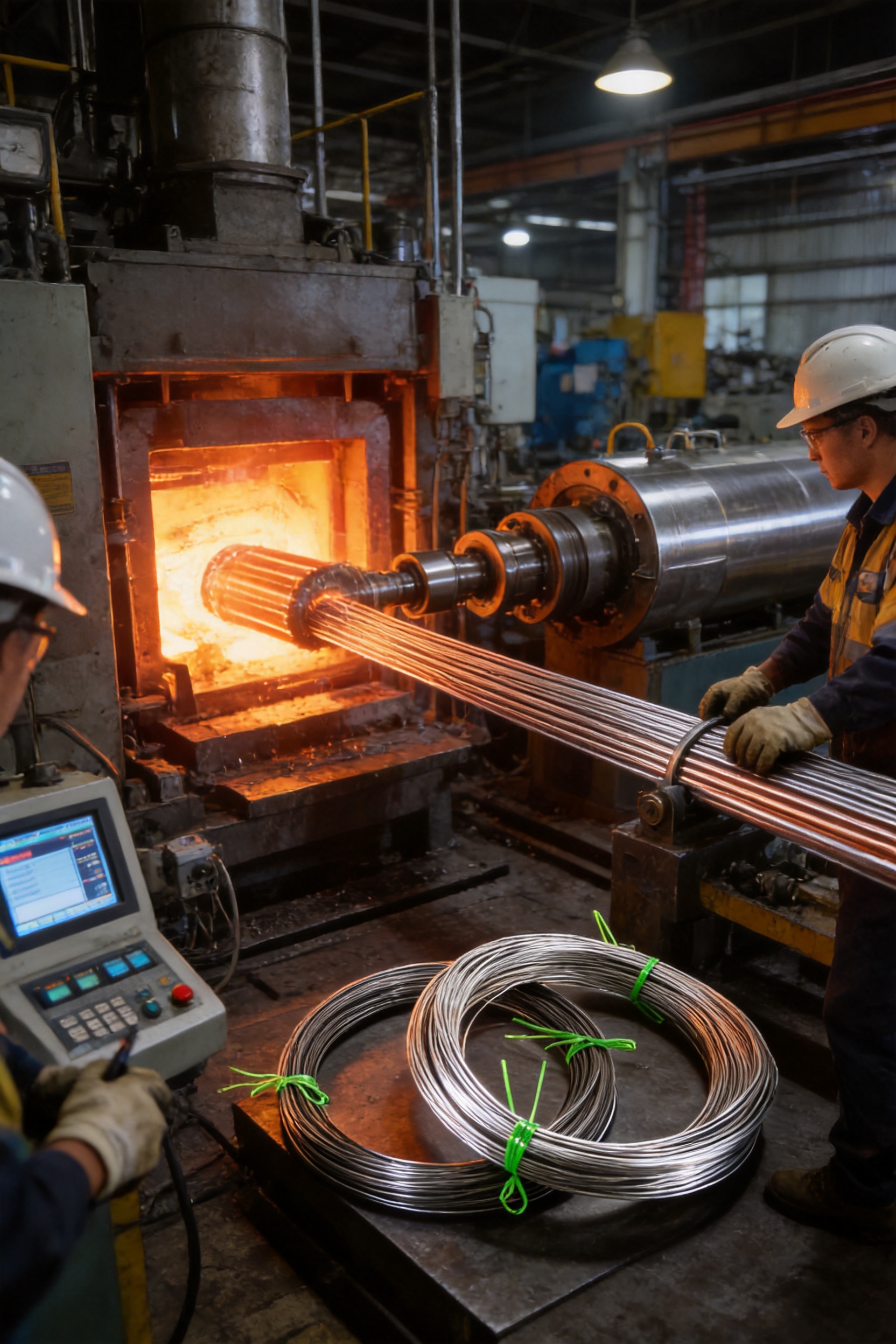
The technical characteristics of thermocouple alloy wire must be considered as a complete set rather than as isolated figures. A wire with excellent tensile strength but poor thermoelectric uniformity is not suitable for precision temperature measurement. Similarly, a wire with a wide nominal temperature range may fail prematurely if it is used in a corrosive atmosphere or subjected to repeated mechanical vibration.
The supplied physical property data provides representative values for the principal material combinations. These values include density, melting point, tensile strength, elongation, and resistivity at 20°C. They support material selection, manufacturing design, and engineering evaluation.
| Material | Approximate Density at 20°C (g/cm³) | Approximate Melting Point (°C) | Minimum Tensile Strength (MPa) | Minimum Elongation (%) | Resistivity at 20°C (μΩ·cm) |
| KP | 8.5 | 1427 | 490 | 10 | 70.6 |
| KN | 8.6 | 1399 | 390 | 15 | 29.4 |
| NP | 8.5 | 1410 | 620 | 30 | 100 |
| NN | 8.6 | 1340 | 550 | 35 | 33 |
| EP | 8.5 | 1427 | 490 | 25 | 70.6 |
| EN | 8.8 | 1220 | 390 | 25 | 49 |
| JP | 7.8 | 1402 | 240 | 20 | 12 |
| JN | 8.8 | 1220 | 390 | 25 | 49 |
| TP | 8.9 | 1084 | 196 | 20 | 1.71 |
| TN | 8.8 | 1220 | 390 | 25 | 49 |
Density is useful for production calculations, material verification, and weight estimation. Melting point provides a basic indication of the thermal characteristics of each alloy, although it must never be treated as the recommended operating temperature. The actual service limit depends on thermoelectric stability, oxidation behavior, mechanical loading, insulation, sheath material, and the surrounding atmosphere.
Tensile strength helps determine whether a wire can withstand handling, drawing, winding, assembly, and vibration. Elongation indicates the capacity of the material to deform without immediate fracture. These properties are particularly important when the wire is formed into a small-radius junction, inserted into a probe, or installed in equipment that experiences thermal expansion and contraction.
Resistivity affects the resistance of a thermocouple circuit. For long wire runs, high resistance can reduce signal quality or interact with the input impedance of the measuring instrument. Correct wire size, circuit design, compensation cable selection, and transmitter placement are therefore important for maintaining measurement performance.
Thermocouple output is not determined only by the nominal type. The tolerance grade, temperature range, reference junction condition, installation method, and operating atmosphere also influence the actual accuracy that can be achieved.
| Type | Grade | Long-Term Operating Temperature (°C) | Short-Term Operating Temperature (°C) | Specified Temperature Range (°C) | Tolerance | Referenced Standard |
| K | I | 1200 | 1300 | -40 to 1100 | ±1.5°C or ±0.4% of reading | GB/T 2614 |
| K | II | Subject to application | Subject to application | -40 to 1300 | ±2.5°C or ±0.75% of reading | GB/T 2614 |
| E | I | 750 | 900 | -40 to 800 | ±1.5°C or ±0.4% of reading | GB/T 4993 |
| E | II | Subject to application | Subject to application | -40 to 900 | ±2.5°C or ±0.75% of reading | GB/T 4993 |
| J | I | 600 | 750 | -40 to 750 | ±1.5°C or ±0.4% of reading | GB/T 4994 |
| J | II | Subject to application | Subject to application | -40 to 750 | ±2.5°C or ±0.75% of reading | GB/T 4994 |
| T | I | 300 | 350 | -40 to 350 | ±0.5°C or ±0.4% of reading | GB/T 2903 |
| T | II | Subject to application | Subject to application | -40 to 350 | ±1°C or ±0.75% of reading | GB/T 2903 |
| T | III | Subject to application | Subject to application | -200 to 40 | ±1°C or ±1.5% of reading | GB/T 2903 |
| N | I | 1200 | 1300 | -40 to 1100 | ±1.5°C or ±0.4% of reading | GB/T 17615 |
| N | II | Subject to application | Subject to application | -40 to 1300 | ±2.5°C or ±0.75% of reading | GB/T 17615 |
The temperature figures shown above are engineering reference values from the supplied product information. The final allowable temperature must be confirmed for the selected wire diameter, insulation, protective tube, sheath, junction construction, atmosphere, and installation design. A wire that can tolerate a brief exposure to a high temperature may not be suitable for continuous operation at the same temperature.
Tolerance is generally expressed as whichever is greater between a fixed temperature value and a percentage of the measured temperature. For example, a specification of ±1.5°C or ±0.4% of reading means that the applicable tolerance is determined by the larger value at the measurement point. System accuracy may be lower than the wire tolerance because of cold-junction compensation, extension cable, instrument accuracy, grounding, electromagnetic interference, and installation conditions.
Stable thermoelectric output is one of the most important advantages of properly manufactured alloy wire. The wire must generate a consistent relationship between temperature and voltage over its working range. Chemical segregation, contamination, uneven heat treatment, or mechanical damage can cause localized changes in output.
Controlled alloy preparation and uniform processing help reduce such variations. This supports repeatable measurements during startup, normal operation, process transitions, and long-term service.
Thermoelectric drift occurs when the output of a thermocouple changes over time even though the actual temperature has not changed. Drift may result from oxidation, diffusion between materials, grain growth, contamination, thermal cycling, or prolonged operation near the upper temperature limit.
Suitable alloy selection and controlled metallurgical processing reduce the risk of drift. Type N, for example, is often selected for applications where high-temperature stability and improved linearity are important. Nevertheless, no thermocouple is completely immune to drift, and regular calibration or replacement should be considered in critical systems.
Industrial thermocouples frequently operate in hot air, combustion gases, furnace atmospheres, or process environments containing reactive substances. Oxidation can thin the wire, alter the surface composition, weaken the material, and change the thermoelectric signal.
Nickel-based alloy combinations used in K, N, and E thermocouples can provide useful oxidation resistance when used within their design limits. Protective tubes, mineral insulation, metal sheaths, and suitable installation practices provide additional protection. Type selection must consider whether the atmosphere is oxidizing, reducing, vacuum-based, carburizing, sulfur-containing, or otherwise corrosive.
Thermocouple alloy wire must often be drawn to small diameters and bent into compact assemblies. During fabrication, the wire may be wound, inserted into an insulating tube, welded at the tip, or routed through a protective sheath. Adequate tensile strength helps prevent breakage, while sufficient elongation supports forming and handling.
The physical data supplied for the product includes minimum tensile strength and elongation values for the principal alloy combinations. These values give manufacturers and users a basis for selecting materials suitable for fine-wire fabrication, vibration service, and repeated thermal expansion.
The availability of K, N, E, J, and T materials allows users to select a suitable thermocouple for applications extending from low-temperature refrigeration to high-temperature furnace measurement. Rather than using one material for every installation, engineers can match the alloy pair to the operating temperature, atmosphere, sensitivity, stability, cost, and required tolerance.
The wire can be used to produce bare junctions, armored thermocouples, surface or patch sensors, needle probes, assembled thermocouples, and custom temperature assemblies. This flexibility allows the same basic material family to serve fixed equipment, portable instruments, embedded sensors, laboratory tools, and production-line monitoring systems.
The quality of thermocouple alloy wire is established throughout the manufacturing process. Final inspection alone cannot correct poor raw material selection, uneven melting, contamination, or uncontrolled drawing. A reliable manufacturer therefore combines material engineering, production control, process inspection, and final verification.
Each thermocouple type requires a carefully controlled combination of metallic elements. Nickel, chromium, silicon, magnesium, iron, copper, and other elements must be selected according to the required grade and standard. Raw materials should be verified for identity, purity, and batch consistency before entering production.
Control of minor elements is especially important. Small variations may influence oxidation behavior, electrical resistivity, mechanical strength, grain structure, and thermoelectric output. A professional alloy manufacturer establishes material specifications and maintains records for incoming batches.
During melting, the component metals must be combined in a controlled sequence and under suitable process conditions. The objective is to produce an alloy with uniform composition throughout the melt. Proper homogenization reduces the risk of local concentration differences that could later affect signal output or mechanical behavior.
Melting equipment, temperature control, atmosphere management, slag removal, and batch records all contribute to the quality of the finished alloy. The manufacturing process must be adapted to the characteristics of each material combination, because nickel-chromium, copper-nickel, iron-based, and nickel-silicon alloys do not behave identically.
After casting and preliminary processing, the alloy is formed into rods or intermediate stock and drawn through a controlled sequence of dies to achieve the required diameter and surface condition. Wire drawing must balance dimensional accuracy with mechanical properties. Excessive deformation can increase hardness and residual stress, while inadequate control can lead to diameter variation or surface defects.
Intermediate annealing may be used to restore ductility and make further drawing possible. The number of drawing passes, reduction ratio, lubrication, die condition, line speed, and annealing cycle can all influence the final wire.
Consistent diameter is important for sensor fabrication, resistance control, junction welding, and installation. A uniform wire is easier to process into mineral-insulated cables, probes, and compact assemblies. It also improves production repeatability for customers manufacturing large quantities of thermocouples.
Heat treatment can relieve stress, improve ductility, stabilize the microstructure, and support the required thermoelectric behavior. The treatment must be carefully controlled because overheating or an unsuitable atmosphere may cause oxidation, grain growth, contamination, or changes in composition near the surface.
Modern production procedures combine specified heating and cooling conditions with inspection of physical and electrical properties. The purpose is not simply to soften the wire but to establish a stable and repeatable metallurgical condition suitable for service.
Before the wire is packaged or used in a sensor, its surface must be free from harmful contamination, excessive oxide, oil, drawing residue, and loose particles. A clean surface promotes reliable welding and reduces the risk of poor electrical contact.
Depending on the product form and customer requirements, the wire may be supplied bare, wound, cut to length, or prepared for integration with insulation and protective components. Packaging should protect against moisture, mechanical damage, mixing of positive and negative legs, and loss of identification.
Quality control may include measurement of wire diameter, surface appearance, tensile strength, elongation, resistivity, chemical composition, and thermoelectric output. Each inspection serves a different purpose. Dimensional testing confirms manufacturability, chemical analysis confirms alloy identity, mechanical testing evaluates durability, and thermoelectric testing confirms measurement performance.
Inspection records also support traceability. When wire is used in critical equipment, the ability to identify the material batch, manufacturing date, product type, grade, and inspection result is an important advantage over unverified low-cost alternatives.
The final product is reviewed against the specified thermocouple type, tolerance class, dimensions, packaging requirements, and applicable standard. Finished wire may be supplied with product documentation so that the customer can confirm the material’s intended use and handling requirements.
Xinguo Group combines alloy manufacturing with temperature instrument and cable production. This integrated structure allows technical knowledge from sensor design, alloy processing, cable manufacturing, and instrumentation to support product development and customer application service.
Customers purchasing thermocouple alloy wire are not only buying a metal product. They are purchasing the foundation of a measurement system. A supplier with strong manufacturing capability can provide greater confidence in consistency, availability, technical support, and long-term supply.
One important advantage is process integration. A company that understands both alloy wire and finished thermocouples can better evaluate how wire properties affect welding, insulation, response time, sheath compatibility, and instrument connection. This practical knowledge helps reduce the gap between laboratory material specifications and actual field performance.
Another advantage is production flexibility. Different industries require different wire types, diameters, tolerance grades, lengths, packaging formats, and sensor constructions. A manufacturer with alloy, cable, and instrumentation resources can support standard products as well as application-specific requirements.
Quality system certification also provides an organizational framework for controlled purchasing, production documentation, inspection, corrective action, and continuous improvement. Xinguo Group reports certification according to ISO9001 quality management, ISO14001 environmental management, and GB/T28001 occupational health and safety management systems.
The company was founded in 1997 and has developed a group structure that includes instrument manufacturing, alloy production, cable production, and precious metal-related capabilities. Its reported facilities cover more than 150 mu of land with a construction area of approximately 60,000 square meters. The organization employs nearly 300 people, including more than 50 professional technicians, engineers, senior engineers, and technical experts.
These resources support a manufacturing model based on modern equipment, professional technical teams, documented processes, and inspection at different stages of production. Products are developed for domestic and international markets and are designed to comply with IEC requirements as well as relevant national and industrial specifications where applicable.
Thermocouple alloy wire is used in temperature sensors for blast furnaces, converters, continuous casting systems, rolling mills, reheating furnaces, and heat treatment equipment. Molten steel, aluminum, copper, and other metals require fast and reliable temperature measurement because temperature directly affects composition, fluidity, casting quality, and energy consumption.
High-temperature K and N thermocouples are commonly selected for furnace and process monitoring, while special assemblies may be used for immersion measurement or surface monitoring. Protective tubes and sacrificial components may be required when the sensor is exposed to molten metal or severe mechanical impact.
Petrochemical equipment includes reaction kettles, cracking furnaces, pipelines, heat exchangers, catalytic units, storage systems, and process heaters. Sensors may be exposed to high temperature, pressure, corrosive chemicals, vibration, and flammable materials.
In these applications, the alloy wire is normally integrated into a complete engineered thermocouple with suitable insulation, sheath material, process connection, and protection. The selection of a thermocouple type must take account of the process atmosphere and the possibility of contamination or chemical attack.
Boilers, steam turbines, heat exchangers, flues, gas turbines, wind power systems, photovoltaic equipment, energy storage systems, and battery packs all require temperature monitoring. Accurate temperature data supports efficiency management, fault detection, thermal protection, and predictive maintenance.
For power equipment, long-term stability is often more important than the lowest initial purchase price. A reliable thermocouple can help prevent false alarms, reduce unnecessary shutdowns, and provide consistent data for process optimization.
Thermocouple sensors made from K, J, or other suitable materials can monitor engine exhaust temperature, cylinder temperature, exhaust treatment systems, molds, heat treatment lines, and production tooling. Compact wires and fine junctions are useful where response speed and limited installation space are important.
During testing, sensors may experience vibration, rapid temperature changes, and repeated thermal cycles. Mechanical strength, welding quality, and strain relief are therefore essential.
Cement rotary kilns, glass furnaces, ceramic sintering furnaces, refractory production lines, and lime kilns operate at elevated temperatures for extended periods. Thermocouples must withstand heat, dust, thermal cycling, and sometimes corrosive gases.
High-temperature thermocouple alloy wire, combined with suitable insulation and protective tubes, provides continuous temperature measurement for combustion control, product quality, and equipment protection.
Food processing, sterilization, drying, ovens, incubators, low-temperature refrigerators, laboratory furnaces, and scientific instruments require dependable temperature control. Type T and Type E materials can be useful for lower-temperature or precision applications, while Type K is widely used for general-purpose ovens and equipment.
Hygienic design, clean surfaces, calibration, response time, and compatibility with the monitoring instrument must be considered in addition to alloy selection.
Engine testing, high-temperature test benches, aero-engine development, spacecraft thermal components, and other special equipment demand careful control of materials and measurement uncertainty. Thermocouples may be exposed to rapid temperature changes, vibration, vacuum, high heat flux, or limited access for maintenance.
In these applications, the selected wire should be supported by documented material properties, controlled production, traceability, and application-specific testing.
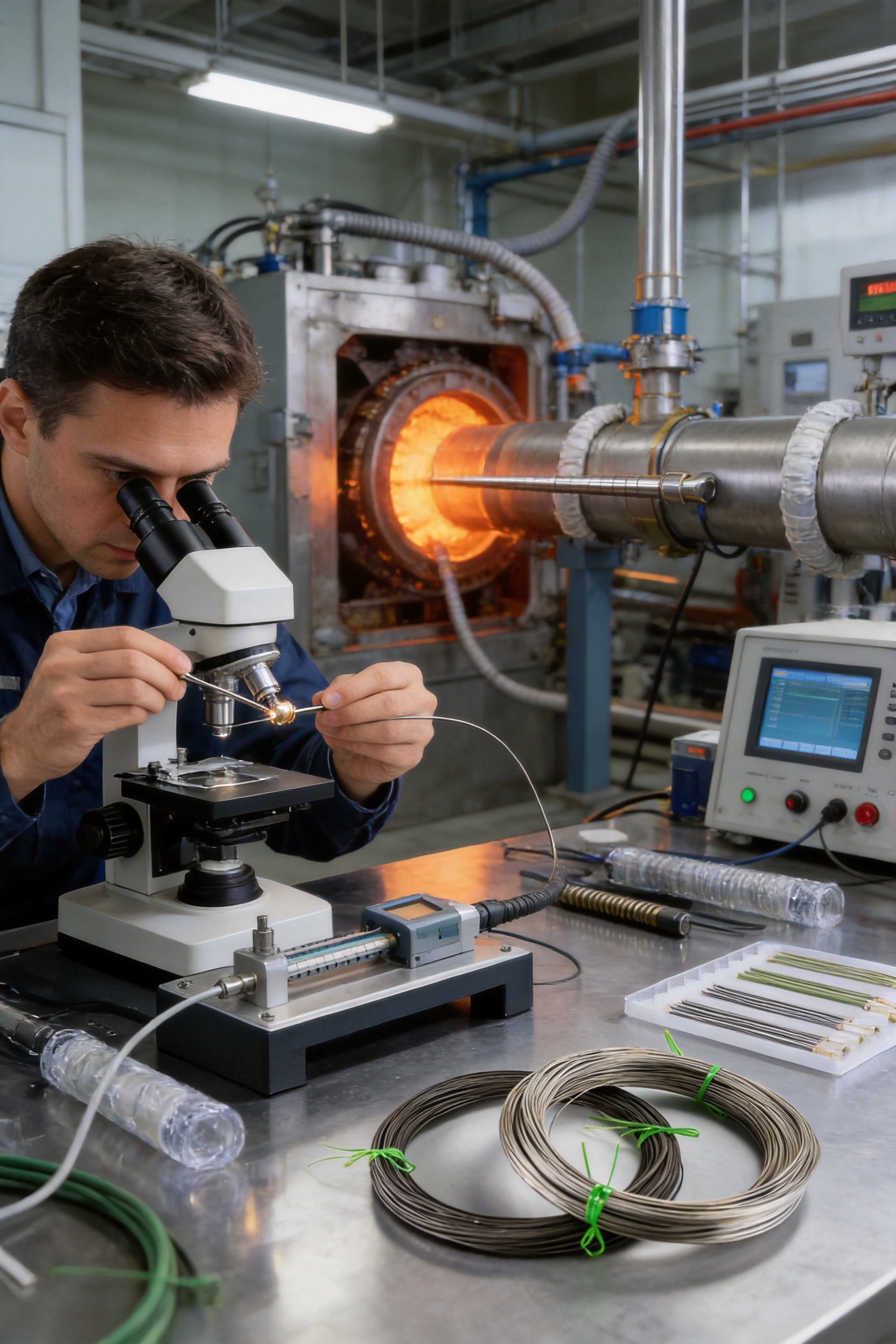
The measuring junction should make complete and stable contact with the object or medium being measured. Poor contact can cause slow response, heat conduction errors, and a reading that does not represent the actual process temperature.
The cold junction must be properly connected and compensated. A thermocouple measures the temperature difference between the hot junction and the reference junction. Modern instruments normally provide electronic cold-junction compensation, but the connection must still be correct and the compensation circuit must match the thermocouple type.
Positive and negative conductors must not be reversed. Reversed polarity can cause an incorrect reading, a negative temperature response, or abnormal controller behavior. The thermocouple type selected in the instrument must match the actual alloy pair.
Thermocouple wiring should be routed away from strong electromagnetic interference, high-current cables, variable-frequency drives, motors, and other sources of electrical noise. Shielding, grounding, isolation, and correct extension or compensation cable can improve signal quality.
The wire must not be used above its appropriate temperature limit for extended periods. Over-temperature operation can accelerate oxidation, cause embrittlement, alter the thermoelectric characteristics, and lead to fracture. Short-term exposure limits should not be interpreted as continuous operating limits.
When cutting and welding wire, the junction must be made reliably. Oxy-fuel welding, argon arc welding, or another suitable method may be used according to the wire type and assembly design. A cold weld, weak weld, contamination, or incomplete fusion can create unstable readings or early failure.
After welding, the junction should be inspected for firmness, symmetry, surface contamination, and electrical continuity. The cold-end connection should be mechanically secure and protected from moisture, vibration, and accidental short circuits.
Where the sensor is installed in a corrosive or high-pressure environment, the thermocouple assembly should include a suitable sheath, protection tube, seal, flange, compression fitting, or process connection. Alloy wire alone cannot provide complete protection against every operating condition.
Over-temperature operation is one of the most common causes of premature failure. It can produce oxidation, grain growth, embrittlement, and thermoelectric drift. Even if the sensor continues to produce a signal, the reading may no longer be accurate.
Poor welding is another frequent problem. A weak or contaminated junction may show intermittent output, excessive resistance, slow response, or complete circuit failure. Welding procedures should be appropriate for the selected alloy and should provide a clean, mechanically strong junction.
Reversed polarity causes incorrect readings and may be overlooked when the sensor is installed remotely. Positive and negative legs should be clearly identified during manufacturing, packaging, and installation.
Insulation damage can create a short circuit between the two conductors or between a conductor and a metal sheath. This can introduce ground loops, unstable readings, or measurement errors, especially in mineral-insulated and multi-point systems.
Failure to provide cold-junction compensation leads to an error that changes with ambient temperature. The error may be small in a controlled laboratory but significant in outdoor, furnace, or process installations.
Corrosion, mechanical vibration, repeated bending, and thermal expansion can eventually break the wire. Protective construction, appropriate wire diameter, strain relief, and suitable routing help extend service life.
Using an incorrect material pair or mismatching the thermocouple type selected in the instrument can produce a consistent but incorrect temperature reading. The product label, wiring documentation, instrument settings, and calibration records should be checked before commissioning.
Before ordering thermocouple alloy wire, the buyer should define the required thermocouple type, measurement range, tolerance grade, wire diameter, length, surface condition, packaging, and final application.
The operating atmosphere is equally important. Oxidizing, reducing, inert, vacuum, carburizing, sulfur-bearing, and high-moisture atmospheres can affect different alloys in different ways. A supplier should be informed about the process environment rather than receiving only a temperature figure.
The required response time may determine the wire diameter and junction construction. Fine wire generally responds more quickly but may be less resistant to mechanical damage. Heavier wire may provide better durability but can increase response time.
The purchaser should also identify whether the wire will be used directly, welded into a bare sensor, inserted into a protective sheath, or used in a mineral-insulated cable. These manufacturing steps may impose requirements for ductility, surface cleanliness, welding performance, and dimensional tolerance.
For critical applications, buyers should request documentation covering chemical composition, physical properties, thermoelectric tolerance, applicable standard, batch identification, and inspection results. Supplier capability, production history, quality systems, and after-sales technical support should also be considered.
The lowest unit price does not necessarily represent the lowest total cost. Inaccurate sensors can cause process waste, unplanned maintenance, product rejection, energy losses, and safety risks. Consistent alloy wire can reduce these hidden costs by improving sensor life and measurement reliability.
Choose Type K for broad general-purpose and medium-to-high-temperature applications. Choose Type N where high-temperature stability and reduced drift are important. Choose Type E where high sensitivity is useful in low- or medium-temperature measurement. Choose Type J for suitable medium-temperature applications where an iron-based positive leg is acceptable. Choose Type T for low-temperature and precision low-temperature measurement.
No. Each thermocouple type has different thermoelectric characteristics, temperature capability, atmospheric compatibility, sensitivity, and mechanical behavior. Type K is widely used, but it is not automatically the best choice for low-temperature laboratory work, highly stable high-temperature service, or every corrosive environment.
A tolerance grade defines the permitted deviation from the standardized thermoelectric relationship over a stated temperature range. Grade I generally provides a tighter tolerance than Grade II in the supplied specifications. The final system accuracy also depends on the instrument, cold-junction compensation, extension cable, installation, and calibration.
Yes. The wire can generally be cut according to installation or manufacturing requirements. After cutting, the measuring junction must be welded correctly, and the cut ends should be protected from contamination and damage. The supplier should be informed if special lengths, coils, spools, or identification are required.
Yes, provided that the welding equipment, procedure, and operator are suitable for the selected alloy and wire diameter. Argon arc welding and other appropriate welding methods may be used. The weld should be firm, clean, electrically continuous, and free from cold welding or excessive contamination.
Possible causes include oxidation, overheating, contamination, thermal cycling, mechanical damage, insulation deterioration, poor junction quality, polarity errors, lack of cold-junction compensation, and chemical changes in the alloy. Calibration comparison with a reference sensor can help identify whether the problem is in the wire, assembly, instrument, or installation.
No. Tensile strength is important, but thermoelectric uniformity, stability, oxidation resistance, elongation, resistivity, surface quality, and standard compliance are also essential. A suitable product balances mechanical properties with electrical and thermal performance.
An inquiry should include thermocouple type, temperature range, tolerance grade, wire diameter, required quantity, length or coil format, application atmosphere, final sensor construction, welding or insulation requirements, applicable standard, packaging, and delivery destination. Photographs or drawings of the intended assembly can also help the manufacturer recommend an appropriate product.
No. The maximum temperature is only one selection factor. A wire designed for high-temperature service may not provide the best sensitivity, low-temperature accuracy, corrosion resistance, or cost for another application. The operating range and environment should be matched to the thermocouple type.
Traceability allows the material batch, production process, inspection result, and shipment information to be reviewed if a quality issue occurs. It also supports regulated industries, preventive maintenance, supplier evaluation, and repeat purchasing of a proven material.
Xinguo Group Co., Ltd. is an industrial manufacturer based in Tianchang City, Anhui Province, China. The group was founded in 1997 and includes companies specializing in instruments, alloys, cables, precious metals, and related industrial products. This combination gives the organization experience across the complete path from material production to finished measurement equipment.
The group reports a registered capital of RMB 118 million, a land area exceeding 150 mu, a construction area of approximately 60,000 square meters, and a workforce of nearly 300 people. More than 50 professional technicians and engineering personnel support research, product development, process improvement, inspection, and technical service.
Its product portfolio includes temperature instruments, thermocouples, pressure instruments, pressure transmitters, pressure gauges, flow meters, level instruments, instrument materials, alloy wire, cables, and electrical accessories. This broad range helps the company understand the practical requirements of industrial measurement systems rather than viewing alloy wire as an isolated commodity.
The company follows documented quality, environmental, and occupational health and safety management systems. Its manufacturing philosophy emphasizes customer requirements, consistent quality, technical improvement, responsible production, and long-term cooperation. Modern equipment, strict inspection procedures, and compliance with relevant IEC, national, and industrial specifications support the supply of products for domestic and international applications.
For customers purchasing thermocouple alloy wire, these strengths provide several practical benefits: access to multiple thermocouple types, support for standard and customized requirements, coordination between material and instrument specialists, documented manufacturing processes, and the possibility of sourcing related sensor products from one industrial supplier.
Thermocouple alloy wire is a precision material that determines the foundation of industrial temperature measurement. Its value comes from the combined performance of chemical composition, thermoelectric stability, oxidation resistance, mechanical strength, ductility, dimensional consistency, and compliance with recognized standards.
Type K, N, E, J, and T wires serve different temperature ranges and application requirements. Correct selection must consider not only the nominal temperature but also the atmosphere, tolerance, response time, mechanical loading, instrument compatibility, and sensor construction.
High-quality manufacturing provides clear advantages over inconsistent low-cost alternatives. Controlled raw materials, uniform alloy melting, accurate wire drawing, appropriate heat treatment, clean surfaces, documented inspection, and batch traceability help reduce drift, premature failure, and measurement uncertainty.
Xinguo Group combines alloy manufacturing, cable production, temperature instruments, and industrial instrumentation capabilities. Its technical personnel, production facilities, management systems, and broad product portfolio support the supply of thermocouple alloy wire for demanding applications in metallurgy, petrochemicals, power, automotive manufacturing, kilns, laboratories, food processing, pharmaceuticals, aerospace, and special equipment.
When the wire is selected according to the actual process and manufactured under controlled conditions, it can provide stable thermoelectric output, dependable long-term service, and accurate temperature information. These qualities make thermocouple alloy wire an essential material for safer operations, improved process control, higher product consistency, and more efficient industrial production.
1. GB/T 2614, Technical Requirements for K-Type Thermocouple Wires and Related Materials.
2. GB/T 4993, Technical Requirements for E-Type Thermocouple Wires and Related Materials.
3. GB/T 4994, Technical Requirements for J-Type Thermocouple Wires and Related Materials.
4. GB/T 2903, Technical Requirements for T-Type Thermocouple Wires and Related Materials.
5. GB/T 17615, Technical Requirements for N-Type Thermocouple Wires and Related Materials.
6. International Electrotechnical Commission, Thermocouples: Reference Tables and Tolerances.
7. International Electrotechnical Commission, Industrial Process Measurement and Control Documentation.
8. ISO 9001, Quality Management Systems: Requirements.
9. ISO 14001, Environmental Management Systems: Requirements with Guidance for Use.
10. Xinguo Group Co., Ltd., Thermocouple Alloy Wire Product Information and Technical Data.



 INQUIRY
 English
 عربى
 русский
 中文简体