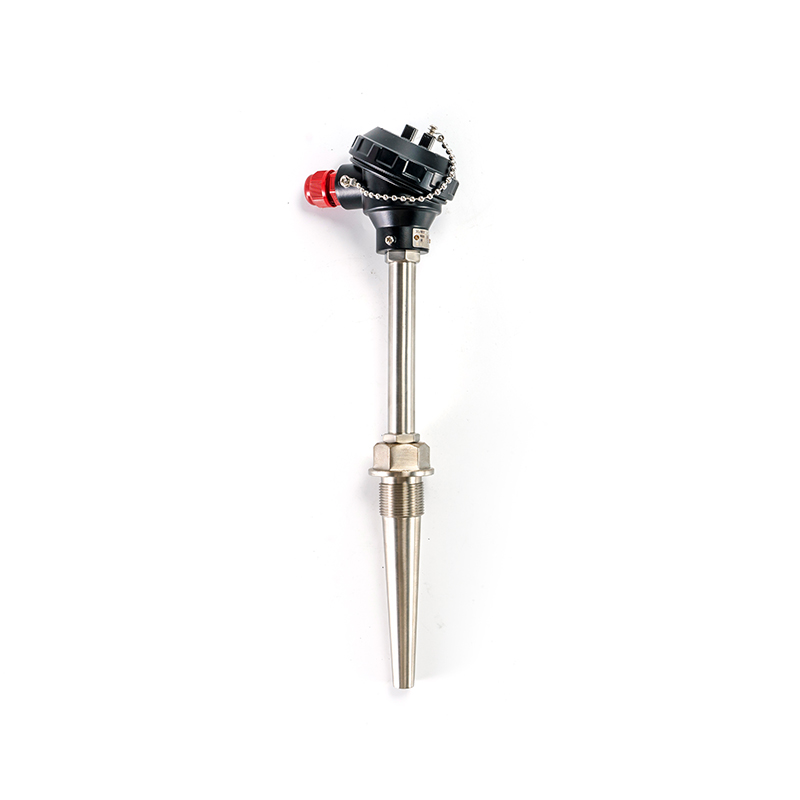
Temperature measurement becomes significantly more difficult when a process combines high heat, moving particles, mechanical impact, chemical exposure, and continuous operation. In circulating fluidized beds, fluidized bed furnaces, cement kilns, mineral processing lines, and similar installations, a conventional resistance temperature detector may provide accurate readings at the beginning of its service life but fail prematurely when exposed to erosion and thermal stress. The protective sheath can become thin, the sensing element can be damaged, and the instrument may eventually produce unstable or inaccurate readings.
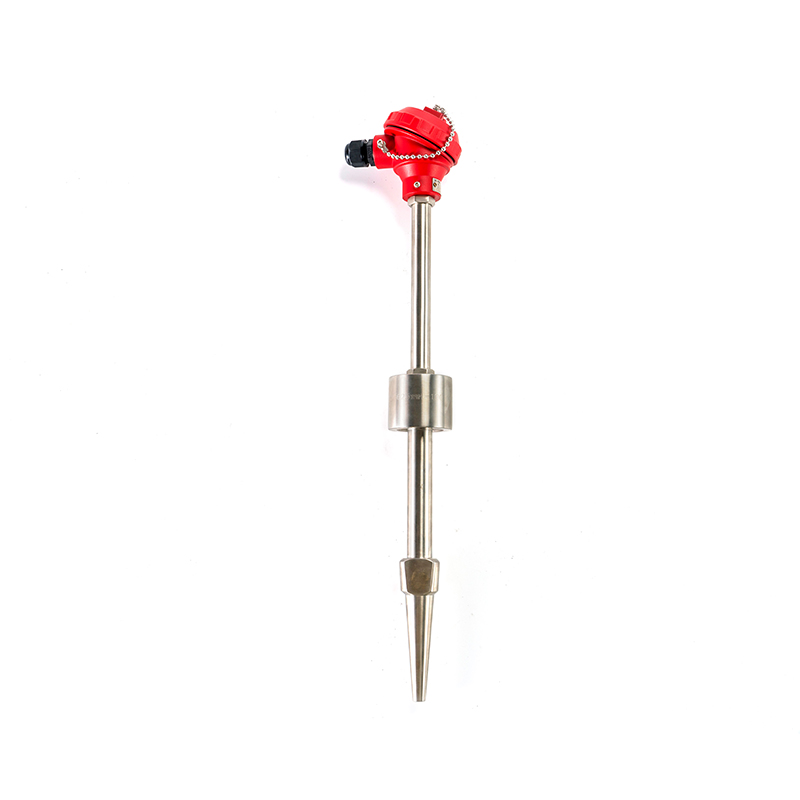
The Abrasion-resistant RTD is designed specifically for these severe operating conditions. It combines a reliable resistance temperature sensing principle with protective materials and manufacturing techniques intended to withstand abrasive particles, elevated temperatures, corrosion, and repeated thermal cycling. The design is suitable for industrial users who need dependable temperature information without frequent replacement of sensors in difficult measurement locations.
Unlike a general-purpose RTD intended for clean liquids, gases, or protected equipment, this product is developed for environments in which the sensor itself is exposed to process wear. Its construction incorporates wear-resistant protective coatings, high-chromium cast iron, high-temperature alloys, and plasma tube technology. These features create a robust measurement assembly that offers a longer operating life and better mechanical protection than many standard RTD designs.
Accurate temperature information is essential in high-temperature process industries. It supports combustion control, material quality, energy management, equipment protection, emissions control, and operational safety. A damaged or unreliable sensor can cause more than a measurement error. It may lead to unnecessary shutdowns, poor product quality, excessive fuel consumption, or damage to expensive process equipment. For this reason, the value of an abrasion-resistant RTD should be assessed not only by its initial purchase price but also by its service life, measurement stability, maintenance requirements, and ability to remain operational in harsh locations.
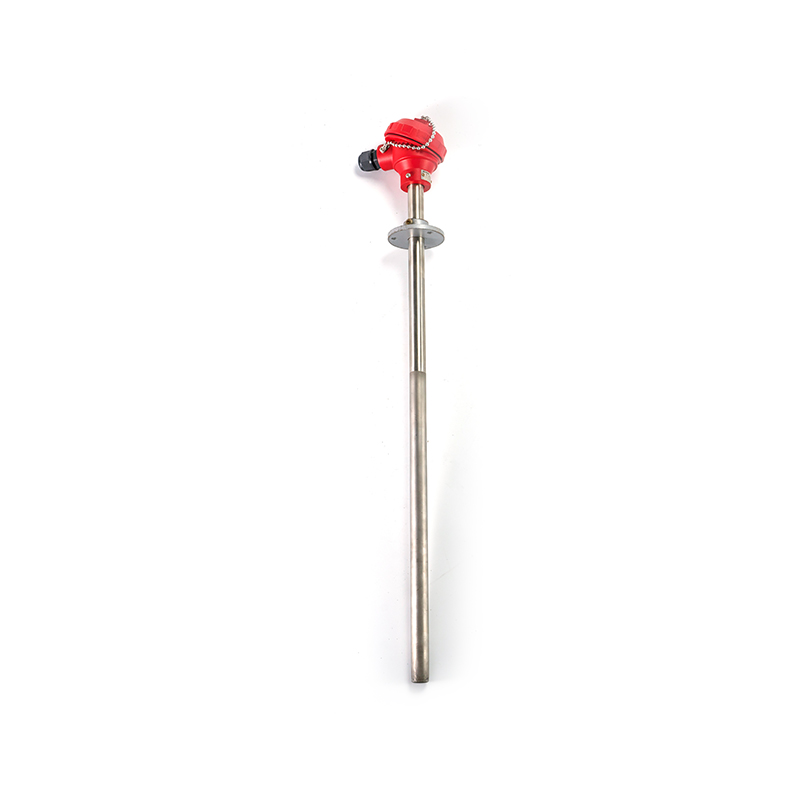
Abrasion-resistant RTD
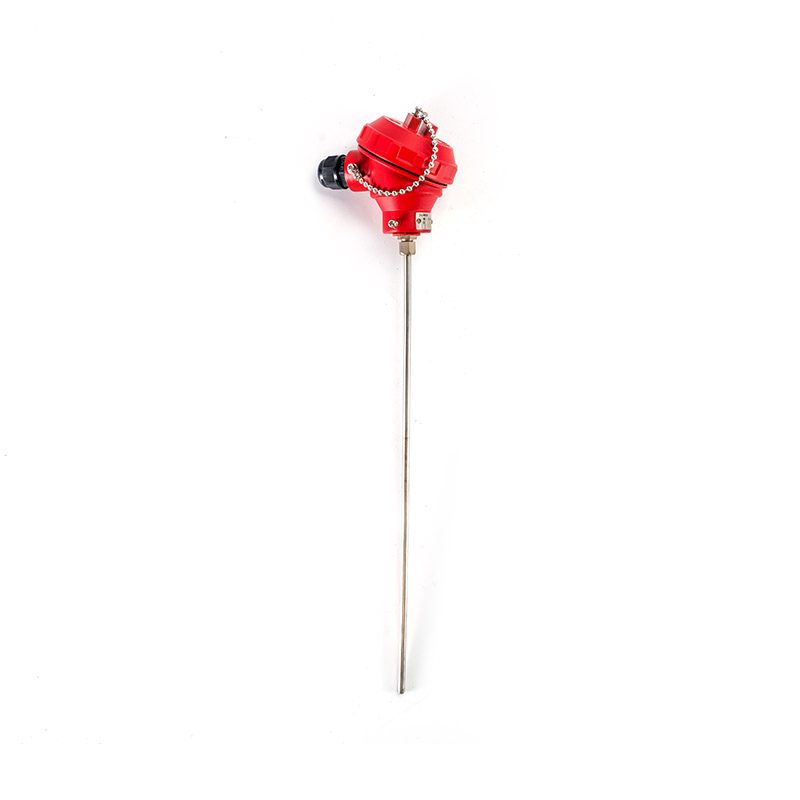
The Abrasion-resistant RTD is an industrial resistance temperature detector engineered for high-wear and high-temperature applications. It is manufactured using a combination of protective wear-resistant coating technology, high-chromium cast iron, high-temperature alloy materials, and plasma tube processing. The selected materials and manufacturing methods are intended to protect the sensing assembly while allowing the instrument to deliver reliable temperature signals to controllers, recorders, display instruments, and other monitoring systems.
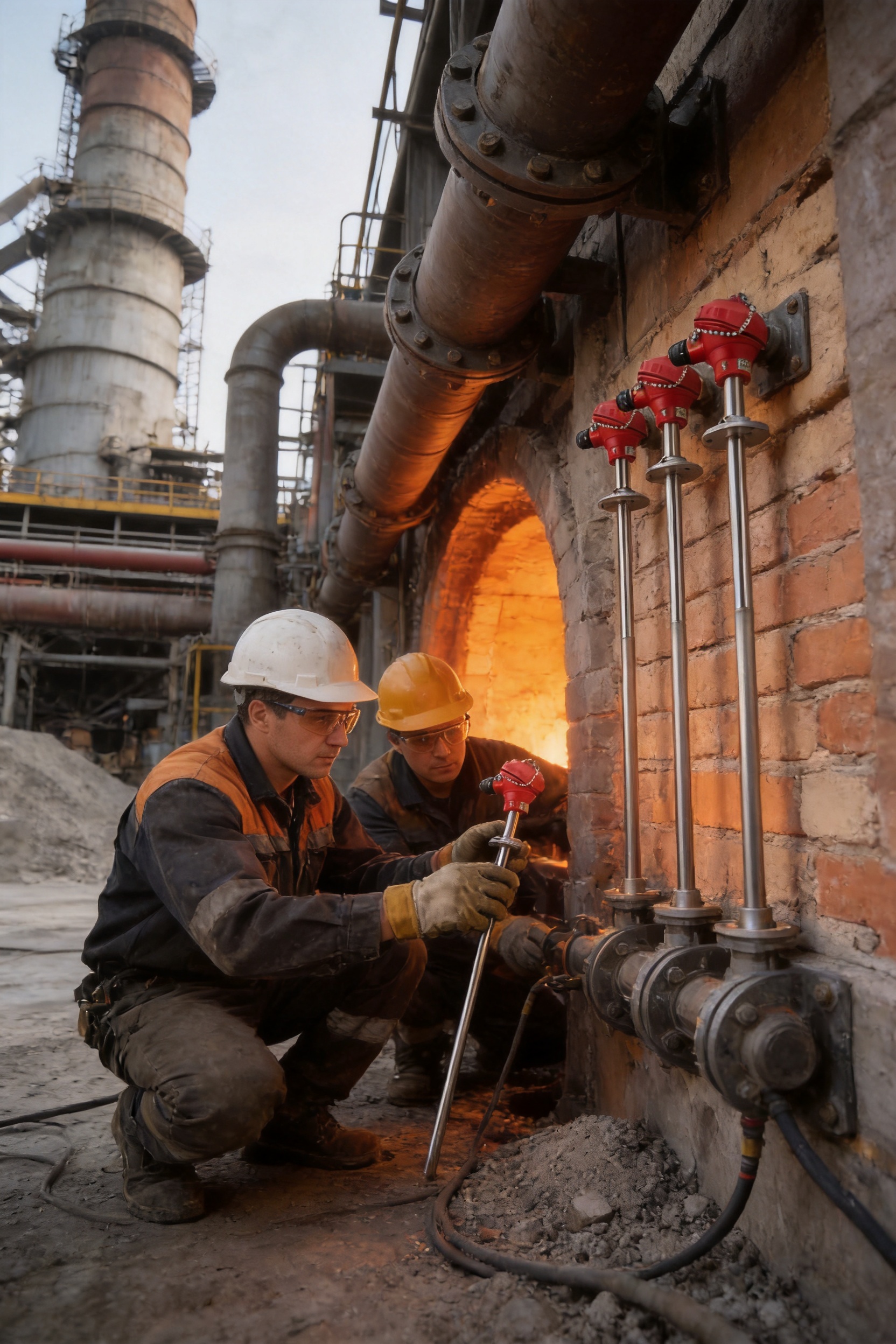
The product is suitable for locations where airborne solids, circulating particles, ash, clinker, mineral material, fuel residue, or other process media can continuously strike the sensor surface. Such particles may move at considerable velocity and can gradually erode ordinary metal protection tubes. The abrasion-resistant construction slows this damage and helps preserve the mechanical integrity of the sensing point.
The RTD can also operate in locations subject to substantial thermal stress. Repeated starts and stops, changes in fuel supply, variations in process load, and fluctuations in fluidized-bed conditions can cause rapid temperature changes. The use of appropriate high-temperature materials helps the sensor tolerate these conditions more effectively than a basic instrument designed for stable, moderate-temperature service.
Although the product is mechanically reinforced, its main purpose remains accurate temperature measurement. Protection is not provided at the expense of process information. The sensor is intended to maintain a dependable temperature response while its outer construction resists wear. This balance between measurement performance and physical durability is one of the product’s principal advantages.
The protective structure may include high-chromium cast iron in areas requiring strong resistance to abrasive contact. Chromium-rich materials are widely used in wear applications because their metallurgical structure can provide improved hardness and resistance to particle erosion. Their suitability depends on the operating temperature, process chemistry, flow velocity, installation position, and other project conditions, so the material selection should be confirmed for each application.
High-temperature alloy components are used where the sensor must maintain mechanical stability and corrosion resistance under elevated heat. These alloys can help reduce deformation and premature deterioration in service. They are particularly valuable in zones where the process temperature remains high for long periods or where repeated thermal expansion and contraction could weaken a less suitable material.
Wear-resistant coating technology provides an additional protective layer. A correctly selected and applied coating can reduce direct contact between abrasive media and the underlying structure. The coating also contributes to protection against certain corrosive conditions. Its performance depends on surface preparation, coating composition, application parameters, thickness control, adhesion, and final inspection.
Plasma tube technology is used to form or process protective tube structures from different materials. Plasma-based manufacturing can support controlled application and processing of high-performance materials, helping create a dense and durable protective surface. It also allows the manufacturer to develop product configurations for different measurement environments rather than relying on one universal construction.
An RTD measures temperature through the predictable change in electrical resistance of its sensing element. As temperature changes, the electrical resistance changes in a defined relationship. A compatible transmitter, controller, recorder, or display instrument converts this resistance signal into a temperature value for process monitoring or control.
The abrasion-resistant design protects the sensing element from the external environment while preserving the electrical path needed for measurement. Correct connection, suitable instrumentation, and appropriate installation are essential for achieving the best possible accuracy. The protection tube and mounting arrangement should be selected according to the required response time, process pressure, temperature range, immersion depth, and mechanical loading.
Many industrial processes transport solid particles through a gas stream or across a hot mechanical surface. In a circulating fluidized bed, for example, particles are continuously lifted, mixed, and returned through the system. A sensor installed in such a process can experience repeated impacts from fast-moving material. The wear mechanism may be gradual, but the accumulated damage can eventually expose the sensing element or create a leak path.
Fluidized bed furnaces present a similar challenge. The bed material is deliberately kept in motion, producing excellent heat transfer but also creating a highly abrasive environment. A standard protection tube may lose wall thickness at the most exposed point. Once the protective wall becomes too thin, vibration and thermal stress can accelerate failure.
Cement kilns and related systems create additional difficulties. Hot gases, dust, clinker, alkaline materials, and chemical compounds can attack exposed components. Mechanical vibration and temperature cycling can make these effects more severe. Sensors used in these processes must be chosen for the complete environment rather than temperature alone.
Abrasion resistance provides several practical benefits. It can extend the interval between sensor replacements, reduce unplanned maintenance, protect the sensing element from direct particle impact, and improve confidence in long-term temperature data. In a continuous plant, these benefits can have a direct effect on productivity and operating cost.
Improved durability also helps maintenance teams work more efficiently. If a sensor fails repeatedly at the same location, personnel may need to enter a hot or restricted area, isolate equipment, remove deposits, and install a replacement under difficult conditions. A longer-lasting RTD reduces the frequency of these interventions and allows maintenance resources to be directed toward higher-priority tasks.
The most important advantage is protection against mechanical wear caused by moving solids. Conventional RTDs often use stainless steel or another general-purpose sheath selected primarily for corrosion resistance and normal temperature service. Such materials may perform well in clean process streams but may not provide sufficient life when continuously struck by abrasive particles.
The combination of high-chromium cast iron, high-temperature alloys, and wear-resistant coatings creates a more suitable barrier for harsh service. No material can resist every form of wear indefinitely, but a purpose-built abrasion-resistant assembly can substantially improve performance compared with an unprotected or lightly protected sensor.
The use of high-temperature materials allows the product to operate in demanding thermal environments. The design is intended to reduce deformation, oxidation, and structural deterioration under prolonged heat exposure. This is especially useful in furnaces, kilns, reactors, and fluidized systems where ordinary sensor construction may have a limited operating life.
High-temperature suitability must always be matched with the actual process conditions. The maximum operating temperature depends on the sensing element, insulation, sheath, coating, connection head, cable, and installation design. Even so, the product’s construction provides a stronger starting point for high-temperature applications than a standard low-stress RTD.
Industrial failures are often caused by several stresses acting at the same time. A sensor may experience particle impact while expanding from heat, vibration while exposed to corrosive dust, or pressure changes while undergoing thermal cycling. A product designed only for one of these conditions may fail when the stress factors combine.
The Abrasion-resistant RTD is developed as an integrated solution. Its materials and protective structure are selected to address mechanical wear, high temperature, corrosion, and thermal stress together. This integrated approach is more practical than treating each problem separately after installation.
Durability can reduce the frequency of sensor replacement. A longer service interval helps lower direct spare-part consumption and reduces the labor needed for inspection, removal, installation, wiring, and calibration. The financial benefit is often greater when the sensor is installed in a difficult-to-access location.
Reduced replacement frequency also helps maintain stable process operation. Frequent sensor changes can introduce periods of uncertain measurement, temporary bypass arrangements, or delayed startup. A reliable instrument supports more consistent process control and simplifies maintenance planning.
The RTD can be integrated with standard industrial temperature monitoring equipment, including display instruments, data recorders, controllers, and compatible RTD transmitters. This allows users to upgrade the durability of the sensing point without necessarily replacing the entire control system.
Before installation, the user should verify the sensor type, resistance value, wiring arrangement, accuracy class, connection method, and input requirements of the receiving device. Compatibility is normally straightforward when the instrument is specified correctly, but these details should never be assumed.
Harsh industrial applications vary considerably. One plant may require maximum erosion resistance, while another may prioritize corrosion resistance, response time, pressure integrity, or a particular mounting dimension. The product can be evaluated and configured according to the actual application rather than treated as a fixed, one-size-fits-all component.
Customization may involve protective tube materials, coating selection, insertion length, mounting thread, flange arrangement, electrical connection, cable length, terminal configuration, or sensor specification. Engineering review is especially important when the RTD will be installed in a high-velocity flow or in a location exposed to large particles.
| Performance Requirement | Conventional General-Purpose RTD | Abrasion-Resistant RTD | Practical Benefit |
|---|---|---|---|
| Resistance to moving solid particles | Usually limited unless separately protected | Enhanced through protective materials and coatings | Longer service life in erosive process zones |
| High-temperature operation | Depends strongly on standard sheath material | Supported by high-temperature alloys and robust construction | Improved suitability for furnaces and kilns |
| Mechanical durability | Designed primarily for ordinary industrial service | Designed for high-wear and high-stress locations | Fewer failures caused by impact and vibration |
| Maintenance demand | May require frequent replacement in abrasive service | Reduced replacement frequency when correctly applied | Lower downtime and maintenance labor |
| System integration | Generally compatible with standard RTD devices | Compatible with standard systems when correctly specified | Simple connection to existing monitoring equipment |
| Application flexibility | Best for relatively clean and stable environments | Suitable for fluidized beds, kilns, and other wear-prone equipment | Broader industrial application range |
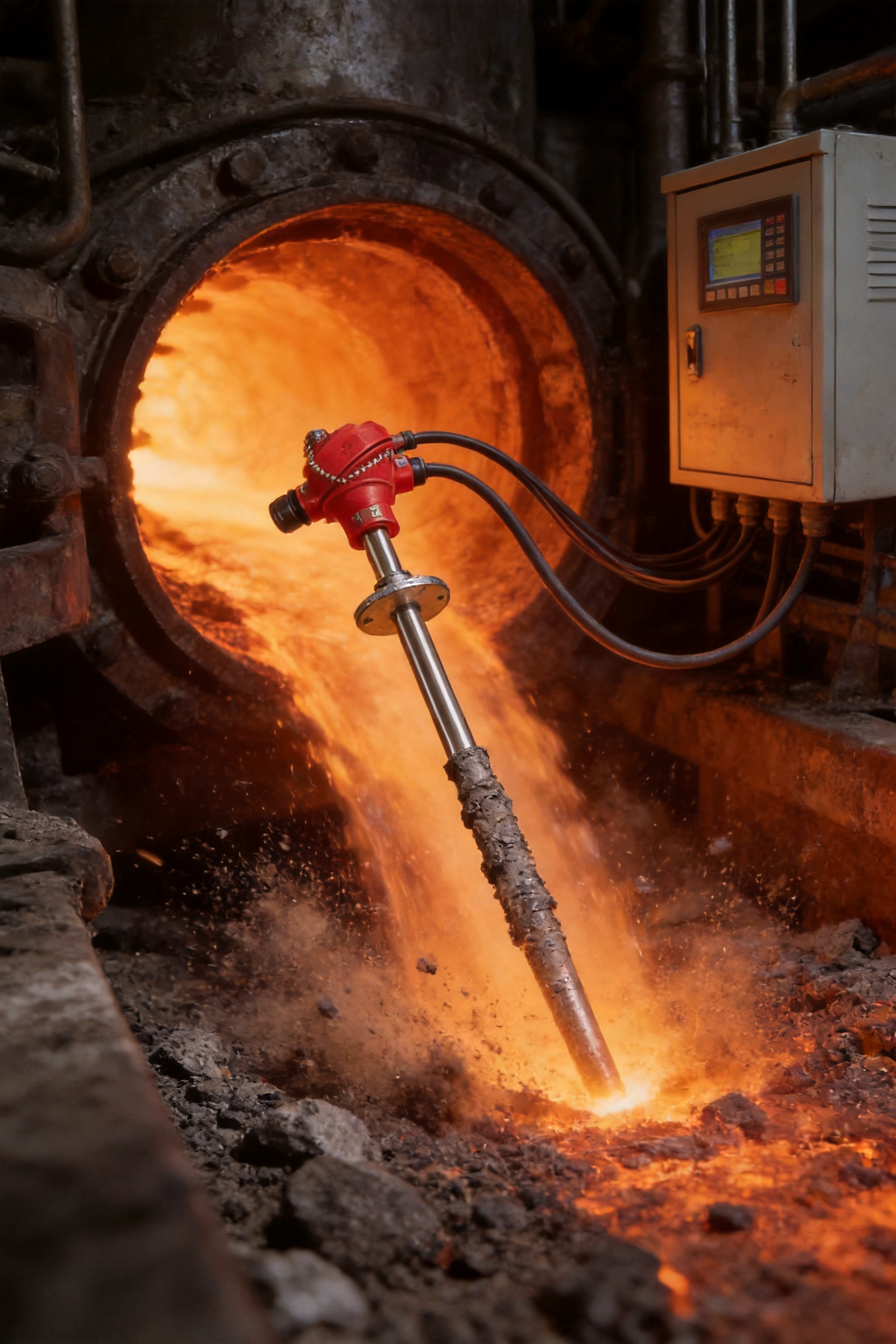
Circulating fluidized bed systems depend on the movement of solid particles through a high-temperature gas stream. Temperature measurement is required in combustion zones, return loops, separators, heat exchange sections, and related equipment. Sensors in these positions may be exposed to continuous particle circulation and high flow velocity.
An abrasion-resistant RTD helps maintain temperature monitoring in locations where a standard sensor could experience rapid sheath wear. Reliable measurements support fuel control, combustion stability, heat recovery, emissions management, and protection of refractory or metallic components.
Fluidized bed furnaces offer efficient heat transfer and uniform processing, but the moving bed material creates severe mechanical conditions. The sensor must withstand contact with particles while continuing to respond to process temperature changes.
The product is appropriate for furnace areas where the sensor is exposed to bed movement, ash, fuel residue, or other abrasive solids. Its protective construction can help plant operators obtain more consistent temperature data without frequent sensor replacement.
Cement manufacturing involves high temperatures, dust, clinker, chemical exposure, vibration, and continuous operation. Temperature measurement is important in preheaters, precalciners, kilns, coolers, and other stages of production. A sensor failure can make process optimization more difficult and may affect product quality or fuel efficiency.
The abrasion-resistant RTD is suitable for wear-prone kiln environments when its materials, dimensions, and installation method are selected for the actual process. Protective construction helps the sensor remain functional in areas where dust and high-temperature solids could quickly damage a general-purpose assembly.
Potential applications include mineral processing equipment, hot gas ducts, combustion systems, ash handling systems, thermal treatment equipment, metallurgical processes, and industrial furnaces. It may also be considered for process lines in which the temperature probe is exposed to high-velocity gas containing solid particles.
Application suitability should be confirmed through a technical review. Important factors include process temperature, particle size, particle hardness, flow velocity, pressure, chemical composition, vibration, installation angle, maintenance access, and required measurement accuracy.
Manufacturing a durable RTD begins with proper material selection. The protective material must be compatible with the process temperature and chemical environment while also providing the required resistance to erosion and mechanical stress. High-chromium cast iron and high-temperature alloys are selected for their ability to perform in demanding service, but their effectiveness depends on composition, structure, processing, and quality control.
Material control includes verifying incoming raw materials, checking certificates where applicable, controlling batches, and ensuring that the selected alloy matches the approved product specification. Consistent material quality is essential because small variations in composition or processing can influence hardness, toughness, corrosion resistance, and thermal behavior.
Plasma processing is an important part of the product’s protective construction. Plasma systems can generate concentrated heat and allow selected materials to be deposited or processed on a prepared surface. When correctly controlled, the process can create a dense protective layer with strong adhesion and suitable resistance to high-temperature wear.
Key process parameters may include power input, material feed rate, plasma gas conditions, surface distance, travel speed, coating thickness, and cooling control. These parameters must be managed systematically to reduce porosity, cracking, excessive residual stress, or uneven coverage.
Surface preparation is equally important. The base material must be clean and properly conditioned before coating. Contamination, oxidation, inadequate roughness, or poor preparation can weaken bonding and reduce the expected service life of the protective layer. A professional manufacturing process therefore treats preparation, deposition, finishing, and inspection as connected stages.
Wear protection paint or coating technology provides another method of reinforcing the sensor’s exposed surface. The coating formulation is selected according to the required resistance and operating conditions. Application may involve controlled mixing, surface preparation, regulated thickness, curing, and visual or instrumental inspection.
Coating quality is affected by environmental conditions, application tools, operator skill, curing time, and substrate condition. A controlled production environment helps maintain repeatability from one product to another. The finished coating should be checked for adhesion, uniformity, surface defects, and compatibility with the intended process temperature.
The sensing element, insulation, protection tube, terminals, connection head, and optional fittings must be assembled carefully. The assembly process should protect the sensing element from contamination, excessive mechanical stress, moisture ingress, and improper alignment.
Electrical connections require particular attention. Poor connections can create unstable readings, additional resistance, intermittent signals, or calibration errors. The manufacturer’s production procedures should control terminal tightening, lead identification, insulation integrity, and continuity testing.
Quality inspection should be conducted at multiple stages rather than only after final assembly. Incoming materials can be checked before use, protective surfaces can be inspected during processing, and finished units can be tested for electrical performance and physical integrity.
Typical checks may include dimensional inspection, visual inspection, coating condition, continuity, insulation resistance, resistance value, response verification, terminal integrity, and final appearance. The exact test program depends on the product specification and customer requirements. A documented inspection process helps provide traceability and supports consistent product quality.
Xinguo Group emphasizes modern production equipment, strict inspection procedures, and controlled manufacturing techniques. Its product development and production capabilities cover temperature instruments, alloy materials, cables, and related industrial components. This broader technical foundation supports the manufacture of specialized sensors that require both instrumentation knowledge and materials expertise.
Xinguo Group Co., Ltd. was founded in 1997 and operates in Tianchang City, Anhui Province, China. The group consists of several specialized companies involved in instrumentation, alloy materials, cables, precious metals, and instrument manufacturing. This structure provides access to related technical capabilities that are valuable in the production of industrial temperature sensors.
The group has a registered capital of RMB 118 million, a land area of more than 150 mu, and a construction area of approximately 60,000 square meters. It employs nearly 300 people, including professional technicians, senior technical experts, senior engineers, engineers, and assistant engineers. This combination of production capacity and technical personnel enables the company to support both standard products and application-specific requirements.
One of the supplier’s important strengths is its integrated understanding of materials and instrumentation. An abrasion-resistant RTD is not simply an electrical component. Its performance depends on the relationship between the sensing element, protective tube, coating, alloy, installation fitting, cable, and receiving instrument. A supplier with capabilities in temperature instruments and alloy materials can evaluate these factors more comprehensively.
The company has established quality, environmental, and occupational health and safety management systems. It holds ISO9001 Quality Management System certification, ISO14001 Environmental Management System certification, and GB/T28001 Occupational Health and Safety Management System certification. These systems provide a framework for documented processes, continuous improvement, environmental responsibility, and controlled operations.
The group states that its products comply with IEC international standards and relevant national and industrial specifications. Compliance requirements vary by product and market, so customers should request the applicable technical documentation for a specific order. Nevertheless, attention to international and national standards supports reliable product evaluation and facilitates use in global industrial projects.
Research and development is another important strength. Industrial processes continually change, and a sensor designed for one application may not be optimal for another. Technical development allows the supplier to consider new coating systems, improved alloys, different protective tube structures, enhanced connection arrangements, and application-specific dimensions.
The company’s manufacturing philosophy emphasizes customer focus, consistent quality, continuous improvement, integrity, and technical innovation. These principles are especially relevant to severe-service products because customers often require technical communication before ordering, assistance with specification, and support after delivery.
The operating temperature should be determined from actual process data rather than an approximate estimate. Normal temperature, maximum temperature, startup temperature, shutdown conditions, thermal cycling rate, and possible excursions should all be considered. The sensing element and every part of the protective assembly must be suitable for the complete temperature profile.
Particle hardness, shape, concentration, size, and velocity all influence wear. Fine particles can erode a surface differently from large angular particles. A sensor installed directly in a high-velocity stream may experience much greater wear than one installed in a partially shielded zone.
The installation location should therefore be reviewed carefully. A protective product can provide excellent service when positioned correctly, but even the strongest sensor may have a shortened life if it is placed directly in an intense erosion path without appropriate support or shielding.
Dust, ash, combustion products, alkalis, chlorides, sulfur compounds, moisture, and process chemicals may attack the sensor surface. The selected alloy and coating should be assessed for chemical compatibility as well as mechanical wear. Corrosion can weaken a protective wall and make it more vulnerable to abrasion.
Mounting must provide adequate support while avoiding unnecessary vibration or bending. The sensor should be installed at the correct insertion depth and orientation for representative measurement. Protective fittings, support structures, flanges, threads, or compression arrangements should be selected for the process pressure and mechanical load.
During installation, workers should avoid striking the sensor, forcing it into an opening, bending the protection tube, or damaging the coating. Mechanical damage introduced during installation may not be immediately visible but can reduce service life.
The RTD should be matched to the input requirements of the connected instrument. The user should confirm the nominal resistance, wiring configuration, lead material, insulation, transmitter input, and signal conversion method. Three-wire and four-wire arrangements can reduce the influence of lead resistance in appropriate applications, while two-wire arrangements may be suitable where the installation and accuracy requirements permit.
A thicker or more robust protective structure may respond more slowly than a thin general-purpose sheath. This trade-off should be evaluated against the process control requirements. In many high-wear applications, service life and measurement availability are more important than the fastest possible response. If rapid response is essential, the design should be reviewed to balance wall thickness, protection, sensor location, and control needs.
| Selection Item | Questions to Confirm | Reason for Review |
|---|---|---|
| Temperature | What are the normal, maximum, and transient temperatures? | Ensures that the sensing element and protective materials are properly rated |
| Process media | What particles, gases, liquids, or chemicals contact the sensor? | Supports alloy and coating compatibility |
| Particle movement | What are the particle size, hardness, concentration, and velocity? | Helps estimate erosion risk |
| Mounting | What flange, thread, length, angle, and support are required? | Prevents mechanical damage and installation problems |
| Signal system | What RTD type, wiring, transmitter, or controller is used? | Ensures electrical compatibility |
| Maintenance | How often can the equipment be inspected or isolated? | Helps determine the required durability and access design |
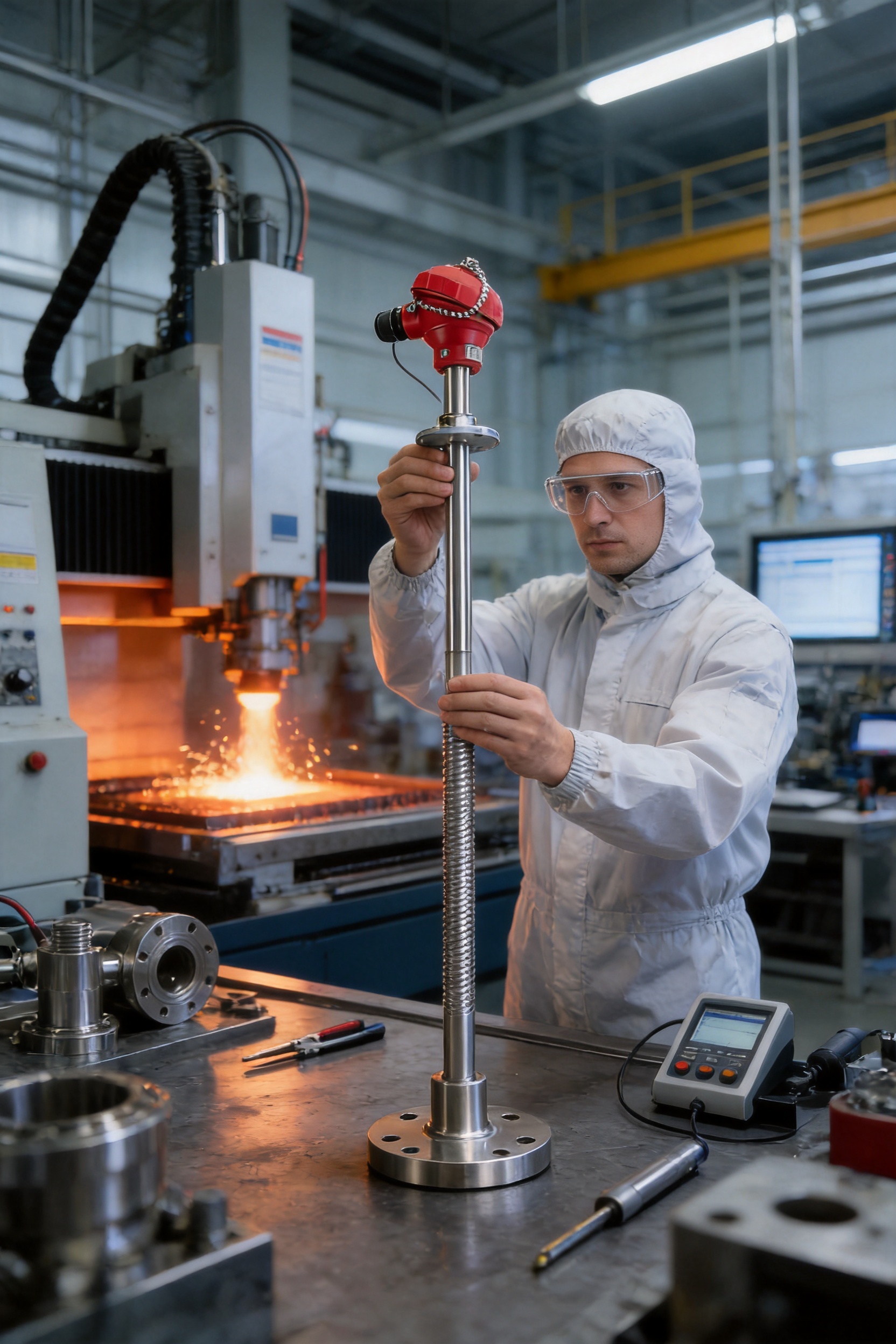
Before installation, inspect the sensor, protection tube, coating, connection head, terminals, and mounting fittings. Confirm that the product specification matches the process location. Check the insertion length and ensure that the sensing area will be positioned in the intended measurement zone.
Prepare the mounting opening and remove debris that could obstruct insertion. Install the RTD without applying excessive force. If a threaded connection is used, apply the appropriate sealing method without allowing sealant to enter the sensor opening or interfere with grounding and electrical connections. If a flange is used, tighten bolts gradually and evenly according to the applicable installation procedure.
Protect the sensor from impact during installation. Do not use the connection head or cable as a handle, and do not strike the protection tube to overcome a tight fit. If the location has significant vibration, use suitable supports or review the installation orientation with an engineer.
Connect the sensor leads to a compatible display instrument, data recorder, controller, or transmitter. Follow the specified wiring arrangement and identify each lead before termination. Keep signal cables away from high-voltage power cables and major electromagnetic noise sources where practical.
Ensure that terminals are clean and secure. Loose connections may cause intermittent readings or unexpected resistance changes. Cable glands should be tightened sufficiently to protect against moisture and dust while avoiding damage to the cable sheath.
After installation, verify continuity and confirm that the measured resistance is reasonable for the ambient temperature. Check the displayed temperature against an independent reference where possible. Review the signal during startup and observe whether the reading changes in a stable and credible manner.
Allow the sensor to acclimate to the operating environment before making conclusions about performance. A process may experience temporary temperature gradients during startup, and the sensor response may reflect those real conditions. Sudden changes should be investigated rather than automatically treated as instrument failure.
During operation, monitor the temperature trend instead of relying only on individual values. A gradual change in response, increasing noise, or an unusual difference between nearby sensors may indicate coating wear, mechanical damage, wiring problems, process changes, or calibration drift.
Do not exceed the rated temperature, pressure, or mechanical limits. Avoid rapid thermal cycling beyond the design conditions whenever process control allows. If the equipment is frequently started and stopped, the sensor specification should account for the associated expansion and contraction.
The robust construction is intended to minimize maintenance, but periodic inspection remains important. Inspection intervals should be based on operating severity and previous service experience. Check for visible wear, coating degradation, cracks, deformation, looseness, corrosion, deposits, and damage to the connection head or cable.
Where safe and practical, compare the RTD reading with a reference sensor or process estimate. If the reading becomes unstable, unusually slow, or inconsistent with process conditions, investigate the complete measurement loop. The problem may originate in the sensor, wiring, transmitter, controller, grounding, or process itself.
Replacement should be planned before the protective structure is completely worn through. Early replacement during a scheduled shutdown is generally safer and less costly than emergency replacement after a failure. Records of inspection findings, operating temperature, failure mode, and service duration can help improve future sensor selection.
The economic value of an abrasion-resistant RTD comes from more than its ability to survive a harsh environment. Reliable temperature data supports better process decisions. Operators can adjust fuel, air, feed rate, residence time, or cooling conditions with greater confidence when the measurement is stable.
In combustion and thermal treatment systems, accurate temperature monitoring can help avoid overheating and incomplete combustion. In cement production, it can support consistent clinker quality and efficient kiln operation. In fluidized bed systems, it can help maintain appropriate process conditions and identify abnormal behavior at an early stage.
Longer sensor life also reduces hidden costs. These may include production interruption, access equipment, labor in high-temperature areas, disposal of failed parts, emergency procurement, and engineering time spent investigating repeated failures. A durable product can provide a lower total cost of ownership even if its initial price is higher than a standard sensor.
Improved availability is particularly important in automated plants. A missing or unreliable temperature signal may force a control system into a conservative mode, trigger alarms, or require manual intervention. Maintaining dependable sensor signals contributes to stable automation and safer operation.
A specialized industrial sensor should be supported by more than a product catalog description. Customers benefit from technical review before ordering, clear drawings, application confirmation, defined electrical specifications, and inspection documentation. These materials help ensure that the sensor is appropriate for the actual process.
Xinguo Group’s range of temperature instruments, pressure instruments, flow meters, level instruments, alloy wires, cables, and instrument materials gives customers access to a broad industrial product portfolio. This can simplify sourcing for projects that require several types of instrumentation or related materials.
Technical support is also valuable when a customer is replacing a failed sensor. Failure analysis may reveal that the original problem was caused by erosion, incorrect insertion depth, vibration, chemical attack, electrical incompatibility, or an unsuitable mounting location. A supplier with manufacturing and engineering experience can help distinguish among these causes and recommend an improved design.
For international customers, communication should cover product drawings, packaging, labeling, delivery requirements, certificates, inspection records, and after-sales contact. Clear technical information reduces the risk of mismatch between the ordered product and the plant installation.
The Abrasion-resistant RTD competes with several alternative solutions, including standard RTDs installed inside separate protection tubes, thermocouples with ceramic or metallic sheaths, and custom wear-resistant temperature assemblies. Each solution has advantages in certain conditions, but the correct choice depends on the required accuracy, response time, temperature range, mechanical environment, and control system.
Compared with a standard RTD, the abrasion-resistant design offers substantially stronger protection against particle wear. Compared with a separate external shield added after purchase, the integrated construction can provide a more coordinated relationship between the sensing element and protective structure. Compared with a simple replacement sensor, it is engineered for the actual failure mechanism encountered in the plant.
Its advantage is especially clear when the process requires stable RTD measurement but exposes the sensor to conditions normally associated with heavy-duty mechanical equipment. The product brings together electrical measurement performance and materials engineering in one assembly.
The product should not be selected solely because it is more robust. Overengineering can increase cost or reduce response speed if the process does not require heavy protection. The strongest competitive advantage is therefore application matching: using a purpose-designed abrasion-resistant instrument where ordinary products have repeatedly failed, while selecting an appropriate configuration for the actual process.
An abrasion-resistant RTD is a resistance temperature detector designed for environments in which moving particles, dust, ash, clinker, or other solids can wear away a conventional sensor sheath. It combines an RTD sensing element with protective materials and construction intended to improve resistance to mechanical erosion and high-temperature service.
The construction may include high-chromium cast iron, high-temperature alloys, and wear-resistant protective coatings. Plasma tube technology is used in the processing or formation of protective structures. The exact material combination should be selected according to the process temperature, particle characteristics, chemical exposure, and installation conditions.
Yes. It is specifically suitable for circulating fluidized bed applications when the selected configuration matches the process conditions. The product is intended to resist the particle movement and high-temperature exposure commonly found in these systems.
Yes. Fluidized bed furnaces are one of the intended application areas. The sensor can be used in locations where bed material and process flow create significant wear, provided that temperature, pressure, mounting, and chemical conditions are reviewed before selection.
Yes. The product is suitable for many wear-prone areas in cement production, including applications involving high temperatures, dust, clinker, vibration, and thermal cycling. The exact location should be evaluated because different kiln zones may require different materials, lengths, and fittings.
Measurement accuracy depends on the RTD specification, sensing element, wiring arrangement, transmitter, calibration, installation position, and process conditions. The abrasion-resistant construction is intended to provide reliable temperature measurement, but the required accuracy class and complete signal loop should be confirmed for each project.
A heavy-duty protective structure can have a slower response than a thin general-purpose sheath. This is a normal trade-off between protection and response speed. In abrasive applications, the longer service life and measurement availability may be more valuable than the fastest possible response. The design can be reviewed when rapid control response is critical.
Yes, it can generally connect to standard RTD controllers, recorders, transmitters, and display instruments when the sensor type, resistance value, wiring, and input specifications are compatible. These details should be verified before purchase and installation.
Maintenance is normally limited to periodic inspection, checking the protective surface for wear or damage, verifying secure mounting, and confirming that electrical connections remain sound. The inspection frequency should reflect the severity of the process. Trend monitoring can also help identify deterioration before complete failure.
Customization may be available for protective materials, coating systems, insertion length, mounting arrangement, connection head, cable, electrical configuration, and other dimensions. Customers should provide process data and installation drawings so the manufacturer can recommend a suitable design.
Useful information includes the process medium, normal and maximum temperature, pressure, particle characteristics, flow velocity, chemical exposure, installation position, required insertion length, connection type, RTD specification, cable requirements, and receiving instrument. Photographs and drawings of the installation can also help improve the recommendation.
The sensor may be exposed to wear, oxidation, corrosion, thermal expansion, vibration, and impact simultaneously. A material that performs well in one condition may fail in another. Selecting the alloy and coating according to the complete process environment is essential for achieving the expected service life.
A successful project usually begins with a process review rather than immediate product selection. The user should identify where the existing sensor fails, how long it operates, what type of damage occurs, and whether the failure is localized to one side or section of the protection tube. This information can reveal the primary wear mechanism.
The next step is to document process conditions. Temperature history, particle properties, flow direction, vibration, pressure, chemical exposure, and maintenance access should be recorded. Installation drawings and photographs can clarify whether the sensor is directly exposed to the process or partly shielded.
The manufacturer can then evaluate the required material combination, coating, protection tube structure, sensing element, and mounting arrangement. A technical quotation should clearly identify the principal dimensions, electrical specification, materials, testing requirements, and delivery documentation.
After installation, the user should establish a baseline reading and record the commissioning date. Periodic inspections can then be compared with the baseline. This approach provides useful evidence about actual service life and supports future optimization.
The Abrasion-resistant RTD is a specialized temperature measurement solution for industrial environments where conventional sensors are vulnerable to wear. Its combination of high-chromium cast iron, high-temperature alloys, protective coating technology, and plasma tube processing provides a robust foundation for operation in circulating fluidized beds, fluidized bed furnaces, cement kilns, and other severe-service locations.
Its principal advantages include improved resistance to particle erosion, suitability for high-temperature applications, protection against combined mechanical and thermal stress, reduced maintenance frequency, compatibility with standard monitoring systems, and the possibility of application-specific customization.
The effectiveness of the product depends on proper selection and installation. Process temperature, particle characteristics, chemical exposure, flow velocity, vibration, mounting, response time, and electrical compatibility should all be considered. A technically appropriate design can provide more stable measurement, lower total ownership cost, and improved operational confidence.
Xinguo Group Co., Ltd. supports this product with experience in temperature instruments, alloy materials, cables, and industrial instrumentation. Its manufacturing facilities, technical personnel, quality management systems, research capabilities, and inspection procedures provide a strong foundation for producing durable industrial sensors. By combining materials engineering with instrumentation expertise, the company is positioned to provide practical temperature measurement solutions for demanding global applications.
1. International Electrotechnical Commission. Industrial Platinum Resistance Thermometer and Sensor Standards.
2. International Electrotechnical Commission. Industrial Process Measurement and Control Documentation.
3. American Society for Testing and Materials. Standard Practices for Resistance Thermometer Calibration and Verification.
4. American Society for Testing and Materials. Standard Test Methods for Abrasion Resistance of Materials and Coatings.
5. International Organization for Standardization. Quality Management Systems: Requirements and Application Guidance.
6. International Organization for Standardization. Environmental Management Systems: Requirements and Guidance for Use.
7. Industrial Furnace Engineering References. Fluidized Bed Combustion, Heat Transfer, and Temperature Measurement Principles.
8. Cement Process Engineering References. Kiln Operation, Clinker Production, and High-Temperature Instrumentation.
9. Materials Engineering References. High-Chromium Cast Irons, High-Temperature Alloys, and Wear-Resistant Surface Treatments.
10. Process Instrumentation Engineering References. Resistance Temperature Detectors, Signal Transmission, Installation, and Maintenance.



 INQUIRY
 English
 عربى
 русский
 中文简体