Ammonia is widely used in refrigeration systems, fertilizer production, chemical processing, storage facilities, and industrial heat-transfer applications. Although it is an efficient and valuable industrial medium, ammonia creates special requirements for pressure measurement. Its chemical interaction with copper and certain copper alloys means that a conventional pressure gauge may suffer corrosion, cracking, leakage, and eventual mechanical failure when installed in an ammonia service line.
The XG-YA-100 and XG-YA-150 series ammonia pressure gauges are designed specifically for measuring gaseous ammonia and liquid ammonia. These gauges use stainless steel pressure-sensing components and prohibit copper alloy parts throughout the measuring system. Their construction is intended to improve safety, measurement reliability, and service life in ammonia refrigeration and chemical applications.
Available with nominal dial sizes of 100 mm and 150 mm, the series provides direct local indication of pressure or pressure-vacuum conditions. The gauges are suitable for ammonia compressors, refrigeration units, liquid ammonia storage tanks, fertilizer plants, and other systems in which the measuring instrument must be compatible with ammonia media.
Pressure gauges are often selected according to pressure range, connection size, dial diameter, and accuracy. However, the compatibility of the wetted parts with the process medium is equally important. A gauge that performs adequately in air, water, or oil may not be suitable for ammonia service.
Ammonia can corrode copper and copper alloys under applicable operating conditions. If the pressure-sensing tube or other internal flow-contact parts are made from an unsuitable copper alloy, corrosion can weaken the material. Over time, the weakened tube may crack or leak. In a pressurized system, such damage can create risks to personnel, equipment, and the surrounding environment.
The XG-YA series addresses this issue by using stainless steel spring tubes and by strictly excluding copper alloy components from the measuring system. This design principle distinguishes the product from ordinary general-purpose pressure gauges that may contain copper-based sensing elements or internal parts.
A dedicated ammonia gauge also reduces the risk of accidental replacement or incorrect installation. The dial and instrument case carry ammonia-specific warning identification. This visible marking helps maintenance personnel distinguish the gauge from standard pressure instruments and makes it less likely that an unsuitable copper-core gauge will be installed in an ammonia circuit.
Dedicated construction is especially important in systems that operate continuously. Refrigeration equipment, compressors, and storage vessels may experience repeated pressure changes, vibration, temperature variation, and maintenance interventions. A suitable ammonia pressure gauge must therefore combine chemical compatibility with mechanical stability, readable indication, dependable sealing, and practical installation.
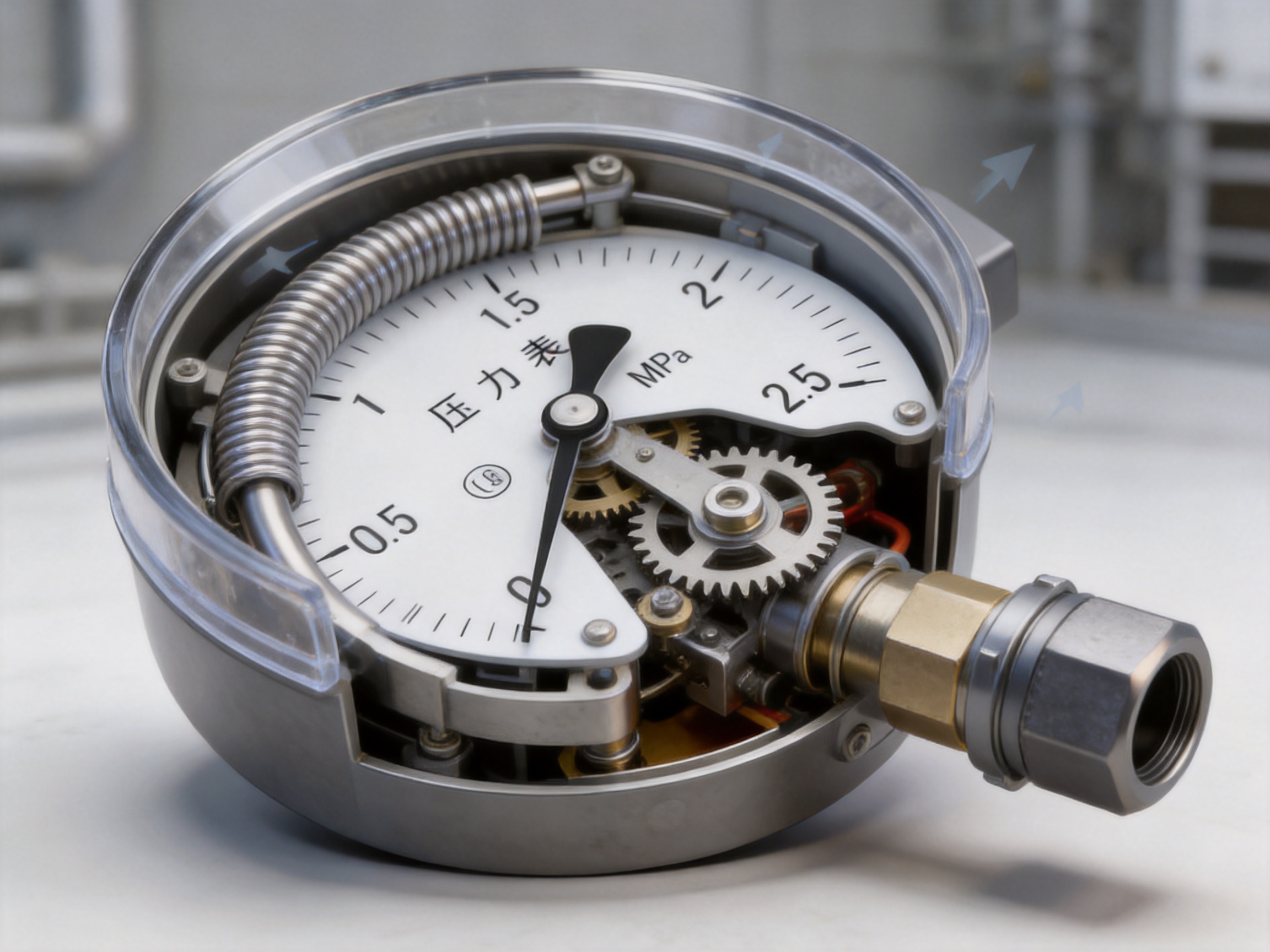
The XG-YA-100 and XG-YA-150 series are local indicating pressure gauges for ammonia and liquid ammonia media. The product operates through the elastic deformation of a pressure-sensing spring tube. When the process pressure enters the sensing element, the tube deforms by a controlled amount. This movement is transferred through a mechanical gear movement to the pointer, which displays the pressure value on the dial.
The measurement system is designed without copper alloy components. Stainless steel is used for the pressure-sensing tube and other applicable overcurrent or pressure-contact components. This material selection is intended to prevent the corrosion mechanism associated with copper exposure to ammonia.
The gauges can be supplied for positive pressure measurement and pressure-vacuum measurement. Depending on the selected scale, the instrument may measure ranges from vacuum and low pressure through medium and high pressure. The nominal dial options are 100 mm and 150 mm, supporting both compact installation and improved readability at a distance.
The standard version is intended for general local pressure monitoring. A shock-resistant, oil-filled version can also be produced for applications involving pulsation, vibration, or mechanical disturbance. This option is particularly useful on ammonia compressors, refrigeration systems, and storage installations where the pointer may otherwise fluctuate or the movement may be exposed to excessive vibration.
The product is not intended to be a universal gauge for every corrosive medium. Its design is optimized for ammonia and liquid ammonia. When the process involves a different strongly corrosive medium, the selection should be reviewed separately, and a diaphragm-type corrosion-resistant pressure gauge may be more appropriate.
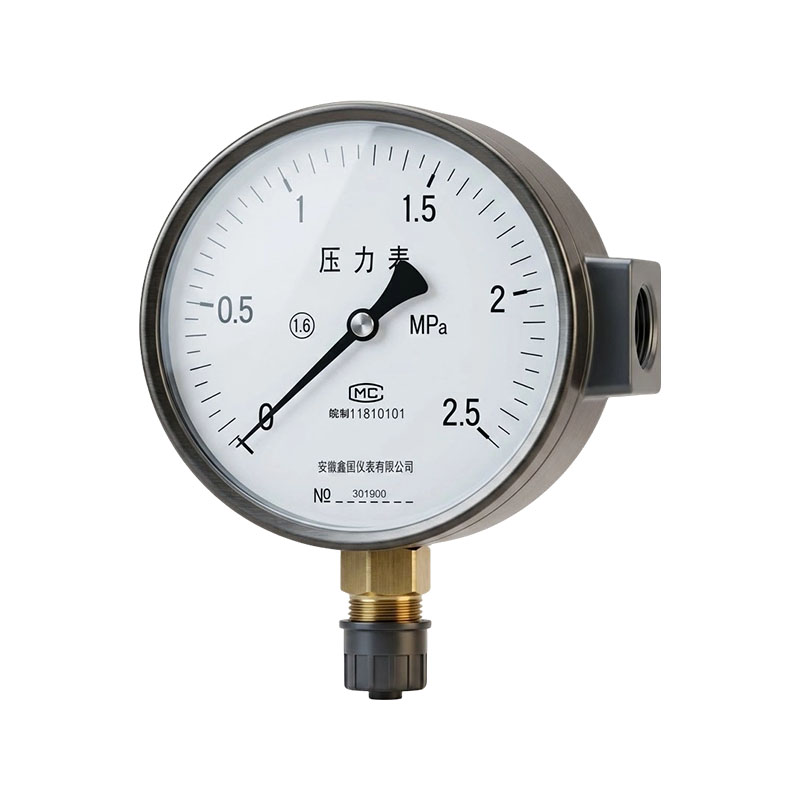
XG/YA -100 、 150 series ammonia pressure gauge
The spring tube is the primary pressure-sensing element. It is formed from stainless steel selected for ammonia service. When pressure enters the tube, the tube tends to straighten or deform elastically. The amount of movement is proportional to the applied pressure within the instrument’s specified operating range.
Using a stainless steel spring tube instead of a copper alloy tube is the most important material-related advantage of the XG-YA series. It minimizes the risk of ammonia-induced corrosion in the sensing element and supports safer long-term operation.
The spring tube must be manufactured with controlled dimensions, uniform wall thickness, accurate forming, and reliable welding or joining procedures. Small variations in geometry can influence sensitivity, linearity, repeatability, and overpressure resistance. For this reason, spring tube production and inspection are important stages in the overall manufacturing process.
The movement converts the small displacement of the spring tube into visible pointer rotation. The mechanism includes linkages, gears, pivots, and adjustment elements. A properly manufactured movement must operate smoothly while resisting wear, friction, and backlash.
The mechanical transmission is calibrated so that the pointer corresponds to the pressure scale printed on the dial. During inspection, the gauge is checked at multiple pressure points to verify that the indication remains within the specified accuracy class.
Mechanical movement design also influences pointer stability. In pressure-pulsating applications, excessive movement can cause pointer vibration and accelerated wear. The optional oil-filled construction helps damp the motion of the movement and provides additional protection from external vibration.
The dial provides the direct visual interface between the instrument and the operator. The scale is arranged for clear pressure reading, with markings selected according to the specified measuring range. The instrument includes ammonia-specific warning identification to distinguish it from general-purpose pressure gauges.
This warning marking is more than a cosmetic feature. In a plant containing multiple pressure instruments, clear identification supports correct installation, inspection, and replacement. It can help prevent an ordinary copper-core gauge from being installed on an ammonia pipe, compressor, or storage vessel.
The case protects the movement, dial, and sensing assembly from dust, accidental contact, and ordinary industrial exposure. The sealing structure is strengthened for ammonia service to reduce the risk of medium penetration and leakage around applicable pressure-contact areas.
Reliable sealing is important because ammonia leakage can affect personnel safety, equipment reliability, and environmental conditions. A pressure gauge cannot replace the safety functions of relief valves, leak detectors, ventilation, or process isolation systems, but a properly sealed gauge contributes to the overall integrity of the measurement point.
The principal advantage is the prohibition of copper alloy components in the measurement system. General-purpose pressure gauges may use copper alloys because these materials are economical, easy to form, and suitable for many non-ammonia applications. However, that material choice is inappropriate for ammonia service.
The XG-YA series uses stainless steel pressure-contact components to reduce the possibility of ammonia corrosion. This improves compatibility with both gaseous ammonia and liquid ammonia and provides a more appropriate material foundation for ammonia refrigeration and chemical installations.
Corrosion of a pressure-sensing tube can lead to inaccurate indication, leakage, or rupture. By selecting stainless steel for the spring tube and restricting copper alloys, the product is designed to reduce this risk at the source.
Material compatibility does not eliminate every possible failure mode. Excessive pressure, unsuitable temperature, external corrosion, vibration, incorrect installation, and inadequate maintenance can still affect performance. Nevertheless, using the correct gauge material is an essential first step in reducing avoidable failure.
The case and dial include warning identification for ammonia service. This helps operators, maintenance technicians, and purchasing personnel recognize the intended application. In a large industrial facility, where similar-looking pressure gauges may be stored or installed nearby, specific identification can reduce selection errors.
The identification also supports maintenance control. When a gauge is removed for calibration or replacement, technicians can confirm that the replacement instrument is suitable for ammonia before installation.
The gauges can be used to measure both gaseous ammonia and liquid ammonia within the applicable pressure and temperature limits. Liquid ammonia systems may experience considerable pressure changes as temperature changes. Refrigeration compressors may also create pulsation and vibration.
For these conditions, the shock-resistant oil-filled option can damp pointer movement and protect the mechanical movement. It is particularly suitable for compressor discharge lines, refrigeration equipment, storage tanks, and other locations where pressure fluctuation is expected.
The sealing arrangement is strengthened for ammonia service to help limit medium penetration and leakage. Good sealing supports safe operation and helps preserve the internal movement from contamination or process exposure.
Correct connection tightening, compatible sealing materials, proper pipe alignment, and regular inspection remain necessary. A gauge should never be forced into alignment by turning the case after the connection has been tightened, because this may damage the connection or compromise sealing.
The product family includes low-pressure, medium-pressure, high-pressure, and compound pressure-vacuum scales. This allows the same specialized product concept to serve different sections of an ammonia installation.
Available scale ranges include positive pressure options from 0 to 0.16 MPa through 0 to 60 MPa, as well as pressure-vacuum ranges beginning at -0.1 MPa. The actual range must be selected according to the process design, normal operating pressure, expected fluctuations, and applicable safety margin.
The 100 mm format is suitable for many standard local measurement points where installation space is limited. The 150 mm format offers a larger viewing area and may be preferred where the operator must read the gauge from a greater distance or where improved visual resolution is helpful.
| Item | Specification |
| Product series | XG-YA-100 and XG-YA-150 ammonia pressure gauges |
| Application medium | Gaseous ammonia and liquid ammonia |
| Nominal dial sizes | 100 mm and 150 mm |
| Pressure-sensing element | Stainless steel spring tube |
| Material requirement | Copper alloy components prohibited in the measurement system |
| Accuracy class | 1.5 or 2.5 |
| Operating ambient temperature | -40°C to 70°C |
| Relative humidity | Not more than 90% |
| Temperature effect | Not more than 0.4% per 10°C when operating temperature deviates from 20 ± 5°C |
| Approximate weight | 0.6 kg for YA-100; 0.9 kg for YA-150 |
| Optional construction | Shock-resistant, oil-filled version |
| Typical applications | Ammonia refrigeration systems, compressors, storage tanks, fertilizer plants, and chemical equipment |
| Model family | Available scale ranges |
| XG-YA-100 | 0 to 0.16 MPa; 0 to 0.25 MPa; 0 to 0.4 MPa; 0 to 0.6 MPa; 0 to 1 MPa; 0 to 1.6 MPa; 0 to 2.5 MPa; 0 to 4 MPa; 0 to 6 MPa |
| XG-YA-100 | -0.1 to 0.06 MPa; -0.1 to 0.15 MPa; -0.1 to 0.3 MPa; -0.1 to 0 MPa; -0.1 to 0.9 MPa; -0.1 to 1.5 MPa; -0.1 to 2.4 MPa |
| XG-YA-150 | 0 to 10 MPa; 0 to 16 MPa; 0 to 25 MPa; 0 to 40 MPa; 0 to 60 MPa |
Scale availability, connection configuration, and final dimensional details should be confirmed before ordering. The selected range should not be based only on the maximum possible pressure. A gauge that operates near the middle of its scale under normal conditions generally provides more useful resolution and reduces unnecessary stress on the movement.
Ammonia refrigeration systems use ammonia as a refrigerant because of its favorable thermodynamic properties and strong efficiency in industrial applications. Pressure must be monitored at compressors, condensers, receivers, evaporators, suction lines, and discharge lines.
The XG-YA series provides local visual confirmation of pressure at these points. Operators can use the indication during routine rounds, startup, shutdown, troubleshooting, and maintenance. The shock-resistant version is useful near compressors and other equipment with mechanical vibration or pressure pulsation.
Compressors can generate pressure fluctuations and vibration that affect ordinary pointer gauges. An oil-filled ammonia gauge helps dampen mechanical movement and can improve readability during operation.
Pressure range selection is especially important for compressors. The gauge should be suitable for normal suction and discharge pressures and should not be exposed to pressure above its rated limit. Pulsation dampeners or suitable process accessories may also be required depending on the system design.
Storage tanks require reliable pressure monitoring because temperature changes can influence the vapor pressure of liquid ammonia. During filling, withdrawal, ambient temperature changes, or system isolation, the tank pressure may vary substantially.
The XG-YA series can provide local pressure indication on storage equipment when installed with the appropriate connection, isolation valve, and safety accessories. The gauge should be positioned so that it can be read and serviced safely without exposing personnel to unnecessary risk.
Ammonia is used in fertilizer production and chemical processing. These facilities often contain multiple process lines, vessels, pumps, compressors, and transfer systems. A dedicated gauge with clear ammonia identification helps standardize pressure measurement across the plant.
Because chemical installations may include multiple corrosive materials, the suitability of the gauge should be evaluated for each individual service. The product is designed for ammonia and liquid ammonia; it should not automatically be assumed to be suitable for every chemical used in the plant.
The performance of an ammonia pressure gauge depends not only on its design but also on the consistency of its manufacturing process. Xinguo Group Co., Ltd. has developed a manufacturing and inspection system covering pressure instruments, temperature instruments, alloy materials, cables, and related industrial products.
Material control begins with the identification and verification of materials used in the pressure-sensing tube, connections, movement, case, and sealing components. For ammonia service, the exclusion of copper alloy pressure-contact components is a key production requirement.
Controlled material purchasing, supplier evaluation, incoming inspection, batch identification, and production traceability help reduce the possibility of material substitution. These controls are particularly important for specialized instruments in which a visually similar component may have very different chemical compatibility.
Spring tubes require accurate forming to achieve the expected relationship between pressure and deflection. Manufacturing controls may include dimensional checks, forming-process control, visual inspection, welding or joining inspection, and pressure testing.
The geometry of the spring tube affects the useful measuring range, sensitivity, repeatability, and resistance to overpressure. Consistent forming is therefore essential for producing gauges with stable indication from one production batch to another.
The mechanical movement is assembled with attention to gear engagement, pivot alignment, pointer balance, and operating friction. Adjustment procedures compensate for manufacturing tolerances and help bring the indicated pressure into the required accuracy class.
The assembly process must also protect the movement from contamination. Fine particles, excessive lubricant, or incorrect gear engagement can influence pointer behavior. Controlled assembly areas, standardized work instructions, and final movement checks contribute to reliable performance.
Each gauge must be calibrated against a suitable reference pressure source. Calibration generally involves applying pressure at multiple points across the scale, recording the indication, and checking the results against the required accuracy class.
Testing may include increasing and decreasing pressure to evaluate indication error, hysteresis, and repeatability. Instruments that do not meet the specified requirements can be adjusted, reworked, or rejected before shipment.
Ammonia service requires careful attention to sealing. Production inspection can include checks of connection integrity, case assembly, pressure-contact joints, and leakage performance. The goal is to reduce the possibility that the process medium will enter the case or escape through a defective connection.
Sealing performance also depends on installation. Even a correctly manufactured gauge can leak if the connection is cross-threaded, over-tightened, installed with an incompatible gasket, or subjected to excessive external pipe stress.
The stated operating environment is -40°C to 70°C with relative humidity not exceeding 90%. Manufacturing and quality procedures should consider the effects of temperature, humidity, vibration, and transportation on the completed instrument.
Functional checks confirm that the pointer moves smoothly, returns correctly, and remains readable. For oil-filled or shock-resistant versions, the filling condition and case integrity must also be checked.
Xinguo Group operates as a national high-tech enterprise with several specialized subsidiaries, including companies involved in instrumentation, alloys, cables, and precious metals. This structure provides a broad technical base for material research, component production, instrument assembly, and industrial quality management.
The group has a land area of more than 150 mu, a construction area of approximately 60,000 square meters, and nearly 300 employees, including more than 50 professional technicians and engineering personnel. These resources support product development, process improvement, testing, and production management.
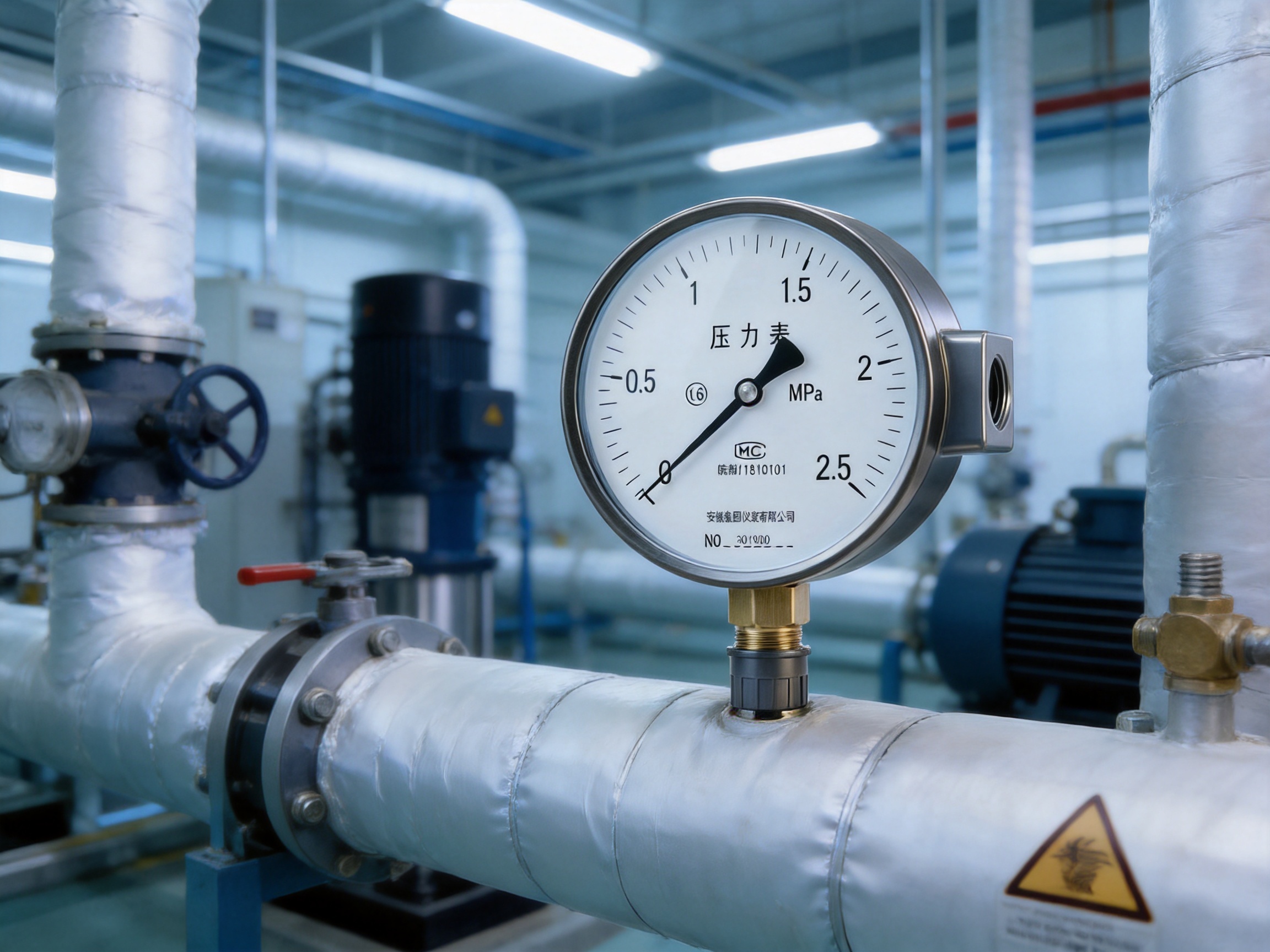
Xinguo Group Co., Ltd. was founded in 1997 and is headquartered in Tianchang City, Anhui Province, China. The group has a registered capital of RMB 118 million and serves customers in industrial measurement, temperature control, pressure measurement, alloy materials, cables, and related fields.
The company maintains modern quality management systems and has obtained ISO9001 Quality Management System, ISO14001 Environmental Management System, and GB/T28001 Occupational Health and Safety Management System certifications. These systems provide a framework for production control, environmental responsibility, occupational safety, documentation, and continual improvement.
The group’s product range includes temperature instruments, pressure instruments, flow meters, level instruments, instrument materials, alloy wire, pressure transmitters, and pressure gauges. This broad product portfolio allows the company to understand the wider measurement requirements of industrial plants rather than treating each pressure gauge as an isolated product.
Research and development capabilities are supported by professional technicians, senior technical experts, engineers, and assistant engineers. The company also uses advanced equipment, modern production methods, and inspection procedures throughout manufacturing. Its products are designed and produced according to applicable IEC standards as well as national and industrial specifications where relevant.
For buyers of ammonia pressure gauges, the value of this manufacturing background extends beyond the gauge itself. Consistent materials, controlled assembly, testing resources, technical support, and product documentation are all important when instruments are used in safety-sensitive refrigeration or chemical systems.
Before installation, confirm that the line contains gaseous ammonia or liquid ammonia and that the gauge is compatible with the actual process conditions. Do not use an ordinary copper-core pressure gauge as a substitute.
The normal operating pressure should generally fall within a readable central portion of the scale. The gauge must also withstand expected pressure fluctuations and should not be exposed to pressure beyond its specified limit.
Confirm that the ambient and process temperatures remain within the applicable range. If the gauge is exposed to temperatures outside the stated conditions, the indication may be affected and the instrument may require additional protection or a different design.
An isolation valve allows the gauge to be removed or inspected without shutting down the entire system, subject to the plant’s safety procedures. Where pulsation, vibration, or pressure spikes are present, suitable dampening or protection accessories should be considered.
The pipe connection should be correctly aligned with the gauge connection. The instrument should not be used to force pipe alignment. Excessive torque, bending load, or unsupported piping can damage the connection and affect accuracy.
After installation, inspect the connection and surrounding area for leakage using an approved procedure. Personnel should follow the site’s ammonia handling, ventilation, personal protective equipment, and emergency response requirements.
Operators should inspect the gauge during regular equipment rounds. The pointer should move normally, remain visible, and return to the expected position when operating conditions change. Sudden pointer movement, persistent vibration, fogging, leakage, or visible corrosion should be investigated.
If the pointer jumps or the reading appears inaccurate, possible causes include pressure pulsation, excessive temperature, mechanical vibration, over-range operation, internal contamination, or corrosion. A shock-resistant oil-filled gauge may be appropriate for pulsating service, but it should not be used to compensate for a fundamentally incorrect pressure range or defective process equipment.
Calibration should be carried out at intervals determined by the process risk, operating conditions, regulatory requirements, and the plant’s quality system. Gauges used in critical systems may require more frequent verification than gauges used only for general indication.
Do not open or repair the gauge in an ammonia-contaminated area unless the equipment has been isolated, depressurized, purged, and declared safe according to approved procedures. If the case, spring tube, connection, or sealing area shows corrosion or leakage, remove the instrument from service and replace it or return it for authorized evaluation.
When replacing a gauge, verify the model, range, accuracy class, connection, dial size, medium compatibility, and optional oil-filled construction. The replacement instrument must be specifically suitable for ammonia service.
The standard version is appropriate where pressure is relatively stable, vibration is limited, and the gauge is installed in a calm local measurement point. It provides direct indication with a simple mechanical structure.
The oil-filled version is recommended where the system experiences pressure pulsation, compressor vibration, mechanical shock, or frequent pointer fluctuation. The filling medium dampens movement and helps protect internal components from vibration-related wear.
Oil filling does not make an unsuitable gauge suitable for ammonia. The instrument must still use the correct stainless steel pressure-contact components and must be selected for the required pressure, temperature, and environmental conditions.
| Selection question | What to confirm |
| What is the medium? | Gaseous ammonia, liquid ammonia, or another process medium |
| Is the gauge specifically ammonia-compatible? | Stainless steel pressure-sensing components and no copper alloy components in the measurement system |
| What pressure range is required? | Normal pressure, maximum pressure, pressure fluctuation, and any vacuum condition |
| Is vibration present? | Use the shock-resistant oil-filled version where appropriate |
| What dial size is preferred? | 100 mm for compact installation or 150 mm for larger visual indication |
| What accuracy is needed? | Accuracy class 1.5 or 2.5 according to the application |
| What are the environmental conditions? | Ambient temperature, humidity, outdoor exposure, and mechanical conditions |
| How will the gauge be maintained? | Isolation, calibration, inspection, replacement, and safe access requirements |
Ammonia can corrode copper alloys. A copper-alloy spring tube or other pressure-contact component may weaken, crack, and leak when exposed to ammonia. The XG-YA series uses stainless steel pressure-sensing components and prohibits copper alloy components in the measurement system for this reason.
Yes. The product is designed for both gaseous ammonia and liquid ammonia measurement within its specified operating conditions. Liquid ammonia systems can experience substantial temperature and pressure changes, so the gauge range and construction must be selected carefully.
No. The standard version may be suitable where pressure is stable and vibration is limited. The oil-filled shock-resistant version is recommended for compressors, pulsating pressure lines, storage equipment, and other locations where vibration or pressure fluctuation may cause pointer instability.
No. The product is specifically designed and optimized for ammonia and liquid ammonia. Other strongly corrosive media may require a diaphragm-type, lined, or otherwise specialized pressure gauge. Compatibility should be confirmed for each medium.
Check for pressure pulsation, vibration, an unsuitable range, overpressure, excessive temperature, or internal damage. If the application has significant pulsation, consider a shock-resistant oil-filled model. If the gauge has been exposed to corrosion or overpressure, it should be inspected or replaced.
Verify the process pressure with an approved reference instrument and check whether the gauge has been installed correctly. Temperature variation, mechanical stress, over-range operation, corrosion, and movement wear may affect accuracy. A qualified technician should perform calibration or determine whether replacement is necessary.
Select a range that covers the normal operating pressure and expected fluctuations without approaching the maximum scale continuously. The selected range must also be compatible with the system’s maximum allowable pressure and safety requirements.
The stated operating environmental temperature is -40°C to 70°C, with relative humidity not exceeding 90%. If the gauge will be exposed to conditions outside these values, additional protection or a different product design may be required.
Use the ammonia-specific warning identification on the instrument, verify the product model and material specification, and maintain clear purchasing and spare-parts records. Do not replace the gauge with a visually similar general-purpose copper-core instrument.
No. A pressure gauge provides local indication only. It does not replace pressure relief devices, automatic shutdown systems, leak detectors, ventilation, emergency isolation, personal protective equipment, or established ammonia safety procedures.
The XG-YA-100 and XG-YA-150 series ammonia pressure gauges are purpose-built instruments for applications in which ordinary copper-core pressure gauges are unsuitable. Their stainless steel spring tubes, copper-free measurement system, ammonia-specific warning identification, reinforced sealing structure, broad pressure range options, and optional oil-filled construction address the principal challenges of ammonia pressure measurement.
The gauges are suitable for local monitoring in refrigeration systems, ammonia compressors, liquid ammonia storage tanks, fertilizer plants, and chemical facilities. The 100 mm and 150 mm formats support different installation and visibility requirements, while accuracy classes of 1.5 and 2.5 provide options for different measurement needs.
Product performance is supported by Xinguo Group’s experience in industrial instrumentation, alloy materials, temperature measurement, pressure measurement, and related manufacturing fields. Its quality management systems, research and development resources, technical staff, production facilities, and inspection procedures provide a strong foundation for consistent industrial instrument manufacturing.
Correct selection and installation remain essential. Users should confirm medium compatibility, pressure range, temperature, vibration, connection requirements, and maintenance procedures before ordering. When these factors are properly considered, the XG-YA series can provide a safer and more dependable local pressure indication solution for ammonia-based industrial systems.
1. Product technical information for the XG-YA-100 and XG-YA-150 ammonia pressure gauge series.
2. Product application guidance for ammonia refrigeration pressure measurement and industrial gauge selection.
3. General engineering principles for Bourdon spring-tube pressure gauges and mechanical pressure indication.
4. Industrial practices for material compatibility, sealing, pressure calibration, and maintenance of ammonia equipment.
5. ISO 9001 quality management system principles for manufacturing organizations.
6. ISO 14001 environmental management system principles for industrial production.
7. IEC and related industrial instrumentation practices applicable to pressure and temperature measurement equipment.



 INQUIRY
 English
 عربى
 русский
 中文简体