Accurate temperature measurement is fundamental to the safe, efficient, and stable operation of industrial equipment. In furnaces, heat-treatment lines, chemical processing systems, power-generation facilities, petroleum installations, food-processing equipment, and laboratory instruments, the temperature sensor must deliver dependable signals while resisting vibration, mechanical stress, moisture, dust, oxidation, and repeated thermal cycling. An armored thermocouple cable is designed specifically for these demanding conditions.
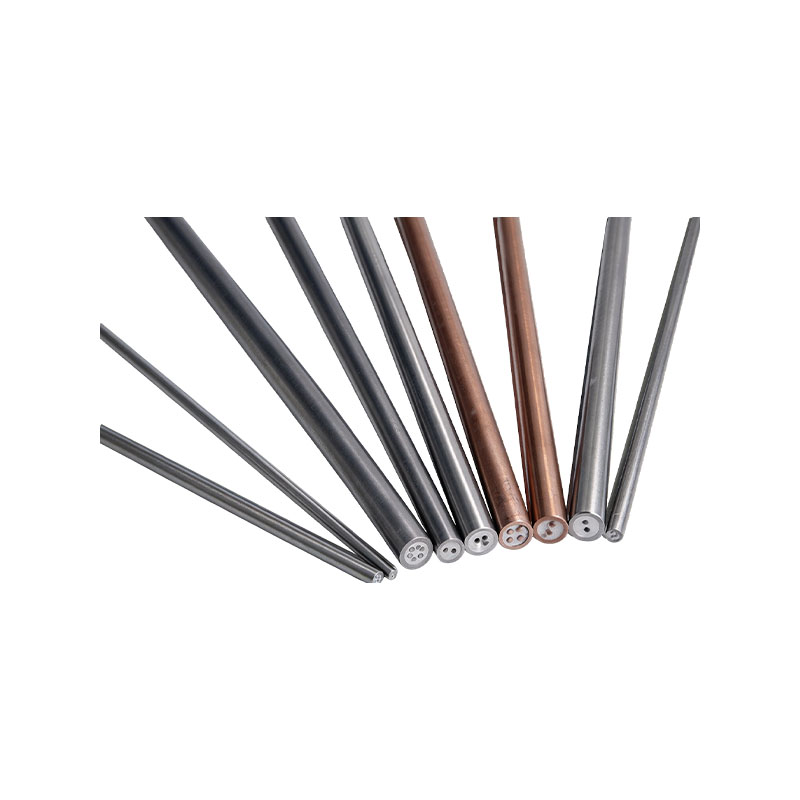
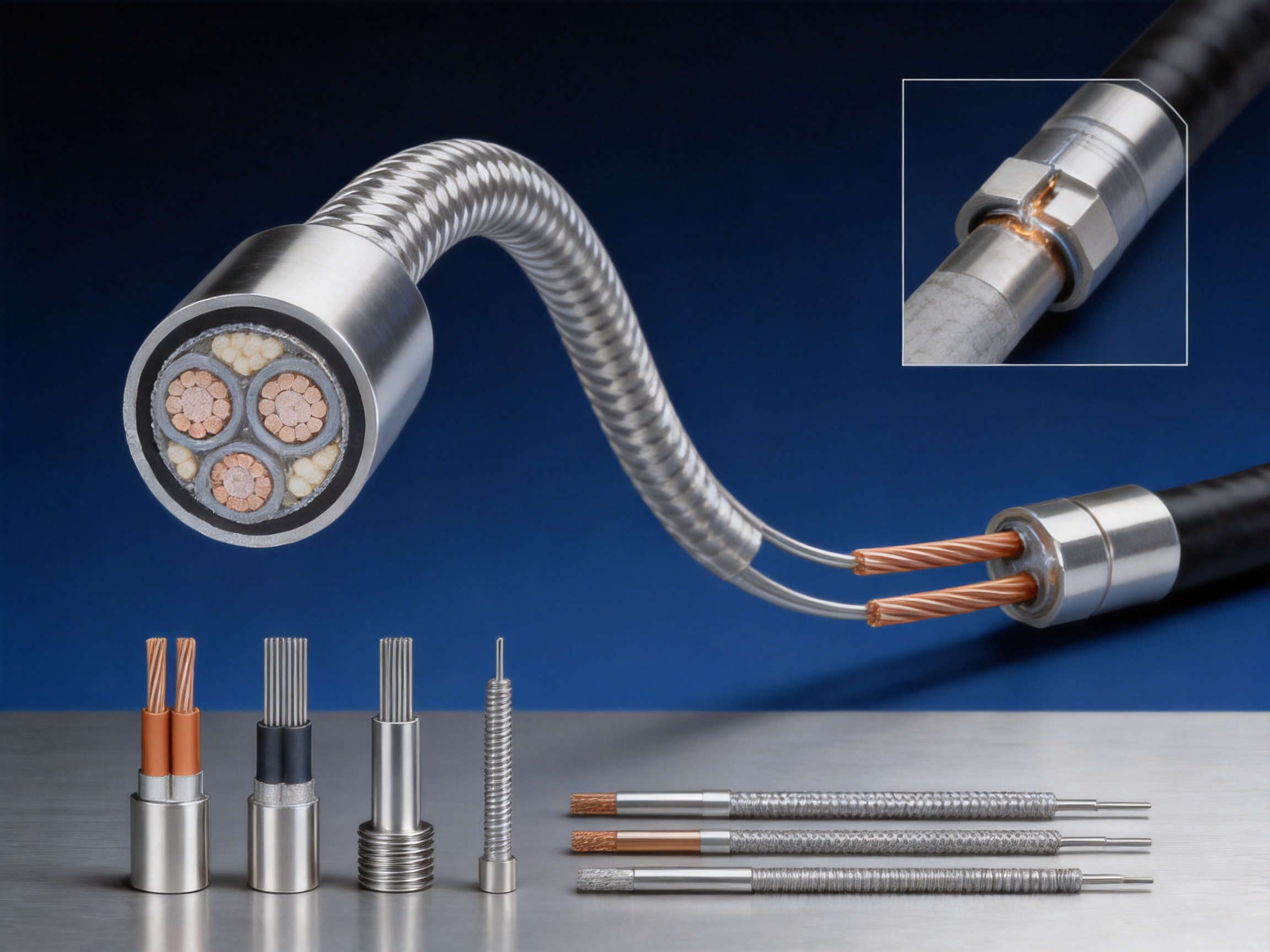
Armored thermocouple cable, also called mineral-insulated thermocouple cable, consists of thermocouple conductors enclosed within a metallic protective sheath and electrically separated by compacted magnesium oxide insulation. This integrated construction creates a small, flexible, and mechanically strong temperature-sensing cable that can be manufactured into armored thermocouples, surface sensors, probes, and customized temperature assemblies.
Compared with conventional unprotected thermocouple wire, armored thermocouple cable offers considerably better resistance to impact, vibration, bending, moisture, contamination, and high-temperature exposure. Its compact diameter also allows it to enter narrow spaces and follow complicated equipment layouts. At the same time, the low thermal mass of the cable enables rapid response to changing process temperatures.
Xinguo Group Co., Ltd. manufactures armored thermocouple cable for industrial instrumentation applications, supplying base-metal and precious-metal thermocouple types in a range of sheath materials, diameters, temperature ratings, tolerance classes, and construction options. Supported by alloy-material production, cable manufacturing capabilities, modern testing equipment, and an established quality-management system, the company provides both standard products and customized solutions for international customers.
An armored thermocouple cable is a factory-assembled temperature-sensing cable made from three principal components: thermocouple wire, mineral insulation, and a metallic outer sheath. The thermocouple wires generate a thermoelectric voltage when exposed to a temperature difference between the measuring junction and the reference junction. The mineral insulation electrically separates the conductors, while the metallic sheath protects the internal structure from the surrounding environment.
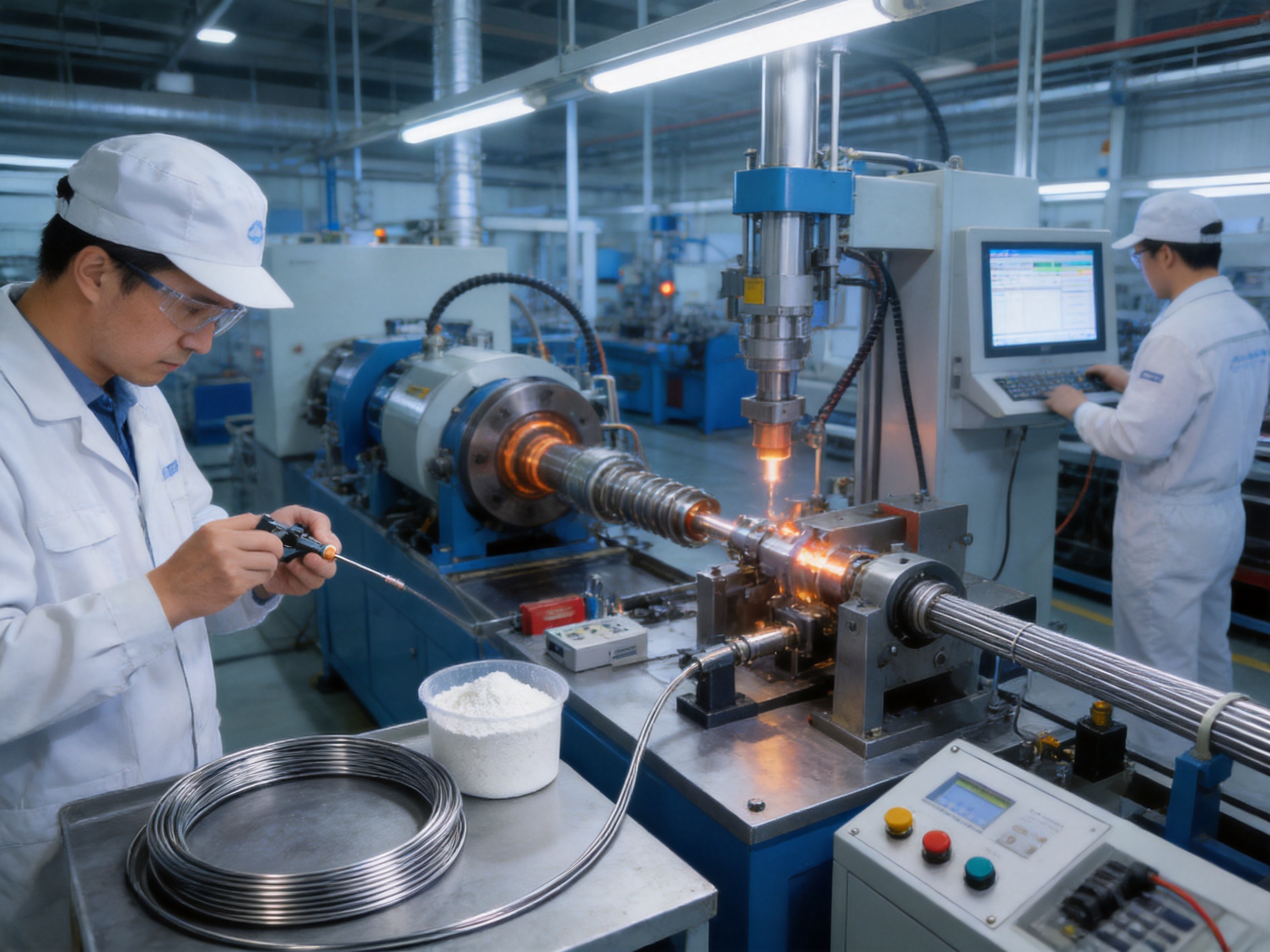
During production, the thermocouple wires are positioned inside a metallic tube. High-purity magnesium oxide powder is placed around the wires, and the assembly is compacted through controlled mechanical reduction and forming processes. This compaction creates a dense insulation structure with stable electrical and mechanical properties. The completed cable can then be cut, stripped, welded, formed, or assembled into a finished thermocouple.
The cable is available in single-core, twin-core, and multi-core configurations. Two-core designs are commonly used for ordinary thermocouple circuits, while four-core or multi-core constructions can be selected for dual measurement, redundancy, differential sensing, or specialized instrumentation assemblies.
The designation “armored” refers to the metal sheath surrounding the thermoelements. Depending on the application, the sheath may be manufactured from stainless steel, nickel-chromium alloys, or other high-temperature materials. The appropriate material is selected according to the process temperature, atmosphere, mechanical loading, corrosion conditions, and expected service life.
The internal thermocouple conductors are made from matched thermoelectric alloys. Common types include K, N, E, J, T, S, R, and B. Each type has a defined thermoelectric relationship and a corresponding temperature range. The conductor materials must have consistent chemical composition, stable thermoelectric characteristics, and suitable dimensional accuracy.
For example, a Type K thermocouple uses nickel-chromium and nickel-silicon-based alloys and is widely used for general industrial temperature measurement. Type N offers improved stability in some high-temperature and oxidizing conditions. Type E provides relatively high thermoelectric output, while Type J is frequently applied to moderate-temperature equipment. Type T is suitable for lower-temperature measurement and applications requiring good accuracy near ambient conditions.
Precious-metal thermocouple cables, including Types S, R, and B, are selected for high-temperature furnaces, laboratory equipment, ceramic processing, and other applications in which long-term high-temperature stability is critical. Their temperature limits and calibration requirements differ from those of base-metal thermocouples, so the thermocouple type must be selected together with the sheath and insulation design.
Magnesium oxide is used as the primary insulation material because it combines high-temperature capability, electrical insulation, chemical stability, and mechanical compactness. When properly dried and compacted, magnesium oxide provides a reliable barrier between the thermocouple wires and between the wires and the metallic sheath.
The density and uniformity of the insulation are important to cable performance. Voids, moisture, contamination, or uneven compaction can reduce insulation resistance and create instability during operation. For this reason, manufacturing control over powder quality, filling, compaction, intermediate annealing, and final dimensional reduction is essential.
Mineral insulation also enables a small cable diameter without requiring a thick polymer jacket. This is a major advantage in high-temperature applications, because organic insulation materials may soften, age, emit gases, or fail when exposed to elevated temperatures. The compact inorganic structure remains suitable for demanding thermal environments when the cable is correctly specified.
The outer sheath provides mechanical protection and forms the primary environmental barrier. It helps shield the thermocouple conductors from impact, abrasion, vibration, dust, corrosive vapors, and handling damage. Its flexibility allows the cable to be routed around equipment, inserted into narrow assemblies, and formed into a suitable probe geometry.
Stainless-steel sheaths such as 304, 316L, and 1Cr18Ni9Ti are widely used for general industrial applications. High-temperature nickel-chromium materials such as GH3030 and GH3039, as well as 25Cr-20Ni alloys, can be selected for more demanding thermal conditions. The appropriate sheath material depends not only on the maximum temperature but also on the process atmosphere and chemical exposure.
When the measuring junction is exposed to a process temperature and the reference junction is maintained at a different temperature, a thermoelectric voltage is produced. The instrumentation system interprets this voltage according to the calibration table for the selected thermocouple type. The measured signal is small, so stable insulation, sound connections, correct polarity, suitable extension wire, and effective interference control are all necessary for reliable measurement.
The cable itself is not a universal replacement for correct system design. Its performance depends on the compatibility of the thermocouple type, sheath, insulation, measuring junction, transmitter, compensation cable, and installation method. A properly selected armored thermocouple cable, however, provides a strong foundation for accurate and durable temperature instrumentation.
The small diameter and compact construction of armored thermocouple cable give it a low thermal mass. This enables the measuring junction to respond quickly when the process temperature changes. Rapid response is valuable in control loops, batch processing, thermal testing, semiconductor equipment, furnace monitoring, and machinery protection.
Compared with a large-diameter probe or a thermocouple placed inside a heavy protective assembly, a small armored cable can detect temperature changes more quickly. Faster response helps reduce control lag and supports closer monitoring of transient conditions. The actual response time depends on cable diameter, sheath material, junction configuration, installation method, fluid velocity, and the thermal properties of the measured medium.
Different thermocouple types and sheath materials allow armored cable to cover a wide temperature range. Type T can be used for relatively low-temperature measurement, while Types K and N are common in general industrial and high-temperature applications. Types S, R, and B are used for elevated-temperature conditions where precious-metal thermoelements are appropriate.
The maximum operating temperature is determined by the combined limits of the thermocouple alloy, sheath material, insulation, junction construction, atmosphere, cable diameter, and exposure duration. A cable rated for a particular temperature in air may not have the same service life in a reducing atmosphere, vacuum, carburizing environment, or corrosive process. Therefore, a temperature rating should always be evaluated together with the actual process conditions.
The metallic sheath protects the internal conductors from many forms of mechanical stress. It improves resistance to vibration, impact, pulling, and moderate bending compared with bare thermocouple wire. This makes the cable suitable for engines, pumps, pipelines, furnaces, rotating machinery, test equipment, and production lines where movement or vibration is unavoidable.
Although armored cable is flexible, it is not intended to be bent repeatedly at an excessively small radius. The recommended bending radius is generally no less than five to seven times the outer diameter of the sheath. The hot junction area should be bent as little as possible because excessive deformation near the measuring end can damage the internal conductors or alter the junction geometry.
The compact mineral-insulated structure provides strong resistance to moisture and dust penetration when the cable ends are properly sealed. This is especially important in outdoor installations, process plants, workshops, and areas exposed to washdown, condensation, airborne particles, or oil mist.
Moisture can reduce insulation resistance and may result in unstable signals, intermittent readings, or measurement drift. Armored cable helps reduce this risk, but the cable end remains a potential entry point for moisture. Terminations, connectors, seals, and transitions must therefore be selected and installed correctly.
Armored thermocouple cable can be manufactured in diameters from approximately 0.5 mm to 8.0 mm according to the product range and application requirements. Small-diameter cable is suitable for narrow channels, small machine parts, miniature probes, and dense instrument layouts. Larger diameters provide greater mechanical strength and may be preferred for longer unsupported sections or severe handling conditions.
The ability to route a cable through a small space provides an important advantage over rigid thermocouple assemblies. It also helps reduce installation interference in complex equipment, where several sensors, electrical cables, fluid lines, and structural components must share a confined area.
Consistent thermocouple alloy composition and uniform insulation help maintain a stable thermoelectric signal. When manufactured to the required tolerance class, armored thermocouple cable can provide predictable measurement performance across the specified temperature range.
Signal stability also depends on correct wiring. The extension cable should match the thermocouple type or use a suitable compensation wire. Ordinary copper wire should not be substituted for thermocouple compensation cable in the measurement circuit, because the resulting additional thermoelectric potentials can introduce substantial errors.
A metallic sheath and inorganic insulation generally provide longer service life than exposed thermocouple wire in harsh industrial environments. The cable is less vulnerable to abrasion, flame, splashing particles, vibration, and accidental contact with nearby components. Proper material selection and correct installation further improve durability.
Long service life reduces replacement frequency, production interruptions, maintenance labor, and the risk of unexpected sensor failure. For continuous-process industries, these benefits can be more significant than the initial purchase price alone.
| Performance Factor | Armored Thermocouple Cable | Bare Thermocouple Wire | Rigid Heavy-Duty Probe |
| Mechanical protection | High due to metallic sheath | Low unless separately protected | High, but generally less flexible |
| Installation flexibility | Excellent; cable can be formed and routed | Good, but easily damaged | Limited by rigid construction |
| Thermal response | Fast, especially in small diameters | Very fast | Moderate to slow depending on probe size |
| Vibration resistance | Good | Limited | Good, but mounting is more demanding |
| Moisture resistance | Good when ends are sealed | Limited | Good when fully sealed |
| Space requirements | Low | Very low | Higher |
| Customization potential | High; multiple types, diameters, and sheath materials | High, but with lower protection | Moderate |
Bare thermocouple wire may be appropriate for laboratory testing, temporary measurements, or protected locations. However, it is more susceptible to mechanical damage and environmental contamination. Heavy rigid probes offer strong protection but may be difficult to install in confined spaces and may respond more slowly because of their greater thermal mass.
Armored thermocouple cable combines many of the benefits of both alternatives. It provides substantially better protection than bare wire while retaining a small profile and useful flexibility. It is also easier to customize than many rigid assemblies, allowing manufacturers and integrators to produce probes with different lengths, junction styles, connectors, and mounting structures.
The product range includes base-metal and precious-metal thermocouple cables. Typical models include KK for Type K, KN for Type N, KE for Type E, KJ for Type J, KT for Type T, KS for Type S, KR for Type R, and KB for Type B.
| Product Model | Thermocouple Type | Typical Sheath Materials | Representative Maximum Operating Temperature |
| KK | K | GH3030, GH3039, 25Cr-20Ni, 304, 316L | Up to approximately 1100°C depending on diameter and material |
| KN | N | GH3030, GH3039, 25Cr-20Ni, 304, 316L | Up to approximately 1100°C depending on design |
| KE | E | 304, 316L, 1Cr18Ni9Ti | Up to approximately 800°C |
| KJ | J | 304, 316L, 1Cr18Ni9Ti | Up to approximately 750°C |
| KT | T | 304, 316L, 1Cr18Ni9Ti | Up to approximately 400°C |
| KS | S | GH3030, GH3039, 25Cr-20Ni | Up to approximately 900°C depending on diameter |
| KR | R | High-temperature alloy sheaths | Up to approximately 1100°C |
| KB | B | GH3030, GH3039, 25Cr-20Ni | Up to approximately 1200°C |
These values are representative product limits and should not be treated as universal operating guarantees. Actual performance depends on the cable diameter, sheath material, thermocouple wire diameter, atmosphere, mechanical installation, duty cycle, and exposure time. Customers should confirm the final specification before applying the cable to a critical or high-temperature process.
The product can be supplied in common outer diameters including 0.5 mm, 1.0 mm, 1.5 mm, 2.0 mm, 3.0 mm, 4.0 mm, 4.5 mm, 5.0 mm, 6.0 mm, and 8.0 mm. Other diameters and material combinations may be available through technical consultation.
Dimensional control is important because the outer diameter affects flexibility, response time, mechanical strength, insulation thickness, and compatibility with fittings. Typical dimensional tolerances range from approximately ±0.025 mm for a 0.5 mm cable to approximately ±0.080 mm for an 8.0 mm cable, depending on the product specification.
The internal thermocouple wire diameter and insulation thickness are also controlled. A balanced construction helps maintain electrical separation and thermoelectric consistency while preserving the required mechanical properties. Multi-core and single-core constructions may have slightly different internal dimensions based on the selected design.
Armored thermocouple cables may be supplied in Class I, Class II, or Class III tolerance grades. The applicable tolerance is expressed as a temperature value or a percentage of the measured temperature, whichever is greater, according to the relevant standard and thermocouple type. Customers requiring precision measurement should specify the required grade, temperature range, reference junction conditions, and calibration requirements during the inquiry stage.
Reliable armored thermocouple cable begins with controlled raw materials. Thermocouple alloys, sheath materials, magnesium oxide insulation powder, and auxiliary production materials must be verified before entering production. Chemical composition, surface condition, dimensional consistency, and material identification are important elements of incoming inspection.
For thermocouple alloys, material consistency is especially important because variations in composition can affect the thermoelectric output. Sheath materials must also meet the required mechanical, corrosion-resistance, and high-temperature properties. Magnesium oxide must have suitable purity, particle characteristics, and moisture control.
The metallic sheath is formed and prepared according to the selected diameter and material. Thermocouple conductors are cut or supplied in the correct configuration and positioned within the sheath. The spacing between conductors and the relationship between the conductors and sheath must be controlled to support stable insulation resistance and reliable measurement.
For multi-core cable, the conductor arrangement is designed to prevent unwanted contact and maintain consistent insulation thickness. Special care is required during assembly because even small alignment problems can become more significant after compaction and reduction.
Magnesium oxide is filled into the space around the thermocouple conductors. Filling conditions are controlled to reduce voids and ensure an even distribution of insulation material. Moisture management is essential because absorbed moisture can reduce insulation resistance and affect cable performance during testing and operation.
The filling process may include controlled drying, screening, vibration, and handling procedures. The objective is to create a uniform internal structure that will remain stable during subsequent forming and heat treatment.
The filled assembly is reduced to the specified outer diameter through a controlled process that may involve drawing, rolling, swaging, or other mechanical forming methods. The reduction compacts the magnesium oxide around the conductors and creates the dense mineral insulation structure that characterizes the cable.
Reduction must be carefully managed to prevent conductor breakage, sheath cracking, uneven wall thickness, or excessive deformation. Intermediate annealing may be used to restore ductility and relieve stresses in the metal sheath. Production parameters are selected according to the sheath alloy, cable diameter, core configuration, and required final properties.
Heat treatment can improve the flexibility and dimensional stability of the cable after repeated mechanical reduction. It also supports stress relief and helps prepare the cable for final forming. The temperature and atmosphere must be controlled to avoid oxidation, contamination, or undesirable changes in the sheath and thermocouple materials.
After forming and heat treatment, the cable may undergo cleaning, surface finishing, straightening, cutting, marking, and end preparation. Clean surfaces are important for welding, brazing, sealing, connector attachment, and other assembly operations.
The measuring junction may be formed as a grounded junction, ungrounded junction, or exposed junction depending on the application. A grounded junction provides rapid response and direct thermal contact with the sheath. An ungrounded junction electrically isolates the thermocouple wires from the sheath, which can help reduce ground-loop problems and electrical interference. An exposed junction may provide very fast response but requires additional environmental protection.
The junction-forming process must produce a mechanically secure and electrically continuous connection. The selected junction style should be matched to the process medium, insulation requirements, response-time target, and instrument input configuration.
Finished cable is inspected for outer diameter, wall thickness, conductor continuity, polarity, insulation resistance, thermoelectric characteristics, and surface condition. Insulation resistance is measured between the thermocouple conductors and between the conductors and the metallic sheath.
For many product configurations, room-temperature insulation resistance is specified at a high level, such as a minimum of 1000 MΩ per meter under the applicable test conditions. High-temperature testing may also be performed, with requirements depending on the thermocouple model and test temperature. Type T cable may have a separate high-temperature insulation requirement because of its intended temperature range and material configuration.
Thermoelectric verification confirms that the completed cable produces an output consistent with the selected calibration standard. Where required, sampling or full-length testing can be arranged according to the customer’s quality requirements.
Xinguo Group combines several related industrial capabilities, including temperature instruments, thermocouple alloy materials, cable products, precious-metal materials, and instrumentation accessories. This integrated structure supports better coordination between alloy selection, cable design, thermocouple production, and finished instrument assembly.
The company was established in 1997 and operates from Tianchang City, Anhui Province, China. Its group structure includes Anhui Xinguo Instrument Co., Ltd., Shenyang Oudi Instrument Manufacturing Co., Ltd., Anhui Xinguo Alloy Co., Ltd., Anhui Xinguo Cable Co., Ltd., and Anhui Xinguo Precious Metal Co., Ltd. Together, these organizations provide a broad manufacturing and technical foundation for temperature-measurement products.
The company has a registered capital of RMB 118 million, a land area of more than 150 mu, a construction area of approximately 60,000 square meters, and a workforce of nearly 300 employees. More than 50 employees are professional technicians, senior technical experts, senior engineers, engineers, or assistant engineers. This technical team supports product development, process improvement, quality analysis, customer customization, and application engineering.
Modern production equipment and systematic inspection procedures are used throughout the manufacturing process. Control begins with raw material verification and continues through alloy processing, cable assembly, compaction, heat treatment, dimensional inspection, electrical testing, and final release. This process-based approach helps reduce variation between production batches.
The company has obtained ISO 9001 Quality Management System certification, ISO 14001 Environmental Management System certification, and GB/T 28001 Occupational Health and Safety Management System certification. These systems provide a framework for controlled production, environmental responsibility, workplace safety, corrective action, documentation, and continuous improvement.
Products are developed and manufactured with reference to IEC international standards, Chinese national standards, and industrial specifications. Depending on the product category and customer requirement, armored thermocouple cables may be supplied in accordance with standards including JB/T 8205-1999, GB/T 18404-2001, JB/T 8909-1999, QB/T 2405-2004, and relevant thermocouple calibration requirements.
The combination of alloy manufacturing, cable production, instrument assembly, and testing capability provides a practical advantage over suppliers that only assemble finished sensors from externally sourced materials. It supports closer control of thermoelectric materials, faster technical communication, and more flexible customization of sheath, diameter, tolerance, cable length, and junction design.
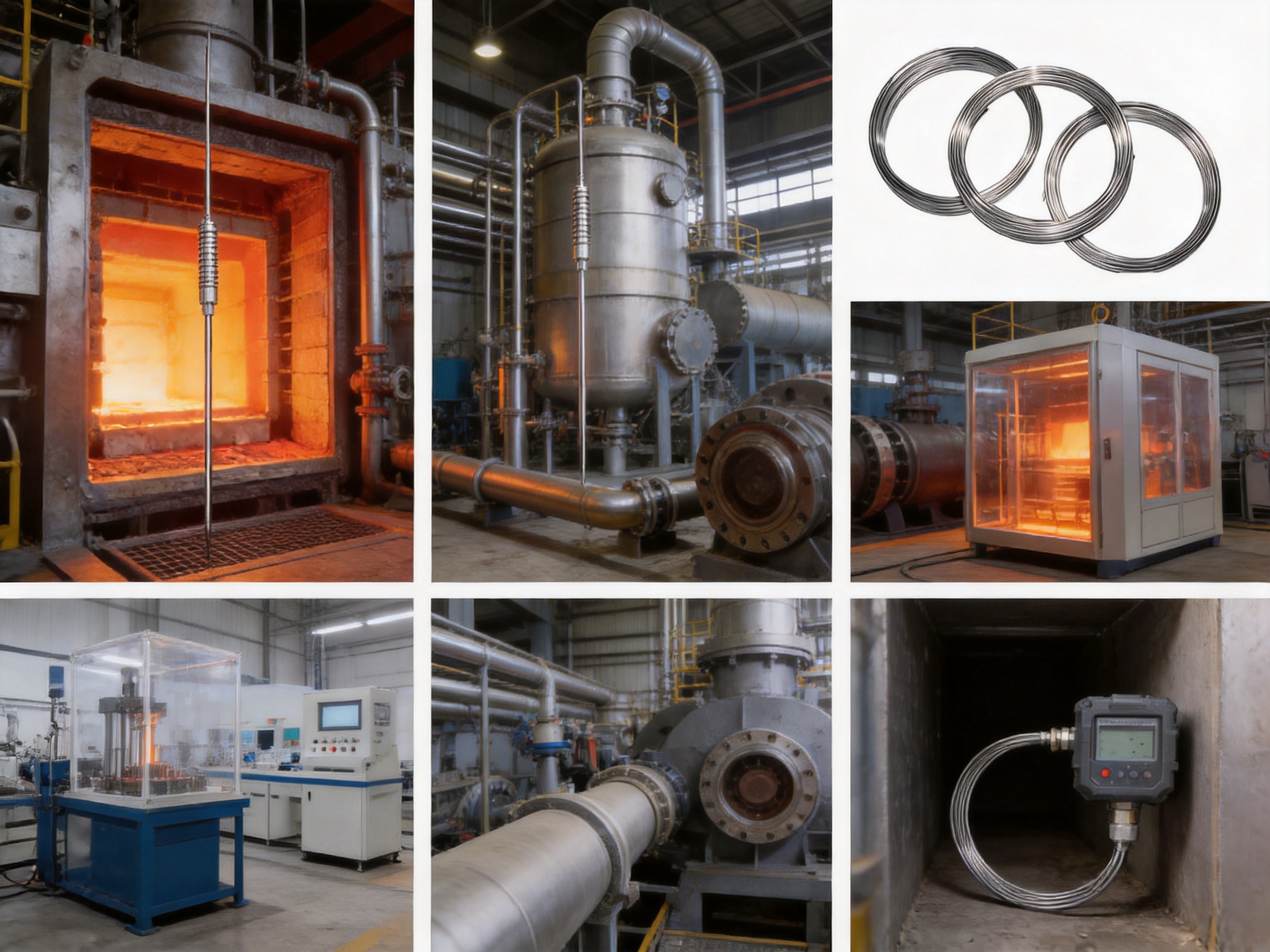
Armored thermocouple cable is used in annealing furnaces, sintering furnaces, hardening lines, tempering equipment, ceramic kilns, and laboratory furnaces. The cable can be inserted into narrow areas or assembled into probes for monitoring furnace zones, workpieces, heating elements, and exhaust paths.
Chemical plants require temperature sensors that can withstand vibration, contamination, and complex process conditions. The choice of sheath material is particularly important because certain chemicals can attack stainless steel or nickel-based alloys. Armored cable can be integrated into thermowells, reactor sensors, pipeline assemblies, and process-control instrumentation.
Power plants use thermocouples to monitor boilers, turbines, exhaust systems, bearings, steam lines, heat exchangers, and auxiliary equipment. The cable’s vibration resistance and compact installation profile are useful in areas where conventional rigid sensors may be difficult to position.
Armored cable can be applied to motors, pumps, compressors, gearboxes, engines, molds, hydraulic systems, and production machinery. It can monitor bearing temperature, surface temperature, fluid temperature, and localized hot spots. Its flexibility allows sensors to be routed around moving or densely packed components.
Temperature control is essential in sterilization, drying, baking, refrigeration, fermentation, and pharmaceutical processing. In these applications, sensor materials, surface condition, sealing, cleanability, and compliance requirements must be considered together. Stainless-steel armored cable can be designed into hygienic assemblies when the installation and termination are properly specified.
Testing chambers, climatic cabinets, thermal cycling systems, and research equipment often require small, responsive temperature sensors. A small-diameter armored thermocouple cable can provide a good balance of flexibility, response speed, and protection for repeated testing.
Choosing the correct armored thermocouple cable begins with defining the measurement conditions. The most important factors include temperature range, thermocouple type, atmosphere, chemical exposure, cable diameter, mechanical loading, bending requirements, required accuracy, insulation resistance, and connection method.
The thermocouple type should be selected according to the temperature range and required measurement characteristics. Type K is a common general-purpose selection, while Type N may be preferred where improved high-temperature stability is desired. Types E, J, and T serve specific temperature and output requirements. Types S, R, and B are selected for higher-temperature and precision applications.
The sheath material should be evaluated against the actual environment rather than temperature alone. Stainless steel may be suitable for many general applications, while nickel-chromium materials may be required for higher temperatures. Corrosive gases, reducing atmospheres, carburization, sulfur, chlorides, and molten materials can significantly affect service life.
Diameter selection requires balancing response time and mechanical strength. A smaller cable generally responds faster and is easier to install in confined spaces. A larger cable usually provides greater mechanical robustness, thicker insulation, and improved resistance to handling damage. The correct choice depends on the installation and process requirements.
The required bending radius must be considered during layout. The cable should not be forced around sharp corners or repeatedly flexed beyond the recommended limit. Strain relief should be provided near connectors, junction boxes, and sensor mounting points.
Customers should also specify the cable length, number of cores, tolerance class, junction type, end treatment, connector, sealing method, and any calibration or inspection documentation. Clear specification at the inquiry stage helps prevent mismatches between the cable and the final instrument.
Before installation, inspect the cable for crushed sections, sheath cracks, exposed conductors, contamination, or damaged ends. Do not install cable that has been sharply kinked or mechanically flattened, because internal conductor damage may not be visible from the outside.
Maintain a bending radius of at least five to seven times the cable outer diameter unless a project-specific specification states otherwise. Avoid bending the hot junction. If the cable must be formed close to the measuring end, use suitable tooling and make the bend gradually.
Use compatible compensation or extension wire. The wire type must correspond to the thermocouple type and polarity. Connections should be mechanically secure and protected against moisture. In high-interference environments, shielded construction, suitable cable routing, and single-point grounding of the shield may be considered.
Keep thermocouple signal cables away from high-current power cables, variable-frequency drives, ignition systems, and strong electromagnetic sources whenever possible. If signal jumping or inaccurate readings occur, check terminal tightness, polarity, grounding, insulation resistance, cable routing, and possible moisture ingress.
During maintenance, compare the sensor reading with an independent reference where practical. Sudden changes in insulation resistance, unstable output, slow response, or persistent measurement drift may indicate moisture, sheath damage, conductor deterioration, junction failure, or an unsuitable operating environment.
The general recommendation is to maintain a bending radius of no less than five to seven times the outer diameter of the armored sheath. The exact requirement may vary according to the cable diameter, sheath material, core configuration, and customer specification. The hot junction should be bent as little as possible to avoid internal conductor damage.
Yes, provided that the thermocouple type, sheath material, cable diameter, insulation structure, and junction design are suitable for the application. The maximum temperature is not determined by the thermocouple type alone. Atmosphere, exposure time, mechanical stress, and chemical conditions must also be evaluated. Operation beyond the specified range may accelerate aging and cause permanent damage.
Common causes include electromagnetic interference, loose terminals, incorrect polarity, moisture in the insulation, sheath damage, poor grounding, damaged compensation wire, or an unsuitable junction arrangement. In interference-prone environments, use appropriate shielding and single-point grounding. Check terminal tightness and insulation resistance before replacing the sensor.
It can be extended when the correct thermocouple compensation wire or extension wire is used. The wire must match the thermocouple type and polarity. Directly mixing ordinary copper wire with thermocouple conductors is not recommended because it can introduce additional thermoelectric potentials and create measurement errors.
A grounded junction is electrically connected to the metallic sheath. It usually provides fast heat transfer and rapid response. An ungrounded junction is electrically isolated from the sheath and may be preferable where electrical isolation or reduced ground-loop risk is important. The choice depends on the instrument circuit and process environment.
Type K is widely used for general industrial temperature measurement because of its broad range, practical cost, and availability. Type N may be selected where improved high-temperature stability is needed. The correct selection should still be based on the process atmosphere, temperature range, required accuracy, and applicable standards.
High-temperature nickel-chromium alloys such as GH3030, GH3039, and 25Cr-20Ni may be selected for demanding conditions, while stainless-steel materials such as 304, 316L, and 1Cr18Ni9Ti are used for many general applications. The final choice must consider chemical compatibility and atmosphere as well as temperature.
Insulation resistance is measured between the thermocouple conductors and between the conductors and the outer sheath. The test voltage depends on the cable diameter and applicable product specification. A typical requirement is a high room-temperature resistance per meter, with separate high-temperature requirements for cables tested under elevated conditions.
Custom designs may be available after technical consultation. Possible customization areas include thermocouple type, sheath material, outer diameter, core count, cable length, tolerance class, junction construction, end treatment, connector, and special inspection requirements.
Magnesium oxide provides high-temperature electrical insulation, mechanical compactness, and good resistance to moisture and chemical degradation when properly processed. Its mineral structure allows the cable to remain small and flexible without relying on organic insulation that may fail at elevated temperatures.
Armored thermocouple cable is a precision product rather than a simple metal tube containing wires. Its performance depends on thermocouple alloy consistency, insulation density, sheath quality, dimensional accuracy, heat treatment, junction integrity, and final electrical testing. A specialized manufacturer can coordinate these factors through controlled production and technical inspection.
Xinguo Group’s broad product structure supports this integrated approach. The group manufactures temperature instruments, alloy wires, cable products, precious-metal materials, and related instrumentation components. This gives customers access to technical coordination across the sensor system instead of relying on disconnected suppliers for each component.
The company’s engineers and technicians can assist with selecting thermocouple type, sheath material, diameter, tolerance, junction style, and installation configuration. This application-oriented service is particularly useful for customers working with unusual temperatures, compact equipment spaces, vibration, corrosive atmospheres, or customized sensor assemblies.
Quality management, environmental management, occupational safety systems, modern equipment, and documented inspection procedures provide an additional foundation for long-term supply. Customers in international markets also benefit from the company’s experience with national, industrial, and international product requirements.
Armored thermocouple cable is a versatile and durable solution for industrial temperature measurement. Its combination of fast response, compact dimensions, mechanical strength, vibration resistance, environmental protection, and wide temperature capability makes it suitable for applications ranging from machinery and pipelines to furnaces and high-temperature process equipment.
The product’s performance is based on the interaction of thermocouple alloy, magnesium oxide insulation, metallic sheath, junction design, and manufacturing precision. Correct selection and installation are essential. Users must consider the complete operating environment, including temperature, atmosphere, chemicals, vibration, bending, electrical interference, and required accuracy.
With alloy production, cable manufacturing, temperature-instrument expertise, technical personnel, advanced equipment, and quality-management systems, Xinguo Group is positioned to supply standard and customized armored thermocouple cable solutions. Its integrated capabilities help support consistent product quality, responsive technical communication, and reliable service for industrial customers worldwide.
For customers seeking long-term temperature-measurement reliability, the most effective approach is to specify the application clearly and select a cable designed for the actual operating conditions. When the thermocouple type, sheath, insulation, dimensions, junction, and installation are properly matched, armored thermocouple cable can provide stable and accurate performance in some of the most demanding industrial environments.
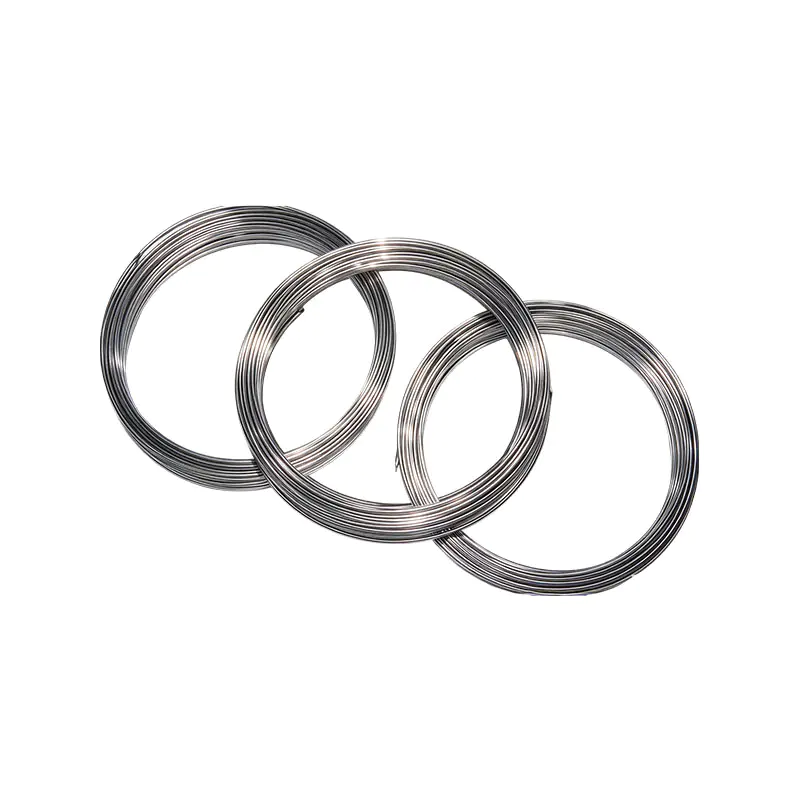
Armored thermocouple cable
The following summary presents representative options described for the armored thermocouple cable range. Final values should be confirmed against the selected model, diameter, material, tolerance class, and application conditions.
| Item | Available or Representative Options |
| Thermocouple types | K, N, E, J, T, S, R, B |
| Common product models | KK, KN, KE, KJ, KT, KS, KR, KB |
| Sheath materials | 304, 316L, 1Cr18Ni9Ti, GH3030, GH3039, 25Cr-20Ni |
| Typical outer diameters | 0.5, 1.0, 1.5, 2.0, 3.0, 4.0, 4.5, 5.0, 6.0, and 8.0 mm |
| Insulation material | Compacted magnesium oxide |
| Core configurations | Single-core, twin-core, four-core, and customized multi-core designs |
| Typical tolerance classes | Class I, Class II, and Class III according to the applicable thermocouple standard |
| Applications | Furnaces, heat treatment, chemical processing, power generation, machinery, laboratory equipment, pipelines, and industrial instrumentation |
When requesting a quotation or technical recommendation, customers should provide the thermocouple type, operating temperature, maximum exposure temperature, process medium, atmosphere, sheath preference, outer diameter, cable length, number of cores, required tolerance class, junction type, bending requirements, connector style, and applicable inspection documentation.
Additional information about vibration, pressure, flow velocity, chemical exposure, installation depth, response-time requirements, and electrical interference can help the manufacturer recommend a more suitable design. For high-temperature or critical applications, customers should also identify whether the cable will operate continuously or intermittently and whether calibration certificates are required.
For projects requiring formal quality documentation, the supply package may be discussed in advance to include material certificates, dimensional inspection records, insulation-resistance results, thermoelectric calibration data, conformity documentation, and product identification records. The specific documentation depends on the customer’s industry, project requirements, and applicable standards.
Base-metal armored thermocouple cables may be manufactured with reference to JB/T 8205-1999 and GB/T 18404-2001. Precious-metal armored thermocouple cables may be manufactured with reference to JB/T 8909-1999, while certain platinum-rhodium products may follow QB/T 2405-2004. Thermoelectric characteristics may be evaluated according to applicable calibration tables and tolerance requirements.
1. GB/T 16839.1-1997, Thermocouples—Part 1: Calibration Tables.
2. GB/T 18404-2001, Mineral Insulated Metal-Sheathed Thermocouple Cables.
3. JB/T 8205-1999, Industrial Mineral Insulated Metal-Sheathed Thermocouple Cables.
4. JB/T 8909-1999, Mineral Insulated Precious-Metal Thermocouple Cables.
5. QB/T 2405-2004, Platinum-Rhodium Mineral Insulated Thermocouple Cable Requirements.
6. International Electrotechnical Commission, Thermocouple and Industrial Temperature Measurement Standards.
7. Manufacturer technical data for armored thermocouple cable construction, dimensions, insulation resistance, thermoelectric tolerances, and operating-temperature recommendations.



 INQUIRY
 English
 عربى
 русский
 中文简体